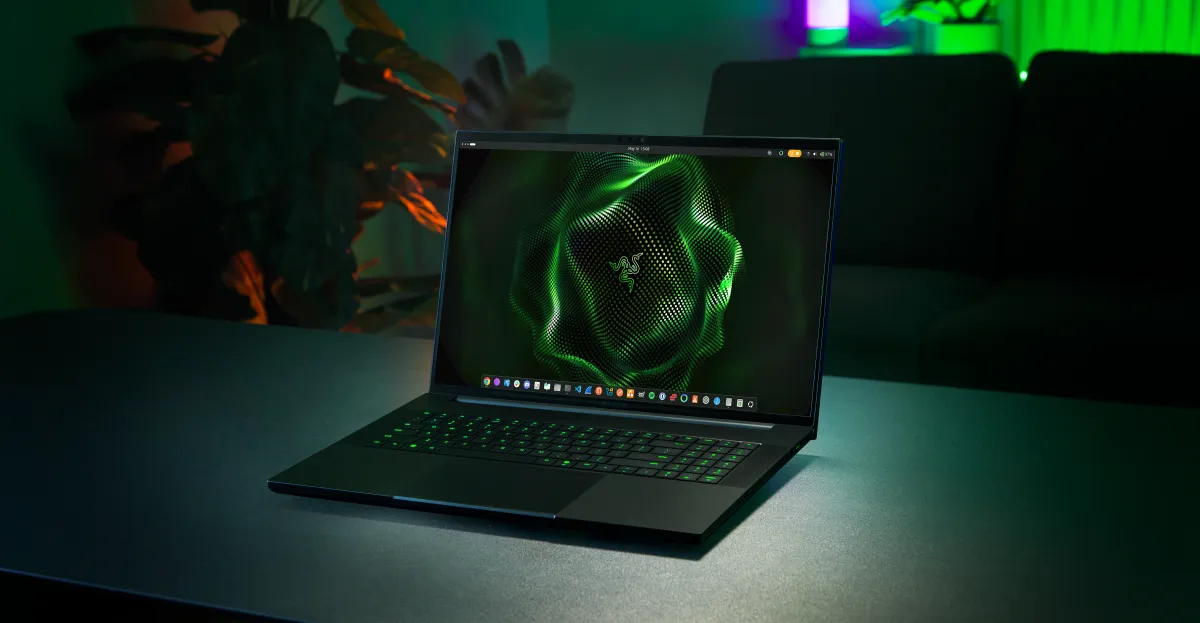
Razer, a leading manufacturer of gaming electronics, has announced the launch of its new Blade 18, equipped with the Intel Core Ultra 9 290HX Plus processor. The device is now available on Razer's website, starting at $3,999.99, which represents a $500 increase compared to the previous model released in 2025.
The new Blade 18 features a robust design and high performance, coming with the Nvidia RTX 5070 Ti graphics card, with an option to upgrade to RTX 5090. This price increase comes just a year after a previous hike for the last model before its market launch.
Event Details
The new Blade 18 appears to be a minor upgrade from the Intel Arrow Lake to the Arrow Lake Refresh, retaining the same graphics card options available last year. It boasts a dual-mode 18-inch display, with Razer claiming that the screen is now 20% brighter this year.
The device can support high resolutions up to 3840 x 2400 at a fast refresh rate of 240Hz, or 1920 x 1200 resolution at an ultra-fast refresh rate of 440Hz. However, the 1200p resolution on an 18-inch screen may not appear as sharp as 4K resolution.
Background & Context
Razer is recognized as a leader in gaming hardware manufacturing, consistently offering high-quality products at premium prices. However, prices continue to rise, with other Blade devices also experiencing price increases. For instance, the Blade 16, which relies on the Intel Panther Lake processor, saw its price rise from $3,499.99 with RTX 5080 to $3,999.99.
Razer has not responded to inquiries regarding the reasons for these price increases at the time of publication, but it seems these increases are part of a phenomenon known as RAMageddon, referring to the rising memory prices in the market.
Impact & Consequences
These price increases raise questions about the future of the gaming hardware market, as they may lead to a decline in demand from consumers seeking more economical options. Additionally, these increases could impact competing companies, potentially prompting them to reassess their pricing strategies.
Furthermore, these pricing changes may have effects on the supply chain, as companies might need to seek lower-cost alternatives to meet changing market demands.
Regional Significance
In the Arab region, these price increases could affect gamers and users looking to acquire the latest technologies. With the growing interest in video games in the Arab world, players may find it challenging to afford new devices, which could impact the growth of the gaming market in the region.
In conclusion, the prices of gaming devices remain a contentious issue, with increasing challenges facing both companies and consumers alike. It is crucial to monitor market developments to understand how they will affect players and users in the future.