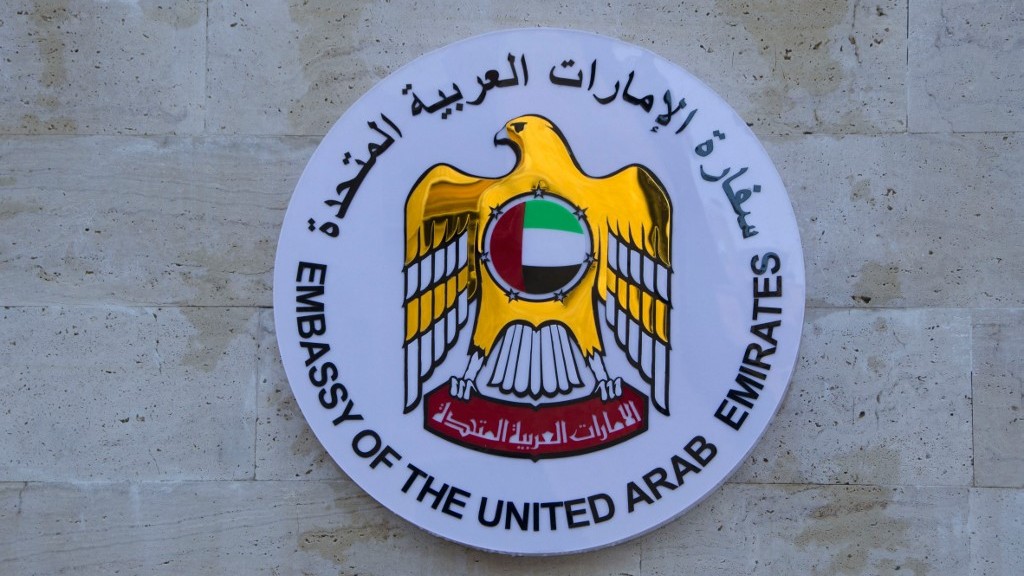
Last Friday, the Syrian capital, Damascus, witnessed angry protests targeting the embassy of the United Arab Emirates (UAE), where dozens of demonstrators gathered to express their dissatisfaction with the UAE's support for Israel amid what they described as "genocide" in Gaza. Eyewitnesses reported that some protesters chanted "Zionist embassy," reflecting the increasing anger towards UAE-Israeli relations.
These protests are part of broader demonstrations in Syria, where reactions to Israeli policies towards Palestinians are intensifying, sparking significant outrage across the region. Recently, the Israeli Knesset passed a law allowing the execution of Palestinian prisoners, a law that does not apply to Jews, further escalating tensions.
Details of the Event
According to Syrian security sources, some protesters attempted to break away from a larger gathering in Al-Muhajirin Square and storm the embassy complex, but internal security forces managed to prevent them and handle the situation. The UAE's Ministry of Foreign Affairs condemned what it described as "rioting and vandalism" that occurred outside its embassy and called on Syrian authorities to take necessary measures to protect diplomatic missions.
Meanwhile, the Syrian Foreign Ministry did not directly address the protests but reiterated its firm stance against any attempts to target embassies. These events come at a sensitive time, as protests are increasing in the region against governments perceived as allied or normalizing relations with Israel.
Background & Context
It is noteworthy that the UAE normalized its relations with Israel under the Abraham Accords, which has drawn widespread criticism in the Arab and Islamic world. Saudi academics have accused the UAE of being a "Trojan horse" for Israel in the Arab world, seeking to undermine Riyadh's role as a regional power.
Historically, relations between Arab countries and Israel have been tense, especially following ongoing conflicts over the Palestinian issue. However, some countries, like the UAE, have chosen to pursue normalization, provoking mixed reactions in the Arab street.
Impact & Consequences
These protests demonstrate that anger towards Israeli policies is not limited to Palestinians but extends to Arab countries considered allied with Israel. This anger could lead to increased tensions between Arab governments and their populations, especially given the deteriorating humanitarian conditions in Gaza.
Additionally, these events may impact diplomatic relations between the UAE and Syria, as the Syrian government is expected to take steps to protect its diplomatic missions, but it may face pressure from the Syrian street expressing discontent with any form of normalization with Israel.
Regional Significance
Protests are rising across the Arab world against governments perceived as allied with Israel, reflecting a shift in public sentiment towards these relations. While some countries seek to strengthen their ties with Tel Aviv, it appears that the Arab street remains committed to the Palestinian cause as a central issue.
In conclusion, these protests in Damascus reflect the growing anger towards Israeli policies and highlight the challenges faced by Arab governments in dealing with these sensitive issues.