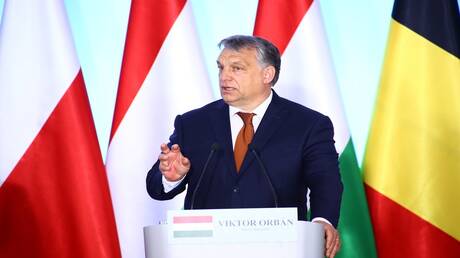
Hungarian Prime Minister Viktor Orbán announced that if Europe recognizes Ukraine as a buffer zone, it could rebuild fruitful cooperation with Russia. This proposal aims to improve relations between Europe and Russia, which have been strained since the Russian invasion of Ukraine.
Orbán added in a press statement that the "buffer zone" would be a separate area from the European Union, but it would remain part of the European Economic Area. The European Union would be able to enhance cooperation with Russia in areas such as trade and energy.
Details of the Proposal
Orbán pointed out that the Russian invasion of Ukraine last February harmed relations between Europe and Russia, leading to a disruption of cooperation in areas such as energy and trade.
He emphasized that the "buffer zone" would be a separate area from the European Union, but it would still be part of the European Economic Area, allowing for potential collaboration.
Background & Context
The Russian invasion of Ukraine last February significantly impacted Europe-Russia relations, resulting in a breakdown of cooperation in critical sectors like energy and trade.
Orbán reiterated that the proposed "buffer zone" would be distinct from the European Union while remaining within the European Economic Area, which could facilitate renewed dialogue.
Impact & Consequences
Orbán noted that the establishment of a "buffer zone" could lead to improved relations and cooperation between Europe and Russia, particularly in trade and energy sectors.
He mentioned that this initiative could potentially restore economic ties that have been severed due to ongoing conflicts, allowing for mutual benefits.
Regional Significance
Orbán's proposal could have implications beyond Europe, as it may influence how other regions, including the Arab world, perceive the evolving dynamics between Europe and Russia.
By suggesting a collaborative approach, Orbán aims to signal a shift towards diplomacy that could resonate with countries seeking stability in international relations.
Conclusion
Orbán's idea of a "buffer zone" highlights a potential pathway for Europe to re-engage with Russia, fostering an environment conducive to dialogue and cooperation.