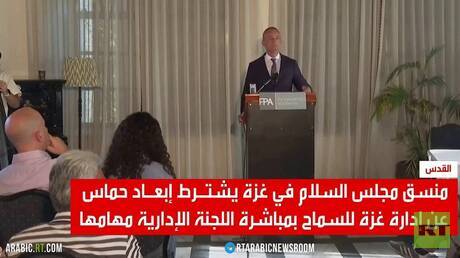
In a new move reflecting the escalating crisis in Gaza, UN peace envoy Nikolai Mladenov has suggested removing Hamas from governing the region. This proposal comes at a sensitive time as tensions in Gaza continue to rise.
Mladenov, who serves as the UN Special Coordinator for the Middle East Peace Process, emphasized that this proposal aims to achieve greater stability in the area. It emerges amid the difficult economic conditions faced by Gaza's residents, where public protests against deteriorating living conditions have increased.
Details of the Proposal
Mladenov's plan involves distancing Hamas from the executive authority in Gaza, potentially paving the way for the formation of a new government that includes other Palestinian factions. This proposal aims to enhance cooperation among Palestinian factions and achieve national reconciliation, which is seen as a necessary step given the ongoing political division.
It is noteworthy that Hamas, which has controlled Gaza since 2007, faces increasing pressure from the international community to accept a political solution that guarantees Palestinian rights and achieves peace in the region. Hamas has expressed reservations about this proposal, stating that it represents the will of the Palestinian people.
Background & Context
Historically, Gaza has witnessed numerous political and economic crises, with Hamas at the center of these issues. Since taking control of the territory, the movement has faced significant challenges, including the ongoing Israeli blockade, which has greatly impacted the daily lives of the population.
In recent years, several international parties, including the United Nations, have attempted to mediate reconciliation talks between Hamas and Fatah, but these efforts have yielded little success. Mladenov's recent proposal may serve as a new opportunity to reconsider the political dynamics in Gaza.
Impact & Consequences
If Mladenov's proposal is accepted, it could lead to radical changes in the political landscape of Gaza. Removing Hamas from power may contribute to improving relations between Palestinian factions, but it could also provoke negative reactions from the movement's supporters.
The economic impacts would also be significant, as the formation of a new government could improve the economic situation in the sector, provided that necessary international support is secured. However, the question remains about how the international community will respond to this proposal and its potential impact on the security situation in the region.
Regional Significance
This proposal could have wide-ranging effects on the Arab region, as the stability of Gaza is considered part of the overall stability of the region. Any progress in the political process may encourage peace efforts in other areas of the Middle East.
Moreover, improving conditions in Gaza could help reduce tensions between Palestinians and Israelis, potentially opening the door for new negotiations. Amid the multiple crises facing Arab countries, any advancement in the Palestinian issue is seen as a positive step towards achieving peace and stability in the region.
In conclusion, it remains to be seen how the involved parties will react to this proposal and whether it will lead to real changes in the situation in Gaza. The responses from Hamas and the international community will be crucial in determining the fate of this proposal.