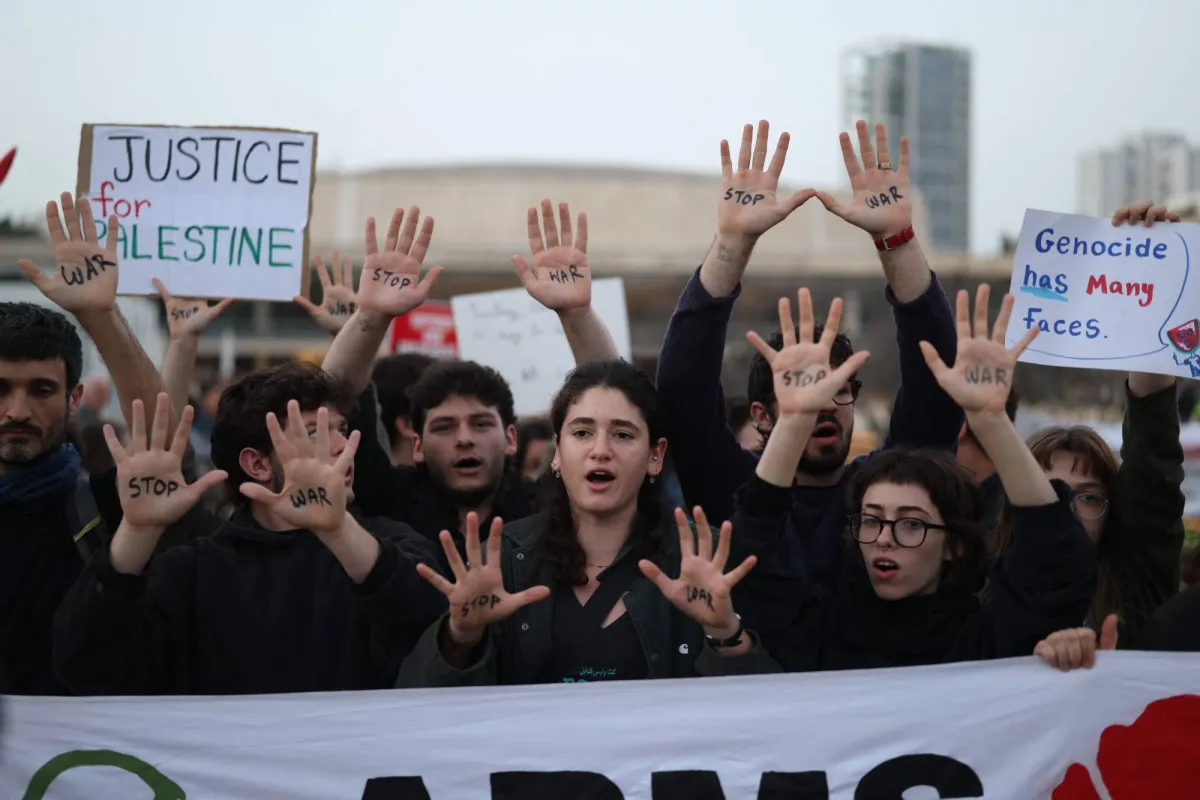
Hundreds of Israelis protested in Tel Aviv on Saturday against ongoing wars with Iran, Lebanon, and Gaza, calling for an end to the conflicts. The demonstrators voiced their discontent with Prime Minister Benjamin Netanyahu, expressing skepticism about the government's justifications for the war.
Despite restrictions on gatherings due to the war, protesters gathered in a central square in the city, holding anti-war signs, one of which read: "No to bombing (...) End the never-ending war." Alon-Lee Green, a leader of the Israeli-Palestinian grassroots organization Stand Together, stated that the police are trying to silence their voices, pointing out that the war is a constant reality in Israel.
Details of the Event
Israeli police detained Green and several other protesters after they expressed their demands to end the wars in Iran, Lebanon, and Gaza, as well as the atrocities in the West Bank. Cecile, one of the protesters, voiced her doubts about the reasons for the war, indicating that Netanyahu is seeking to halt his trial for corruption.
In a video statement, Netanyahu reaffirmed his commitment to continue the military campaign against Iran, referencing attacks targeting Iranian petrochemical plants. He explained that these facilities represent a source of funding for terrorism against Israel and the world.
Background & Context
These protests come at a time of escalating tensions between Israel and Iran, with both countries exchanging attacks since the start of the joint U.S.-Israeli war on Iran on February 28. Israeli strikes have reportedly resulted in the deaths of five individuals in Iran, according to Iranian officials.
Simultaneously, the Israeli army launched missiles from Iran, injuring five people in Israel. According to the army, eight rocket salvos were detected launched from Iran since midnight, in addition to a missile fired from Yemen.
Impact & Consequences
These wars are destabilizing economies worldwide, as Iran responds to U.S. and Israeli attacks by targeting energy infrastructure in the Arabian Gulf region. These conflicts have increased pressure on the U.S. administration, as President Donald Trump seeks to find a resolution to the dispute.
Concerns are growing about a larger escalation in the region, as Iran seeks to enhance its military capabilities while Israel attempts to maintain its military superiority. These developments may contribute to heightened tensions in the area, potentially leading to negative repercussions for regional security.
Regional Significance
These events directly impact Arab countries, with rising fears of increased violence in the region. The continuation of the conflict could lead to a flow of refugees and heightened tensions among neighboring countries.
The protests in Tel Aviv reflect the growing concern among Israelis regarding ongoing wars, which may contribute to changes in government policies in the future. Under these circumstances, hope remains pinned on international mediation efforts to find a peaceful resolution to the conflict.