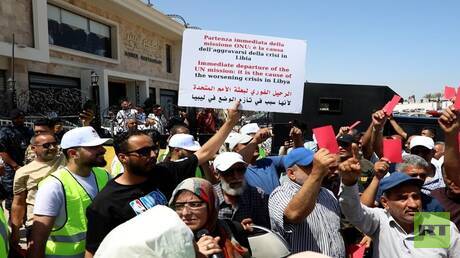
Protesters stormed the United Nations Support Mission in Libya's headquarters in Tripoli, reflecting a significant escalation in protests against illegal immigration and resettlement policies. This incursion comes after the closure of the Refugee Commission, provoking anger among many citizens who express their dissatisfaction with immigration-related policies.
Protests are intensifying in Libya, with demonstrators demanding changes to immigration policies and expressing concerns about the impact of these policies on the country's future. In recent days, the capital has witnessed large gatherings where protesters raised slogans calling for a halt to resettlement operations.
Details of the Incident
In an unprecedented move, protesters stormed the headquarters of the United Nations Support Mission in Libya, disrupting activities within the premises. Local sources confirmed that security forces attempted to control the situation, but the protesters managed to enter the building. This incursion occurs at a sensitive time, as pressure mounts on the Libyan government to address the immigration crisis.
The protesters' demands include a reevaluation of policies concerning refugees and migrants, as many feel these policies do not reflect the needs of the local community. Some protesters pointed out that resettlement increases pressure on local resources, necessitating urgent action.
Background & Context
Historically, Libya has experienced waves of illegal immigration, being a major transit point for migrants from Africa to Europe. As security and economic conditions in the country deteriorate, the number of migrants attempting to reach European shores via the Mediterranean Sea has increased.
The Libyan government is striving to address this crisis through cooperation with international organizations, but criticisms are growing regarding the effectiveness of these policies. In recent years, many refugee shelter centers have been closed, exacerbating the humanitarian situation in the country.
Impact & Consequences
These protests could worsen security conditions in Tripoli, where the country is already experiencing instability. Additionally, the incursion may negatively affect Libya's relations with the international community, especially with humanitarian organizations seeking to assist migrants.
Furthermore, these events may increase tensions among various groups within Libyan society, necessitating urgent intervention from local authorities to ensure stability. It is crucial for the government to effectively address the protesters' demands to prevent exacerbating the crises.
Regional Significance
The crisis of illegal immigration is an urgent issue facing many Arab countries, with increasing numbers of migrants fleeing conflict and poverty. The escalation of protests in Libya may have repercussions for neighboring countries, as migrants may seek refuge in other nations.
Moreover, these events could contribute to a reevaluation of immigration policies in the region, as Arab states seek sustainable solutions to this crisis. It is essential for Arab countries to cooperate in addressing the challenges associated with immigration and achieving stability in the region.
In conclusion, the protests in Tripoli highlight the urgent need to comprehensively address immigration issues, as the current situation requires an effective response from the government and the international community to ensure the rights of migrants and achieve stability in the country.