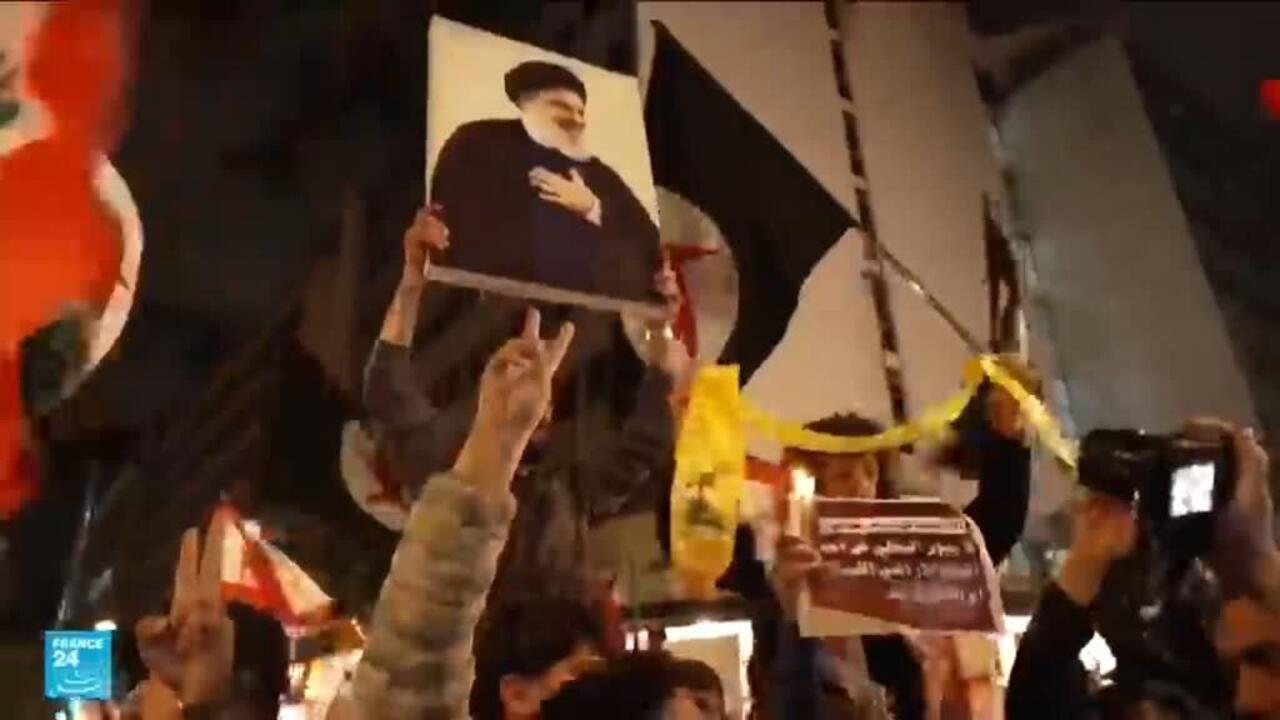
Protesters gathered in the Lebanese capital, Beirut, to show their support for Hezbollah, as the death toll from the ongoing conflict with Israel has surpassed 1,000. The conflict has also led to the displacement of nearly one million people, while the Lebanese government is striving to disarm the party amidst statements indicating that any negotiations with Israel would be considered a surrender.
These protests come at a highly sensitive time, as Lebanon grapples with the repercussions of the recent conflict that erupted between Hezbollah and Israel. Reports have indicated that the death toll has exceeded 1,000, reflecting the scale of violence and humanitarian suffering being experienced by civilians in the region. Additionally, the conflict has resulted in the displacement of approximately one million individuals, further increasing the pressure on the Lebanese government, which is facing significant economic and social challenges.
Details of the Protests
Protesters gathered in several areas of Beirut, raising slogans in support of Hezbollah and condemning the Israeli attacks. Images and videos circulating on social media showed large crowds of demonstrators, reflecting widespread public support for the party during these difficult times. Some protesters indicated that this war is not just a military conflict, but also a war on identity and resistance.
In contrast, the Lebanese government continues its efforts to disarm Hezbollah, which the party views as a form of surrender. A leader within the party stated that any negotiations with Israel would only exacerbate the situation, reaffirming Hezbollah's steadfast position in the face of Israeli threats.
Background & Context
Historically, the relationship between Hezbollah and Israel has been tense, with the region witnessing numerous armed conflicts. Since 2006, when the July War broke out, there have been repeated attempts to reach peace agreements, but these have often failed. The roots of the current conflict can be traced back to escalating tensions in the region, including issues related to borders, oil, and gas.
Lebanon, which is suffering from a crippling economic crisis, finds itself in a difficult position as it must deal with the aftermath of military conflict, in addition to internal and external pressures. The Lebanese government faces increasing criticism for its inability to protect civilians or provide basic services to citizens.
Impact & Consequences
The repercussions of the current conflict extend beyond Lebanon's borders, affecting regional stability as a whole. The conflict could lead to further escalation in the region, threatening security in neighboring countries such as Syria and Palestine. Additionally, the large-scale displacement of civilians places additional pressure on neighboring countries hosting refugees, complicating humanitarian situations.
On the other hand, the continuation of the conflict may strengthen Hezbollah's internal position, as the party capitalizes on public support in light of difficult circumstances. This support could complicate the Lebanese government's efforts to disarm the party and make it challenging to reach peaceful solutions.
Regional Significance
The events in Lebanon are part of a larger picture concerning conflicts in the Middle East. The conflict between Hezbollah and Israel reflects ongoing tensions between regional powers and affects relations between Arab countries and Israel. Furthermore, the situation in Lebanon could contribute to increasing sectarian and political divisions in the region.
In conclusion, the situation in Lebanon remains tense, with the conflict continuing to have negative impacts on civilians. The international community must intervene urgently to alleviate humanitarian suffering and achieve stability in the region.