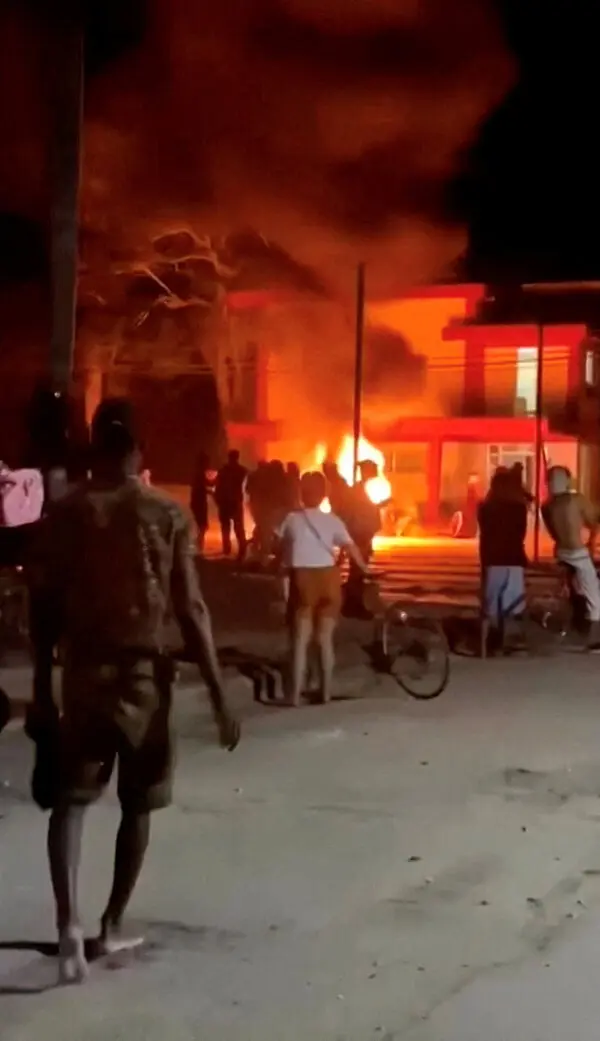
Cuba is currently experiencing a notable increase in popular protests against the communist government, as citizens suffer from a severe humanitarian crisis resulting from shortages of fuel and electricity. These protests come at a time when the country is grappling with the repercussions of the American embargo imposed by the Trump administration, which has significantly reduced oil supplies.
Under these challenging circumstances, manifestations of anger are becoming evident in the streets, where Cubans are banging pots in nighttime demonstrations, and anti-government slogans have appeared on walls. In an unprecedented incident, protesters in the central city of Morón attacked the headquarters of the Communist Party, marking a historic first since Fidel Castro took power nearly 70 years ago.
Details of the Protests
Since the beginning of the year, the United States has imposed strict restrictions on oil supplies to Cuba, exacerbating economic and living conditions. Although a Russian ship was allowed to deliver a shipment of oil as a temporary measure, the overall situation remains dire, provoking public discontent.
Protests are increasing in various Cuban cities, with citizens taking to the streets to express their anger towards the government. Historian and activist Aleina López noted that civil society is gradually beginning to emerge, despite the country lacking a strong opposition movement due to the arrest of many opposition figures or their forced exile.
Historical Context and Background
Historically, Cuba has suffered from recurring economic crises, but the current situation is among the worst in recent years. The American embargo, imposed for decades and tightened in recent years, has worsened economic conditions and increased the suffering of citizens. Additionally, the COVID-19 pandemic has further exacerbated health and economic crises in the country.
Although the Cuban government has attempted to implement some economic reforms, these reforms have not been sufficient to meet citizens' needs. The successive crises have led to rising public discontent, raising questions about the future of the ruling regime in Cuba.
Impact and Consequences of the Protests
The current protests in Cuba are seen as an indicator of increasing public anger and may lead to political changes in the country. Experts believe that the continuation of these protests could place the government in a difficult position, as it may be forced to take steps to meet citizens' demands or face a larger escalation in protests.
These events may also impact Cuba's international relations, as they could increase pressure on the government from the international community. If the situation continues as it is, we may witness international interventions or diplomatic pressures from other countries to help resolve the humanitarian crisis.
Significance for the Arab Region
The events in Cuba hold particular significance for the Arab region, reflecting the challenges faced by political systems in the face of public anger. The humanitarian crises experienced by Cuba remind us of similar crises in some Arab countries, where citizens are suffering from difficult economic conditions.
In conclusion, Cuba remains an example of how economic and political crises can impact the stability of regimes, necessitating a consideration of how to address these crises in various contexts around the world.