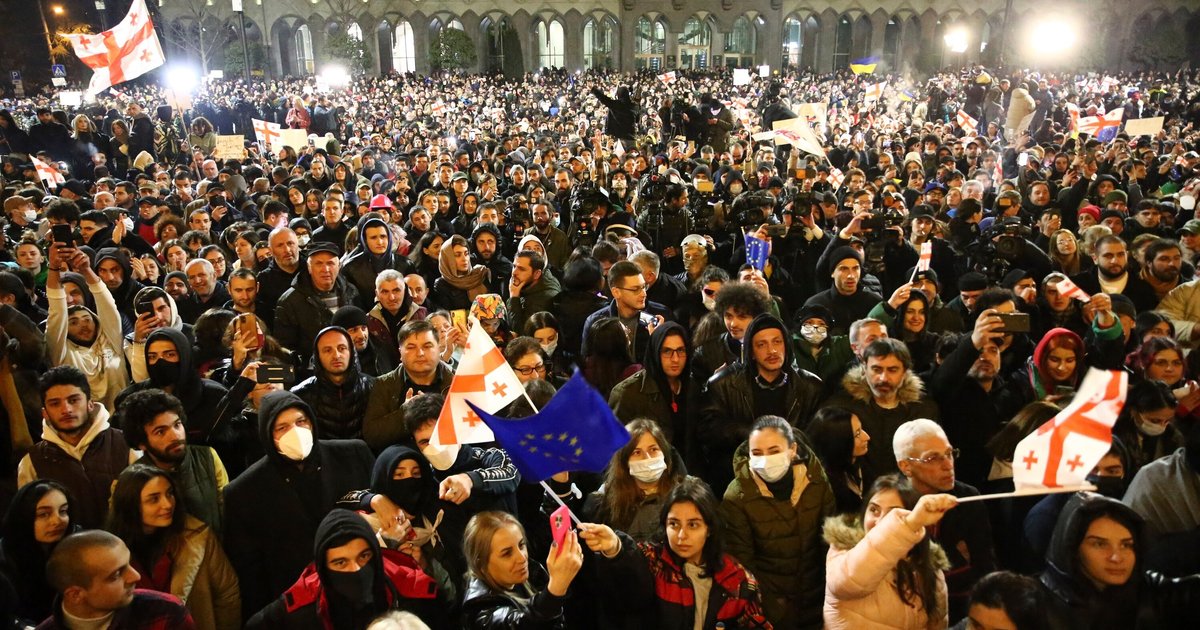
Georgia has recently witnessed a significant escalation in popular protests, with thousands taking to the streets of the capital, Tbilisi, to express their dissatisfaction with government policies. These protests, which began several weeks ago, focus on demands for political and economic reforms and come at a critical time for the country as it seeks to enhance its relationships with Western nations.
The demonstrators, who belong to various segments of society, express their concerns over the deteriorating economic conditions and rising unemployment rates, in addition to what they perceive as a decline in civil liberties. Reports indicate that the protests have attracted international attention, with some human rights organizations expressing support for the protesters' demands.
Details of the Protests
The protests in Georgia began after the government announced a series of economic policies that many considered unjust. The capital, Tbilisi, has seen massive gatherings, where protesters have blocked major streets, leading to significant traffic congestion. Some protesters have set tires on fire and raised slogans demanding the government's resignation.
In response to these protests, the government issued a statement reaffirming its commitment to improving economic conditions, but at the same time warned that any acts of violence or vandalism would not be tolerated. Police forces have been deployed in the streets to ensure security, which has heightened tensions between the protesters and the authorities.
Background & Context
Historically, Georgia has faced numerous political and economic crises, especially following the collapse of the Soviet Union. In recent years, the country has sought to strengthen its ties with the European Union and NATO, leading to tensions with Russia. These protests are part of a series of events reflecting political instability in the region, as citizens strive for radical changes in the governance system.
It is noteworthy that Georgia has faced significant economic challenges in recent years, including the impact of the COVID-19 pandemic on tourism and local industries. These difficult economic conditions may be one of the main factors leading to the current protests.
Impact & Consequences
These protests could lead to significant changes in the political landscape in Georgia, as the government may be compelled to respond to the protesters' demands by implementing political and economic reforms. If the protests continue, the government may face increasing pressure from the international community, which could affect its relationships with Western countries.
Moreover, these events may increase divisions within Georgian society, as opinions vary on how to handle the current situation. If the government fails to calm the situation, we may witness an escalation in protests, potentially leading to further instability in the country.
Regional Significance
The events in Georgia are particularly significant for the Arab region, as they reflect the challenges many countries face in achieving political and economic stability. These protests could serve as a lesson for Arab nations grappling with similar issues, emphasizing the need to listen to their citizens' demands and work towards necessary reforms.
In conclusion, the situation in Georgia remains under close observation, as citizens look for real changes in their government. The government's response to the protesters' demands will be crucial in determining the country's future.