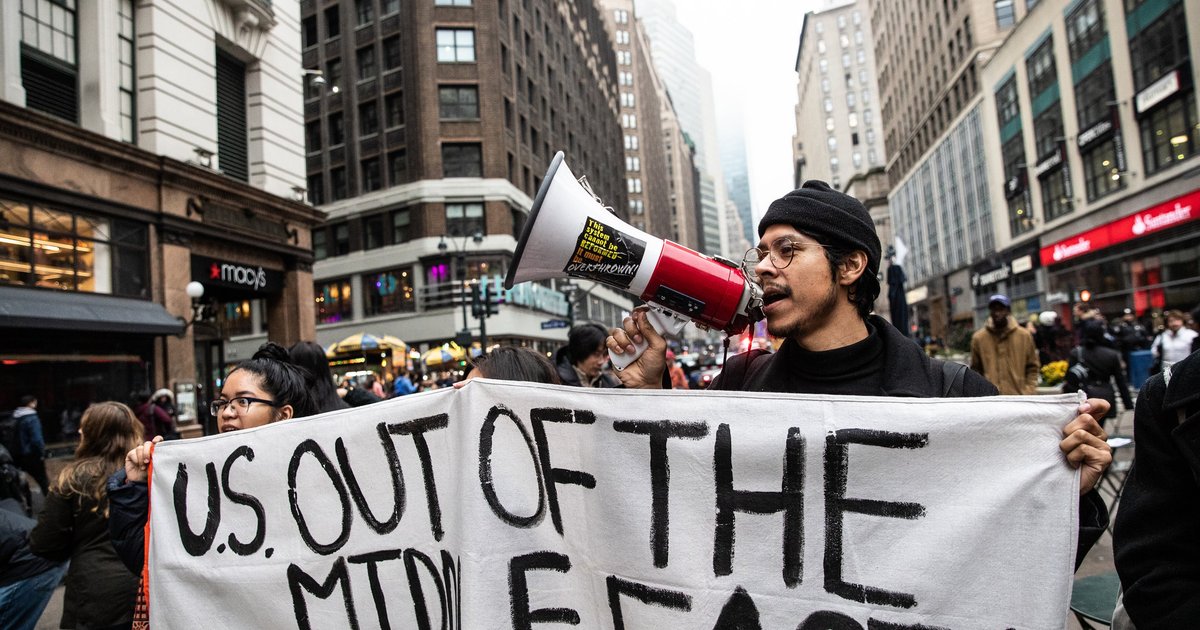
Massive protests have erupted in Israel against a potential war with Iran, resulting in the police arresting 22 individuals during violent crackdowns. These demonstrations come at a sensitive time marked by escalating regional tensions, reflecting the increasing anxiety among Israeli citizens regarding the consequences of any possible conflict.
Protesters gathered in several cities, demanding that the government refrain from being drawn into a new war in the region. The police used force to disperse the demonstrators, leading to clashes between the two sides. These events highlight the internal division within Israeli society regarding how to address the Iranian threats.
Details of the Protests
These protests occur at a critical juncture, as fears of a potential military escalation between Israel and Iran are rising. Reports indicate that demonstrators expressed their concerns that war would have dire consequences for civilians, in addition to its impact on regional stability.
The Israeli police deployed tear gas and water cannons to disperse the protesters, resulting in injuries to several individuals. Many opposition leaders condemned these actions, viewing them as a reflection of the government's inability to handle domestic issues peacefully.
Background & Context
Historically, relations between Israel and Iran have been tense, with Iran considered one of Israel's greatest security threats. For years, Israel has accused Iran of supporting armed groups in the region, such as Hezbollah in Lebanon, which heightens its fears of an all-out war.
In recent years, the region has witnessed an increase in tensions, particularly following the United States' withdrawal from the nuclear agreement with Iran. This withdrawal led to heightened sanctions on Iran, exacerbating tensions between the two parties.
Impact & Consequences
The current protests indicate a growing divide within Israeli society regarding how to deal with Iranian threats. While some advocate for a firm stance against Iran, others prefer diplomatic solutions to avoid any military escalation.
These events signal that the Israeli government is facing significant internal challenges, as pressure mounts from citizens concerned about the potential consequences of any war. Additionally, these protests may influence the government's future policy towards Iran.
Regional Significance
The ramifications of these protests extend beyond Israeli borders, affecting the security situation in the Arab region. Any military escalation between Israel and Iran could destabilize neighboring countries and intensify existing conflicts.
Moreover, rising tensions could impact the relationships between Arab states and Iran, as some countries may be compelled to take a hard stance on the conflict, complicating the political landscape in the region.
The recent protests in Israel reflect the growing anxiety over a potential war with Iran and highlight the internal divisions on how to address this issue. As tensions escalate, the critical question remains how these events will affect the future of Israeli-Iranian relations and what the potential consequences will be for the entire region.