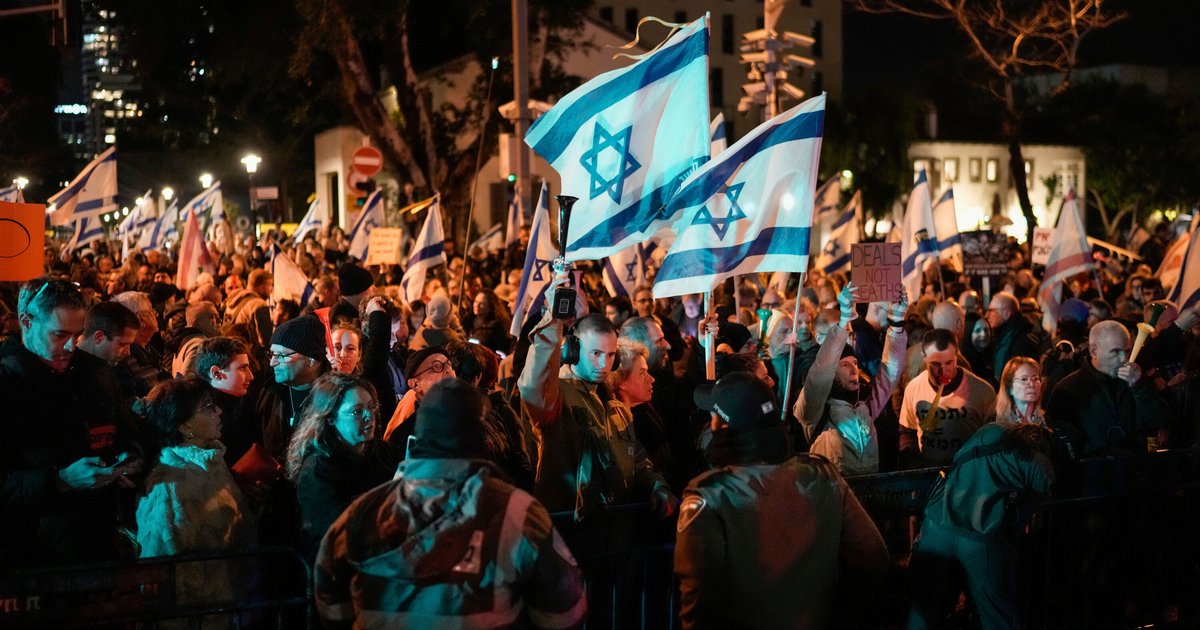
Last Saturday, the city of Tel Aviv witnessed widespread protests, with thousands of demonstrators taking to the streets to voice their rejection of the ongoing war in the region. The protesters, holding signs calling for an end to the conflict, emphasized the need to oust Prime Minister Benjamin Netanyahu, viewing his government as responsible for the worsening conditions.
These protests come at a sensitive time, as pressure mounts on the Israeli government due to escalating violence in Palestinian territories. Images circulated on social media showed large crowds of demonstrators, reflecting the depth of public dissatisfaction with government policies.
Details of the Event
The protests began in the evening, with demonstrators gathering at the famous Rabin Square, chanting slogans calling for peace and an end to military operations. Some speakers at the rally pointed out that the current government has not done enough to protect civilians, both in Israel and in Palestinian territories.
Musical and artistic events were also organized during the protests, adding a festive atmosphere to the event, despite the serious message it conveyed. Police forces were present in large numbers, but no significant incidents of violence were reported.
Background & Context
These protests occur amid rising tensions in the region, with recent months witnessing an escalation in military actions between Israel and Palestinian factions. These actions have resulted in the deaths of many civilians, provoking angry reactions within Israeli society.
Many believe that Netanyahu's government has failed to achieve peace, and its current policies exacerbate instability. In recent years, the country has seen an increase in popular protests calling for a change in government policies.
Impact & Consequences
These protests could increase pressure on Netanyahu's government, potentially leading to changes in political leadership in the near future. The continuation of protests may reflect a shift in public sentiment in Israel, where citizens are demanding more transparency and accountability from the government.
If these popular movements persist, we may witness impacts on the Israeli political landscape, including the possibility of early elections or changes in political alliances.
Regional Significance
These protests hold significant importance for the Arab region, as they reflect a sense of dissatisfaction with Israeli policies. The ongoing conflict in Palestinian territories directly affects relations between Arab countries and Israel, complicating peace efforts in the region.
These events highlight the urgent need for peace and stability, not only in Israel and Palestine but throughout the Middle East. Addressing the demands of the Israeli populace could help alleviate tensions and enhance opportunities for dialogue.