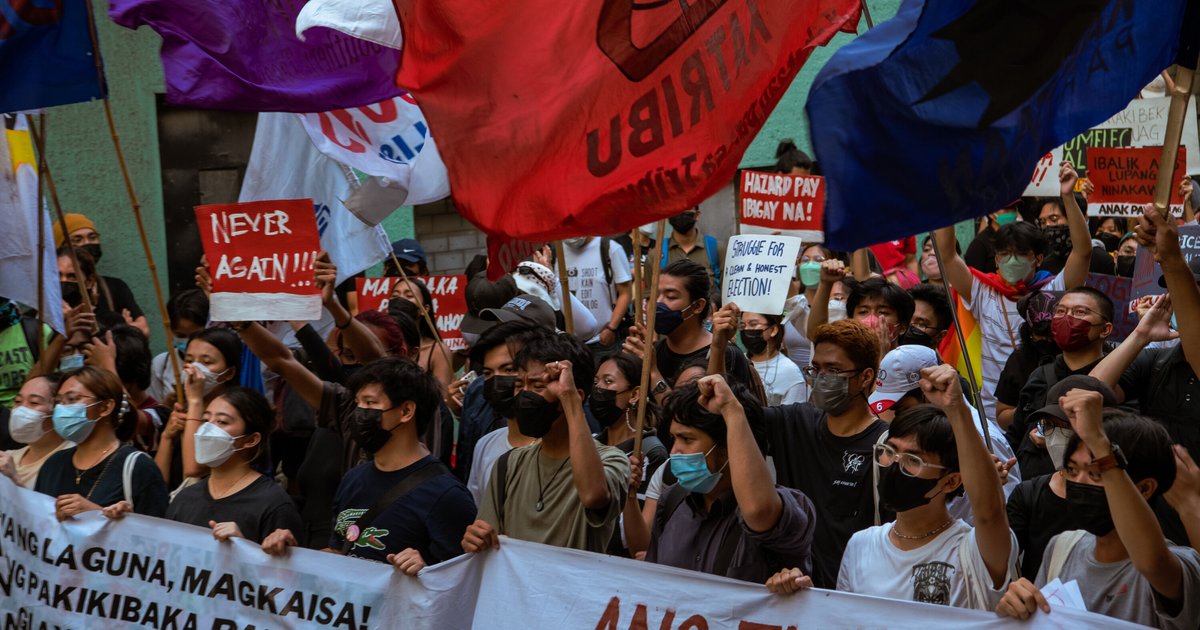
The Philippines has recently witnessed a significant escalation in public protests, with thousands of citizens taking to the streets of the capital, Manila, to voice their discontent with the current government policies. These demonstrations come at a sensitive time for the country, as citizens are grappling with rising living costs and deteriorating economic conditions.
The protests began last Saturday, with demonstrators gathering in the famous Rizal Park, chanting slogans calling for better living conditions and job opportunities. The timing of these demonstrations coincides with the anniversary of significant historical events in the Philippines, further intensifying the national sentiments among participants.
Details of the Protests
The number of protesters has notably increased, with reports indicating that participation in the demonstrations has surpassed 10,000 individuals. The protests have seen a heavy presence of security forces, who have closed off several main streets in an attempt to control the situation. Despite this, the demonstrations have not been without clashes between protesters and security personnel, resulting in injuries to several individuals.
The protesters' demands include better wages, improved healthcare and educational services, as well as a crackdown on the rampant corruption within the government. Demonstrators have pointed out that the current administration has failed to fulfill its previous promises, exacerbating the sense of frustration among citizens.
Background & Context
Historically, the Philippines has experienced numerous public protests reflecting citizens' dissatisfaction with government policies. Previous protests occurred in 2016 against former President Rodrigo Duterte, who faced severe criticism for his repressive policies. However, the current protests arise in a challenging economic context, as many Filipinos continue to suffer the repercussions of the COVID-19 pandemic, which has worsened economic conditions.
The Philippines is one of the countries that heavily relies on remittances from overseas workers, and with the global economy declining, these remittances have been significantly affected, increasing pressure on Filipino families.
Impact & Consequences
These protests could lead to political changes in the Philippines, as the government may feel pressured to take urgent measures to improve conditions. The continuation of these demonstrations could place the current administration in a precarious position, potentially leading to the resignation of some officials or even a complete change in government.
On the other hand, these events could affect social stability in the country, as the intensity of protests may escalate if the government does not respond to citizens' demands. Additionally, these conditions may impact foreign investments in the Philippines, complicating the economic situation further.
Regional Significance
The Philippines is home to a significant Arab community, with many Arabs living in the country as workers or investors. Therefore, any political or economic changes in the Philippines could directly affect the interests of the Arab community there.
Moreover, the events in the Philippines may have implications for economic relations between the Philippines and Arab countries, particularly in the fields of labor and investment. Thus, monitoring these developments is crucial for Arab investors with interests in the Philippines.
In conclusion, the situation in the Philippines remains tense as public protests continue to escalate. It is essential for the government to heed the citizens' demands and work towards improving economic and social conditions to avoid exacerbating the crises.