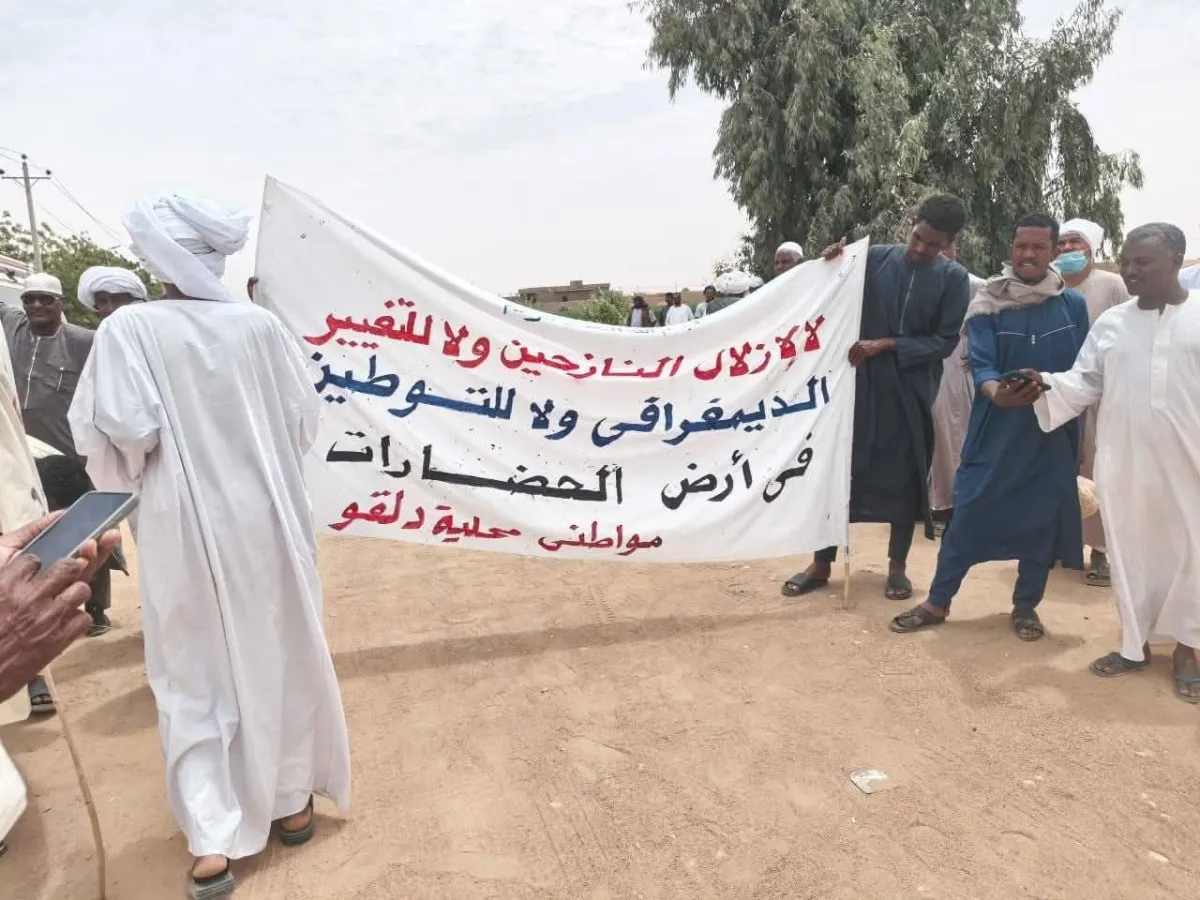
Residents of Dalgo, located in the city of Halfa in northern Sudan, have refused to accept new displaced persons fleeing from the conflict in Darfur, leading to significant controversy on social media platforms. The locals organized a protest in front of the local government headquarters, expressing their firm opposition to the establishment of camps for the displaced in their area.
Tens of thousands of displaced individuals have fled from the city of El Fasher, the capital of North Darfur, to northern Sudan following the takeover by the Rapid Support Forces in October. The Darfur regional government strongly condemned any attempts to displace the displaced persons from the areas they have sought refuge in, considering it a threat to the social fabric of the country.
Details of the Protest
During the protest, demonstrators submitted a memorandum to the administrative director of the local authority, expressing their refusal to host the displaced persons. This comes at a time when the displaced are suffering from dire humanitarian conditions, with over 25,000 people residing in the Al-Affad camp in the city of Al-Dabba, facing severe shortages of shelter and food.
In a press statement, the Darfur regional government, led by Mini Arko Minawi, asserted that the harassment faced by the displaced is part of a scheme aimed at dismantling Sudanese society. They noted that the displaced have been forced to leave their villages due to violence and killings, and now live under harsh conditions.
Background & Context
Historically, the Darfur region has witnessed armed conflicts since 2003, resulting in the displacement of millions of residents. The intensity of the conflict has escalated in recent years, prompting many families to seek safe havens in other parts of Sudan. As the number of displaced persons increases, the issue of their accommodation has become a sensitive topic that raises concerns among local communities.
These events coincide with the rise of extremist rhetoric rejecting the hosting of displaced persons, reflecting the social and economic tensions in the country. Civil activists have expressed their condemnation of this stance, emphasizing the necessity of solidarity with the displaced and rejecting hate speech.
Impact & Consequences
These protests are indicative of the rising tensions within Sudanese society, which could exacerbate the humanitarian situation for the displaced. The refusal of local communities to accept the displaced may contribute to increasing social divisions, threatening civil peace.
These conditions require an urgent response from the Sudanese government and the international community to provide the necessary protection and care for the displaced, and to work on fostering understanding among different communities. Efforts to raise awareness to reduce hate speech and promote values of tolerance must also be strengthened.
Regional Significance
The repercussions of these events extend beyond Sudan's borders, as the humanitarian crises in Sudan reflect larger challenges faced by many Arab countries. With the rising number of displaced and refugee populations in the region, it becomes essential to enhance regional and international cooperation to address these crises.
In conclusion, the situation in Sudan requires the concerted efforts of all parties to ensure the rights of the displaced and achieve stability in the country. Humanitarian challenges cannot be overlooked, and the priority must be to protect lives and improve the living conditions of the displaced.