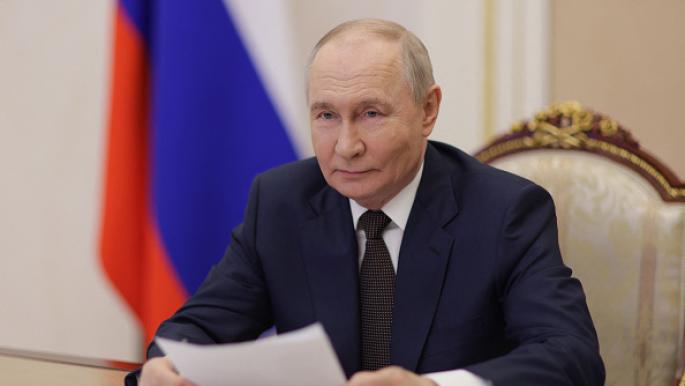
Russian President Vladimir Putin has announced his country's openness towards European nations, emphasizing that relations have not been severed despite the ongoing conflict in Ukraine. These statements come at a time when the world is experiencing heightened tensions due to the war, raising questions about the future of Russian-European relations.
During remarks made at a press conference, Putin confirmed that Russia is ready for dialogue with European countries, indicating that there are opportunities for cooperation despite current challenges. He clarified that his country does not seek to sever ties but hopes to rebuild communication bridges with European nations adversely affected by recent events.
Details of the Event
Putin's statements come at a sensitive time, as Russian forces continue their military operations in Ukraine, leading to strict economic sanctions imposed by Western nations. Nevertheless, it appears that the Kremlin is attempting to restore some of the relationships that have been damaged due to the conflict. Putin pointed out that Russia remains open to dialogue and that there is potential for rapprochement in the future.
In a related context, Putin affirmed that his country does not oppose cooperation with European nations in various fields, such as energy and trade. He expressed cautious optimism regarding the possibility of improving relations, stating that dialogue is the only way to resolve disputes.
Background & Context
The history of Russian-European relations has seen numerous fluctuations, with periods of close cooperation and others of intense tension. Since the onset of the conflict in Ukraine in 2014, relations have deteriorated significantly, resulting in economic sanctions against Russia. However, many European countries still rely on Russian energy, making dialogue an economic necessity.
Many analysts believe that Putin's statements reflect Russia's desire to improve its international image, especially amid increasing economic pressures. Additionally, there are calls from some European countries to resume dialogue with Russia, despite concerns about escalating the conflict.
Impact & Consequences
If Russia continues to open communication channels with European nations, this could lead to a de-escalation of tensions in the region. However, the resumption of relations largely depends on developments in Ukraine. Any progress in negotiations could contribute to easing the sanctions imposed on Russia, which may have a positive impact on the Russian economy.
On the other hand, any rapprochement could provoke mixed reactions within European countries, as there is concern that some nations may move towards normalizing relations with Russia while the conflict is still ongoing. This situation could lead to divisions within the European Union regarding how to handle Russia.
Regional Significance
The impact of these statements may extend to the Arab region, where many Arab countries maintain strategic relations with both Russia and Western nations. Any improvement in Russian-European relations could contribute to changing regional dynamics, especially in the fields of energy and security.
There is also a growing Arab interest in cooperating with Russia in various sectors, such as energy and trade. Therefore, any changes in Russian-European relations may influence Arab policies towards Russia, necessitating close monitoring of upcoming developments.
In conclusion, under the current circumstances, Russian-European relations remain uncertain, but Putin's statements reflect a desire for dialogue and cooperation. The future will determine whether these statements will translate into practical steps towards improving relations.