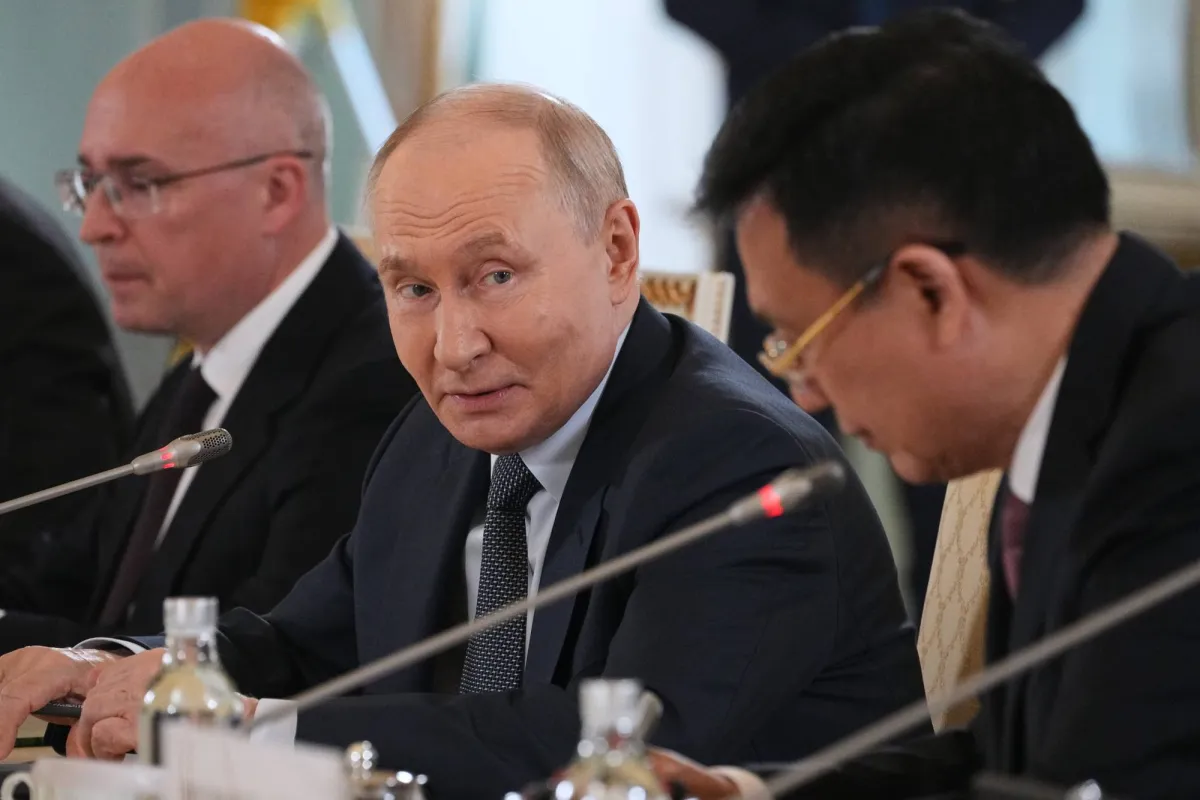
Russian President Vladimir Putin, during a conversation with a group of foreign journalists in St. Petersburg, confirmed that the United States has diverted its attention from ending the war in Ukraine since it launched a war against Iran in late February alongside Israel.
Putin noted that Russia enjoys a relationship of trust with Iran, which qualifies it to assist in resolving the Iranian crisis, according to reports from Reuters.
Details of the Situation
Putin's statements come at a time when the situation in Iran is witnessing increasing tensions, as Mostafa Khamenei, the new Iranian leader, has not appeared publicly since his appointment in March, raising questions about his health and actual authority. Reports indicate that Khamenei has begun to play a more active role in governance and negotiations.
In a related context, U.S. President Donald Trump asserted that Khamenei is "fully engaged" in political affairs after previously questioning whether he was alive. U.S. Secretary of State Marco Rubio also pointed to "indicators" suggesting Khamenei's increased involvement in governance.
Context and Background
Since Mostafa Khamenei assumed the position of leader following his father's death, he has issued several written statements, the latest being a strongly worded message against the "malevolent enemy" on the anniversary of the death of the regime's founding leader, Khomeini. Despite his absence from public events, Iranian authorities are attempting to keep Mostafa Khamenei present in the minds of Iranians.
The power structure in Iran is complex, with experts believing that Mostafa Khamenei needs time to consolidate his authority, especially with the presence of an unofficial committee comprising leaders from the Revolutionary Guard and prominent political figures, making the power more fragmented compared to his father's era.
Implications and Effects
In light of these circumstances, Tehran has insisted on linking any understanding with Washington regarding a ceasefire in the region to halting fighting on the Lebanese front. The Revolutionary Guard has confirmed that its primary condition for accepting a ceasefire is the end of military operations on all fronts, including Lebanon.
These statements come at a time when the security situation in the region is undergoing increasing tests, complicating negotiations between Iran and the United States. The Iranian Foreign Minister indicated that any attack on Beirut would have serious repercussions.
Impact on the Arab Region
Concerns are growing that tensions between Iran and the United States could lead to greater escalation in the region, potentially affecting the stability of neighboring Arab countries. Additionally, any escalation in Lebanon or the Gulf could undermine the fragile negotiating path between the two sides.
Ultimately, the situations in Iran and the Middle East remain volatile, as both Trump and Putin seek to achieve their objectives under complex circumstances, making the region susceptible to further tensions and conflicts.