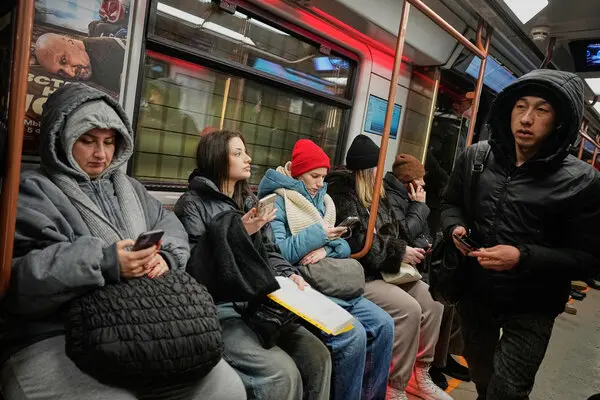
In a concerning development, Russian President Vladimir Putin has taken bold steps to control communications in Russia, as the capital city of Moscow experienced a complete disruption of mobile data services in vital areas. This disruption, which lasted for several days, has raised significant fears that Putin may seek to isolate Russians from the outside world more than previously anticipated.
When a fire broke out in a shopping center near the Kremlin, a local news channel sent a reporter via the Telegram app to cover the event. However, the reporter faced a major issue, as mobile data services were entirely disabled, forcing him to call the channel's landline to describe what was happening, stating: "Three fire trucks, two ambulances, and many people running."
Details of the Incident
These disruptions come at a sensitive time, as Russian authorities increasingly use new technologies as a pretext to enhance control over the internet. In recent weeks, Russians have faced two simultaneous disruptions; the first involved cutting mobile internet services in certain areas, while the second was the blocking of more foreign applications used by millions.
These steps are considered part of a broader strategy aimed at strengthening government control over information and shaping public opinion, especially under the current circumstances the country is facing.
Background & Context
Historically, Russia has always been under strict government control over media and communications. Since Putin came to power, the country has witnessed a notable decline in freedom of expression, with stringent restrictions imposed on independent journalism and media outlets. In recent years, amid rising international tensions, the government has intensified its efforts to control the information available to the public.
This trend aligns with what is happening in other countries, where governments seek to control the flow of information, particularly in times of crisis. However, Russian measures represent a more extreme step, aiming to cut citizens off from external information.
Impact & Consequences
These measures raise questions about the future of freedom of expression in Russia. If the government continues to enhance its control over the internet, it could exacerbate the state of repression and create a more restrictive environment for journalism and citizens. Additionally, cutting Russians off from the outside world may lead to the spread of misinformation and increased social division.
On the other hand, these steps could provoke backlash, as they may increase citizens' desire to seek information from external sources, thereby boosting the use of virtual private networks (VPNs) and other means to circumvent imposed restrictions.
Regional Significance
These developments indicate that Arab countries need to be cautious in dealing with issues of freedom of expression and human rights. Amid the political and economic crises faced by some Arab nations, governments may exploit these circumstances to enhance control over information, threatening freedom of expression in the region.
Ultimately, the events in Russia serve as a warning to other countries about the dangers of government control over information and the importance of maintaining freedom of expression as a fundamental human right.