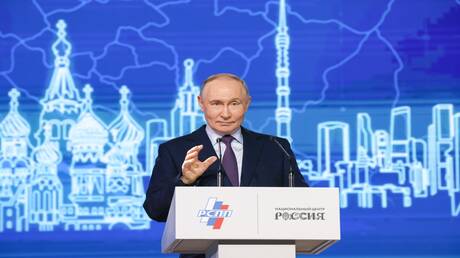
Russian President Vladimir Putin has urged Russian companies to exercise caution and refrain from excessive spending of the additional profits generated from rising energy prices. These statements come at a time when global markets are experiencing significant fluctuations, necessitating that companies make well-considered financial decisions.
During a meeting with representatives from the economic sector, Putin emphasized that the current situation requires Russian companies to avoid rushing into spending their profits, and instead, they should consider investing them wisely. He pointed out that these additional profits should be used to support the national economy and enhance financial stability.
Details of the Event
Putin's comments come at a time when energy prices have seen a notable increase, contributing to higher profits for Russian companies, particularly in the oil and gas sector. This increase has bolstered government revenues; however, the Russian president warned that these conditions may not last long, prompting the need for precautionary measures.
Putin also noted that some companies might be tempted to spend these profits on new projects or raise salaries, but he stressed the importance of considering the potential consequences of such decisions. He affirmed that wisdom in managing these profits will help strengthen the Russian economy in the future.
Background & Context
Russia is facing significant economic challenges due to Western sanctions imposed as a result of the conflict in Ukraine. These sanctions have limited access to global financial markets, pushing the Russian government to rely more heavily on the energy sector as a primary source of revenue.
Although rising energy prices have recently contributed to bolstering the Russian economy, forecasts indicate that these prices may experience fluctuations in the near future. Therefore, the warnings issued by Putin come as part of preparations to address any potential economic crises.
Impact & Consequences
Putin's statements may influence Russian companies' decisions on how to manage their profits, potentially leading to changes in investment strategies. If companies respond cautiously to these calls, the Russian economy may be able to enhance its stability during challenging times.
Additionally, these warnings could affect economic relations between Russia and other countries, as the Russian government seeks to strengthen cooperation with its trade partners under current circumstances. This may lead to changes in foreign investment policies in Russia.
Regional Significance
Energy prices are a key factor affecting the Arab economy, as many Arab countries rely on oil and gas exports as a primary source of revenue. Consequently, rising energy prices could have positive effects on the economies of these countries.
However, price fluctuations may lead to new challenges, requiring Arab nations to consider diversifying their economies and reducing dependence on oil. Furthermore, the Russian warnings may reflect the necessity for Arab countries to take precautionary measures to face any future economic crises.
In conclusion, Putin's warnings serve as a call to think about how to manage financial resources wisely, which could have wide-ranging effects on both the Russian and international economies in the future.