Russian President Vladimir Putin has warned that the U.S.-Israeli war on Iran could act as a new "COVID-19" that strikes at the core of the global economy. This statement was made during his address to business leaders in Moscow, where he pointed out that the conflict in the Middle East is causing significant damage to vital sectors such as logistics, production, and supply chains.
Putin emphasized that the current situation makes it difficult to predict the consequences, adding, "It seems to me that the parties involved in the conflict cannot foresee anything themselves, but it is harder for us." These remarks come at a time when global markets are experiencing increasing disruptions due to the ongoing conflict.
Details of the Event
In a related context, Russia has warned of a potential "nuclear disaster" that could arise from the crisis in the Middle East. Maria Zakharova, the spokesperson for the Russian Foreign Ministry, stated that negotiations are the only rational way to resolve this crisis. Zakharova described negotiations with Iran regarding its nuclear program as a cover for the United States to exploit its attacks against Iran.
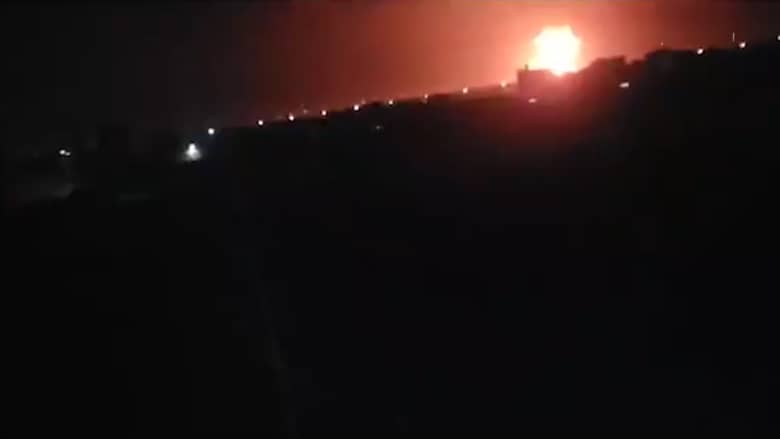
Since February 28, the region has witnessed a military escalation between an Israeli-American alliance and Iran, resulting in hundreds of casualties, including security officials and leaders. Iran has responded to these attacks by launching missiles and drones towards Israel, targeting what it describes as "American sites and interests" in Arab countries.
Background & Context
The roots of the current conflict trace back to ongoing tensions between Iran and the United States, which escalated after Washington's withdrawal from the nuclear agreement in 2018. Since then, relations between Iran and Western countries have taken a turn for the worse, leading to mutual military escalation. Additionally, new alliances in the region, including cooperation between Israel and Arab states, have complicated the situation further.
This war is seen as part of a broader struggle in the Middle East, where economic and political interests intersect. These tensions have impacted global oil markets, with prices rising significantly due to concerns over supply disruptions.
Impact & Consequences
Estimates suggest that the war on Iran could exacerbate global economic crises, as international supply chains are under immense pressure. Companies operating in the oil, gas, minerals, and fertilizers sectors are facing significant challenges due to the conflict.
These crises are expected to affect the prices of essential commodities, potentially leading to increased inflation in many countries, especially those reliant on imports. Furthermore, the economic impacts may extend to financial markets, increasing uncertainty in the global economy.
Regional Significance
Arab countries are directly affected by the military escalation in the Middle East, with some nations suffering from the repercussions of Iranian attacks on American interests. The targeted countries have condemned these attacks, calling for their immediate cessation, reflecting the growing concern over rising violence in the region.
These events serve as a test for regional and international policies, as Arab nations seek to achieve stability amid changing circumstances. Dialogue and negotiations may be the only way to avoid further escalation.
In conclusion, the situation in the Middle East remains complex, with economic and political dimensions heavily intertwined. The statements and warnings from leaders of major countries, such as Putin, reflect the increasing concern over the implications of the conflict, necessitating urgent action from the international community.