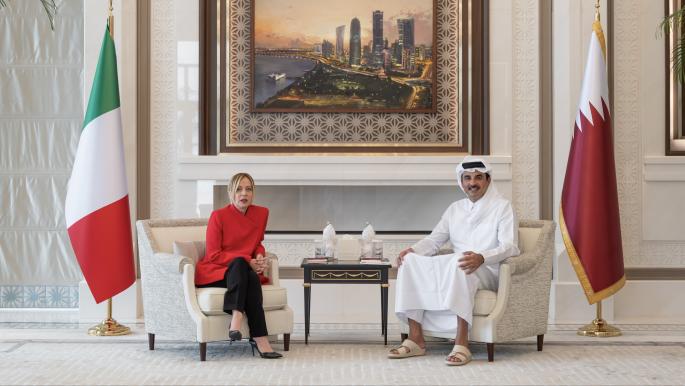
During a meeting in Doha on Saturday, Qatar's Emir Sheikh Tamim bin Hamad Al Thani and Italian Prime Minister Giorgia Meloni stressed the importance of de-escalation in the region amid current tensions. The discussions focused on regional developments and their impact on security and stability.
This visit comes at a sensitive time for the region, where tensions are rising due to ongoing conflicts and wars affecting many countries. Both parties expressed their concern over military escalation and its impact on civilians, emphasizing the need for dialogue and understanding to resolve disputes.
Details of the Meeting
The meeting took place in Doha, where the Emir of Qatar received the Italian Prime Minister as part of efforts to enhance bilateral relations between the two countries. The discussions covered a range of regional and international issues, including the situation in the Middle East and its effects on regional security.
Additionally, ways to cooperate between Qatar and Italy in various fields, including economics and energy, were explored. Meloni highlighted the important role Qatar plays in promoting stability in the region and called for further cooperation among nations to achieve peace.
Background & Context
Historically, Qatar and Italy have enjoyed strong relations, with both countries seeking to enhance cooperation in multiple areas. In recent years, there has been an increase in regional tensions, making it essential for major powers to collaborate to achieve stability.
Italy is one of the European countries aiming to play a larger role in foreign policy, particularly in the Middle East. The Italian government has shown significant interest in cooperating with Arab nations in the fields of security and energy.
Impact & Consequences
The continuation of tensions in the region could negatively impact food and economic security, reflecting on the lives of civilians. Wars and conflicts may exacerbate humanitarian crises, necessitating international intervention.
Calls for de-escalation from international leaders are a positive step; however, achieving peace requires ongoing efforts and effective cooperation among all parties involved. Dialogue remains the only way to achieve lasting stability in the region.
Regional Significance
The situation in the region directly affects Arab countries, many of which suffer from internal and external conflicts. Calls for de-escalation reflect the desire of Arab nations to achieve security and stability, which requires concerted international efforts.
Amid the multiple crises facing the region, hope remains pinned on diplomacy and dialogue as a means to resolve disputes, contributing to improving humanitarian and economic conditions.