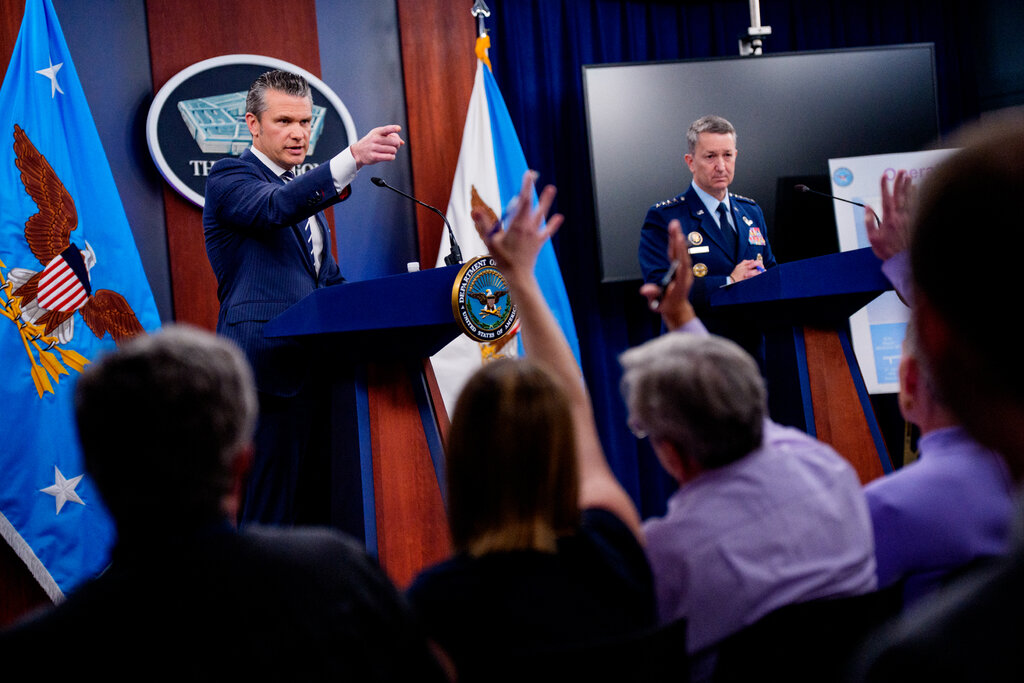
A report by the Financial Times reveals that U.S. Defense Secretary Peter Hegseth's financial intermediary was seeking to purchase a defense investment fund prior to the Iranian attack. This news raises questions about the timing and intent behind these investments, especially amid escalating tensions between the United States and Iran.
This information comes at a sensitive time, as fears grow over the escalation of hostilities in the Middle East. The recent Iranian attack, which targeted U.S. interests, could have far-reaching implications for U.S. defense strategies in the region.
Details of the Event
According to the report, Hegseth's financial intermediary was planning to invest in a defense fund before the attack occurred, raising questions about whether this move was linked to expectations of rising tensions. The Iranian attack, which occurred when relations between the two countries were at their lowest, may reflect a shift in U.S. military strategies.
This type of investment could have significant market impacts, as investors prepare for new forecasts regarding defense spending. At the same time, this raises concerns about conflicts of interest, particularly if the Secretary was aware of sensitive information regarding the security situation.
Background & Context
Historically, relations between the United States and Iran have been tense since the Iranian Revolution in 1979. Since then, the region has witnessed numerous crises, including wars and armed conflicts. The recent attack reflects the continuation of these tensions, placing the United States in a sensitive position that requires a swift and effective response.
In recent years, the United States has taken steps to strengthen its military presence in the region, including increasing defense spending. This coincides with rising threats from Iran, which seeks to enhance its influence in the region by supporting armed groups.
Impact & Consequences
These events could lead to significant changes in U.S. defense policies, potentially prompting the U.S. administration to bolster its military presence in the region. Additionally, these investments may affect financial markets, as investors anticipate an increase in defense spending.
Furthermore, these developments could escalate tensions between the United States and Iran, negatively impacting regional security. If these tensions persist, we may witness greater military escalation, complicating the situation in the region.
Regional Significance
The U.S.-Iranian relations directly impact Arab countries, many of which view Iran as a threat to their security. The escalation of tensions between the U.S. and Iran could lead to increased divisions in the region, affecting political and economic stability.
Moreover, any military escalation could result in severe humanitarian consequences, potentially causing mass displacement of populations and increasing humanitarian crises. Therefore, it is crucial for Arab countries to remain vigilant regarding these developments and work to enhance their internal stability.