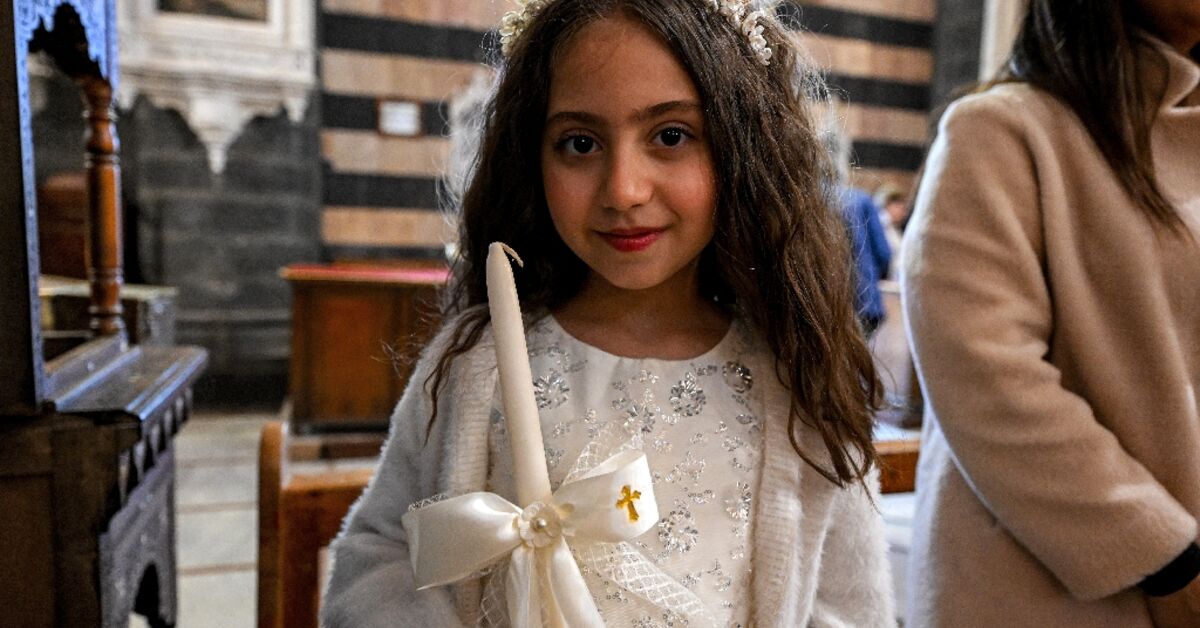
In a somber and painful atmosphere, worshippers celebrated Palm Sunday at a Greek Catholic church in the Syrian capital, Damascus. The churches in the city decided to limit the celebrations to prayers only, following the violent events that occurred in the town of Souk al-Gharb, one of the largest Christian communities in central Syria.
On Friday night, Souk al-Gharb was subjected to attacks that included shop vandalism and vehicle arson, causing panic and fear among the town's residents. In the capital, 37-year-old engineer Fadi Shamas carried his daughter Nala, who wore a white dress, reflecting a spirit of hope despite the difficult circumstances.
Details of the Incident
These events come at a highly sensitive time for the Christian community in Syria, which is facing multiple pressures due to the ongoing conflict in the country. Souk al-Gharb represents one of the large Christian communities that have maintained their traditions despite the challenges. The churches in Damascus decided that this year's Palm Sunday celebration would be different, limiting activities to prayers only as a sign of mourning and solidarity with those affected by the attacks.
These attacks are part of a series of incidents that have occurred in Christian areas of Syria, where residents sometimes face assaults from extremist groups. These events have raised significant concern among Christians in the country, who fear for their future in their homeland.
Background & Context
Historically, Christian communities in Syria have suffered from marginalization and persecution, especially during the conflict that erupted in 2011. As violence escalated, many Christians were displaced from their traditional areas, leading to a significant decline in their numbers. Nevertheless, some communities, such as Souk al-Gharb, continue to maintain their presence and traditions.
Souk al-Gharb is seen as a symbol of resilience, housing many churches and schools that reflect a long history of coexistence among different sects. However, the recent attacks indicate a rise in tensions in the region, threatening the stability of the Christian community.
Impact & Consequences
The recent events suggest that the security situation in Syria remains fragile, and Christian communities may face greater challenges in the future. These attacks could lead to increased emigration, as many Christians seek safe havens away from violence.
Moreover, these events may affect relations between different sects in Syria, potentially increasing divisions and fueling feelings of fear and anxiety. Under these circumstances, it becomes essential to promote dialogue and understanding among all components of Syrian society to ensure a safe and stable future for everyone.
Regional Significance
The events in Syria exemplify the challenges facing Christian communities in the Arab region as a whole. Many countries are suffering from internal conflicts that affect peaceful coexistence among sects. The incidents in Souk al-Gharb may raise awareness about the necessity of protecting the rights of religious minorities in the Arab world.
In conclusion, the events in Souk al-Gharb serve as a painful reminder of the challenges facing Christian communities in Syria and highlight the need for both international and local efforts to protect these communities and ensure their rights to live in peace and security.