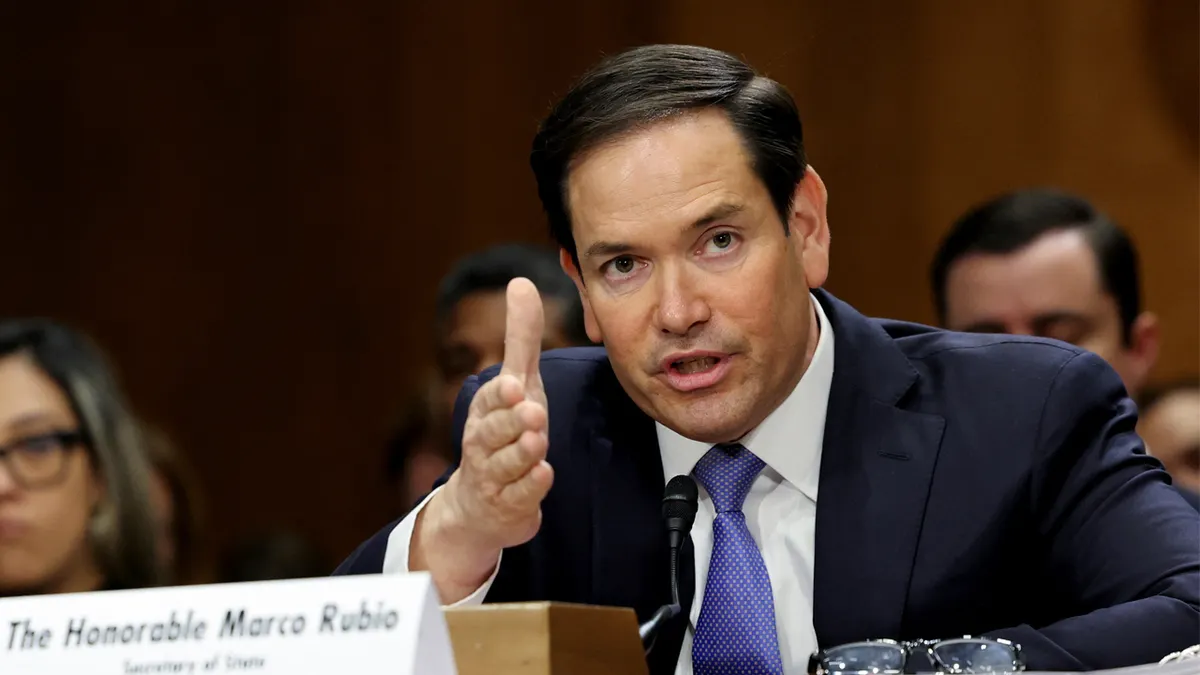
Concerns are growing over the absence of Marco Rubio, the U.S. Secretary of State, amid the Iranian war crisis, as observers note a significant decline in his role. At a time when tensions in the region are escalating, Rubio was expected to be at the forefront, yet he has chosen to stay out of the spotlight.
This absence comes at a critical juncture, as U.S.-Iran relations are increasingly strained, making it essential for the U.S. administration to have clear coordination and a rapid response. However, it appears that Rubio has not played a prominent role in managing this crisis, raising questions about the effectiveness of current leadership.
Details of the Situation
In light of the escalating events in Iran, it was anticipated that the U.S. Secretary of State would lead negotiations and international dialogues. However, reports indicate that Rubio has not attended any of the important meetings related to the crisis, which raises questions about his strategy and priorities during this critical phase.
Despite the fact that the U.S. administration under Donald Trump has taken decisive steps in dealing with Iran, Rubio's absence could weaken the United States' position on the international stage. The challenges facing the administration require strong and effective leadership, which seems to be lacking at present.
Background & Context
Historically, U.S.-Iran relations have been fraught with tensions and conflicts. Since the Iranian Revolution in 1979, relations between the two countries have significantly deteriorated. With rising tensions in recent years, it has become crucial for U.S. officials to coordinate effectively to address these crises.
The current geopolitical landscape necessitates a robust diplomatic approach, especially given the complexities of the Iranian situation. The absence of a strong voice in U.S. foreign policy could lead to missed opportunities for negotiation and resolution.
Impact & Consequences
Rubio's absence could have negative implications for U.S. foreign policy. Increasing tensions with Iran may lead to an escalation of the situation, necessitating strong leadership to navigate these challenges. The lack of a powerful American voice at this time could undermine the United States' position in future negotiations.
Furthermore, the absence of clear leadership may cause uncertainty among U.S. allies in the region, who may feel anxious about the U.S. commitment to their security and stability. This could lead to a ripple effect, impacting regional alliances and security dynamics.
Regional Significance
The implications of Rubio's absence extend beyond U.S. borders, potentially affecting the broader Middle East landscape. Arab nations may grow increasingly concerned about the U.S. response to Iranian aggression, which could influence their own security policies and alignments.
In conclusion, the current situation highlights the importance of effective leadership in U.S. foreign policy, especially during international crises. The absence of key figures like Rubio raises critical questions about the direction and priorities of U.S. diplomacy in a volatile region.