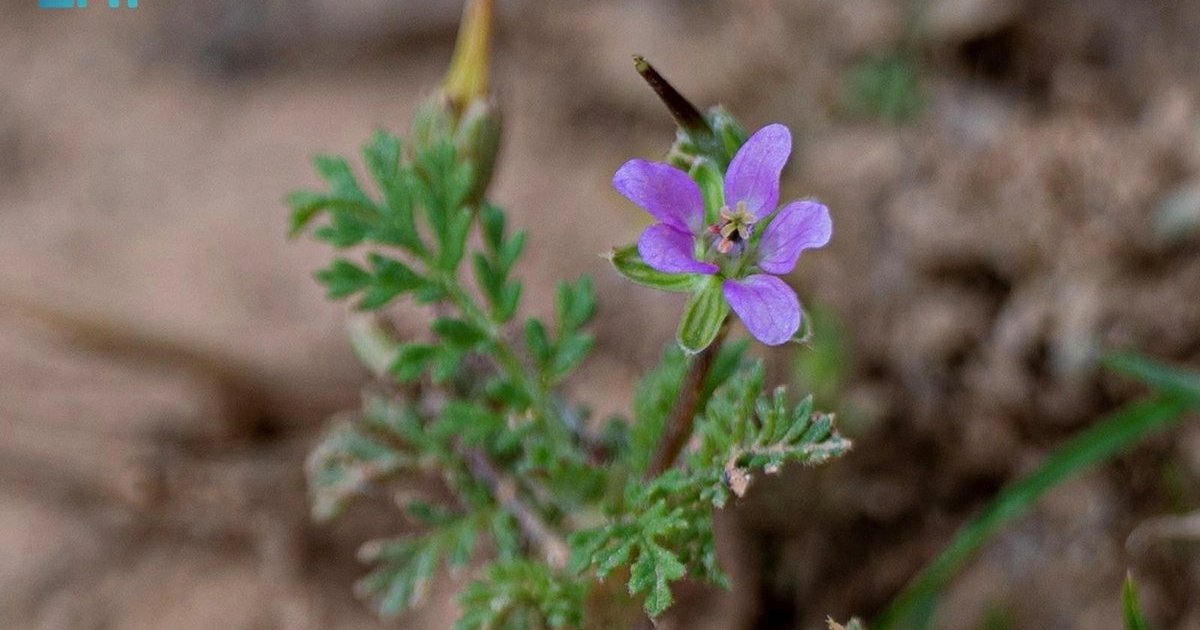
The northern borders of Saudi Arabia have witnessed a rare return of the Roemeria plant, thanks to improved climatic conditions and rainfall that fostered the growth of various seasonal wild plants. This plant, scientifically known as Roemeria, highlights the natural landscape that showcases the Kingdom's efforts in renewing the desert environment, especially during the spring season.
The Roemeria plant is considered an annual herbaceous plant, characterized by its soft and flexible stems, allowing it to adapt to harsh climatic conditions and water scarcity. It belongs to the poppy family and is distinguished by its vibrant purple flowers, fine seeds, and delicate leaves.
Event Details
The rainfall experienced in the region contributes to the growth of other wild plants, enhancing the beauty of the natural landscapes. These plants are expected to continue spreading in the coming period as favorable climatic conditions persist, increasing the ecological and tourist appeal of the area.
The return of the Roemeria plant is a positive sign of life restoration in desert areas, demonstrating nature's ability to recover and adapt to climatic changes. This plant plays a vital ecological role in stabilizing the soil and contributing to the sustainability of the local ecosystem.
Background & Context
Historically, desert areas in the Kingdom have suffered from a lack of biodiversity due to harsh climatic conditions. However, the Kingdom's efforts to preserve the environment and restore wildlife have begun to bear fruit, with numerous environmental initiatives aimed at enhancing biodiversity.
These natural phenomena are part of broader efforts to preserve the environment, as the Kingdom seeks to achieve sustainable development goals. The emergence of plants like Roemeria illustrates how nature can recover when provided with the right conditions.
Impact & Consequences
The appearance of the Roemeria plant in the northern borders is an indicator of the success of environmental efforts, contributing to the enhancement of eco-tourism in the region. This can lead to increased awareness of the importance of environmental conservation and support for sustainable tourism activities.
Moreover, the restoration of wildlife in desert areas can have a positive impact on local communities, as it can improve livelihoods through eco-tourism and sustainable agriculture.
Regional Significance
This phenomenon serves as a model for other Arab countries facing similar environmental challenges. The Kingdom's efforts in restoring biodiversity can inspire neighboring countries to adopt similar strategies to preserve their natural environments.
In conclusion, the return of the Roemeria plant demonstrates how positive climatic changes can make a significant difference in the environment, reflecting the importance of collaborative efforts to preserve nature and enhance biodiversity worldwide.