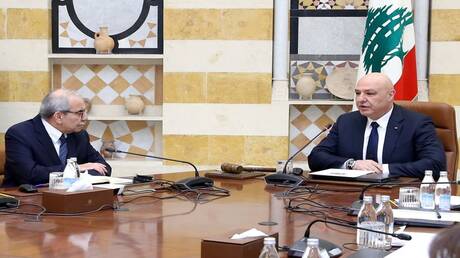
Lebanese President Joseph Aoun and Prime Minister Nawaf Salam reaffirmed the state's steadfast position in preserving national sovereignty and rejecting any threats to civil peace. These statements come at a time when the country is witnessing a surge in political and economic crises, exacerbating internal tensions.
In the current circumstances, Aoun and Salam indicated that any hand reaching out to destabilize the situation will be cut off, reflecting the government's determination to confront challenges threatening civil peace. These remarks come at a sensitive time, as Lebanon grapples with multiple crises, including economic collapse, deterioration of public services, and rampant corruption.
Details of the Event
During a joint press conference, Aoun and Salam stressed the necessity of maintaining national unity in the face of challenges. Aoun clarified that the state would not tolerate any threats that could lead to the disintegration of the social fabric. For his part, Salam emphasized the importance of dialogue as a means to resolve crises, but added that dialogue should not come at the expense of national sovereignty.
These statements come at a time when public pressure on the government is increasing, with citizens demanding radical reforms to address the worsening crises. Recently, the country has witnessed protests calling for improvements in living conditions, further intensifying pressure on the government.
Background & Context
Lebanon has been suffering for several years from accumulated economic and political crises, witnessing an unprecedented economic collapse. The depreciation of the Lebanese pound, rising unemployment rates, and the spread of poverty are all factors that have fueled popular protests. Additionally, the political division among various forces in the country has complicated the situation.
Historically, Lebanon has experienced periods of relative stability, but recurring political and economic crises have led to deteriorating conditions. In recent years, tensions among different political factions have escalated, negatively impacting social stability.
Impact & Consequences
Aoun and Salam's statements underscore the importance of maintaining civil peace under the current circumstances. Any escalation in crises could exacerbate the situation, threatening stability in the country. Moreover, any attempt to undermine civil peace could have dire consequences, not only locally but also regionally.
The Lebanese government seeks to enhance trust among citizens, but the significant challenges it faces may affect its ability to achieve that. If the crises persist, we may witness an escalation in protests, complicating the political landscape further.
Regional Significance
The situation in Lebanon serves as an indicator of the challenges faced by many Arab countries. Economic and political crises are not phenomena confined to Lebanon but extend to other countries in the region. Under these circumstances, the importance of cooperation among Arab nations to enhance stability and development becomes evident.
Experiences from other Arab countries in facing crises may provide valuable lessons for Lebanon. It is essential for the Lebanese government to adopt effective strategies to address challenges, including enhancing national dialogue and implementing economic reforms.
In conclusion, the situation in Lebanon remains under scrutiny, as citizens look forward to tangible steps from the government to improve conditions. The firm statements from Aoun and Salam reflect the state's commitment to maintaining civil peace, but challenges persist and require effective responses.