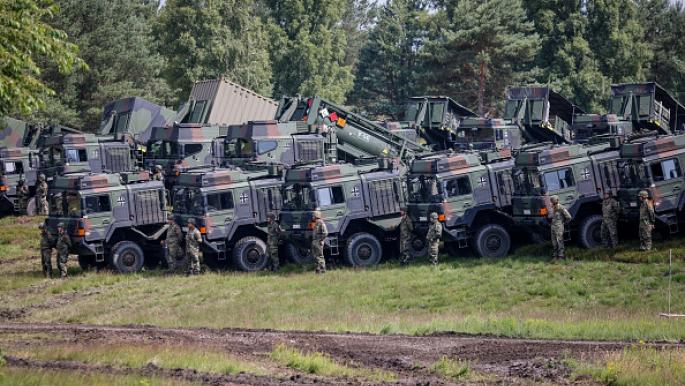
Europe is currently witnessing an unprecedented phase of rearmament, considered the widest since the end of the Cold War. Plans to enhance military capabilities are accelerating across many European countries, reflecting a radical change in defense strategies. However, this shift is accompanied by deep disagreements among nations regarding how to manage these military ambitions.
Security concerns in Europe are increasing due to multiple geopolitical crises, ranging from the conflict in Ukraine to rising tensions with Russia. In this context, European countries are seeking to bolster their military capabilities by increasing defense spending and modernizing weapons. However, these efforts face significant challenges due to differences in national interests.
Details of the Event
Countries such as Germany, France, and the UK are striving to enhance their military cooperation in the face of common threats. However, these nations differ in their priorities and strategies. For instance, while Germany focuses on strengthening its traditional defense capabilities, France aims to develop advanced military capabilities that include modern technology.
These disagreements are evident in the regular meetings of European leaders, where discussions revolve around how to allocate military resources and cooperate in defense matters. These discussions often reveal tensions between countries seeking to enhance their military independence and those preferring close cooperation within the framework of NATO.
Background & Context
The roots of these disagreements trace back to a long history of cooperation and competition among European nations. After the Cold War, the European continent experienced a period of relative stability, but recent events have resurfaced security concerns. The conflict in Ukraine has had a significant impact on European defense policies, prompting many countries to reassess their military strategies.
Historically, Europe has relied heavily on the United States for defense, but recent geopolitical changes have pushed European nations to seek greater autonomy in security and defense. This shift reflects the desire of European countries to enhance their military capabilities without complete reliance on traditional allies.
Impact & Consequences
These disagreements could lead to negative effects on European security. If consensus is not reached among countries regarding defense strategies, tensions may escalate among EU member states. Additionally, lack of coordination could weaken Europe’s ability to effectively confront external threats.
Moreover, competition among European nations in the field of armament may lead to increased military spending, which could impact social and economic budgets. In this context, European countries must consider how to balance the enhancement of military capabilities with the need to maintain economic and social stability.
Regional Significance
The Arab region is also affected by changes in European defense policies. Increased armament in Europe may lead to shifts in the balance of power in the region, as some Arab countries may seek to enhance their military capabilities to face potential threats. Furthermore, tensions among European nations could affect relations with Arab countries, particularly in the areas of security and defense cooperation.
Ultimately, the current situation in Europe requires a coordinated and effective response from member states. European nations should strive to overcome their differences and focus on enhancing security cooperation to ensure the continent's stability in the face of future challenges.