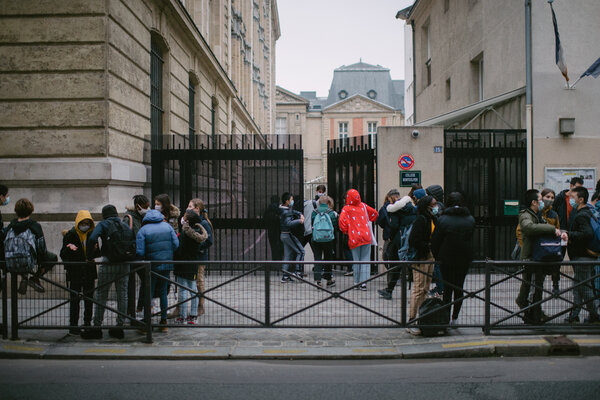
The French capital, Paris, is experiencing an escalating crisis in its after-school education system, a situation that has arisen from long-term changes in the educational framework. For over a year, schools have faced significant challenges in adapting to new school hours, prompting the Ministry of Education to rely on the private sector for after-school educational services.
This move is seen as a reaction to the increasing pressures on schools, yet it raises questions about the effectiveness of this system, as the private sector is not directly supervised by the Ministry of Education but relies on local authorities, leading to disparities in the quality of services provided.
Details of the Current Situation
The current crisis in after-school education in Paris is not new; it is a result of structural changes within the French educational system. Since the introduction of new school hours, schools have struggled to provide educational and recreational activities for students after official school hours. This situation has led to a greater reliance on private education service providers, who often lack adequate oversight.
The problem is evident in the absence of standardized criteria governing this sector, contributing to chaos and significant differences in service quality. Many parents express concern over these institutions' inability to meet their children's educational and recreational needs.
Background & Context
Over the years, the French educational system has undergone radical changes, beginning with the introduction of new school hours aimed at enhancing the learning experience for students. However, these changes have not been accompanied by effective plans to support after-school education, leading to a worsening crisis in this sector.
Historically, after-school education relied on activities organized by the schools themselves, but with changing times, it has become necessary to seek alternatives. Nevertheless, the reliance on the private sector without sufficient oversight has exacerbated the situation rather than improving it.
Impact & Consequences
The current crisis in after-school education affects many social and economic aspects of French society. The lack of a suitable educational environment after school can lead to a decline in overall educational standards, impacting students' futures.
This crisis may also widen the gap between high-income and low-income families, as wealthier families can afford private education, while others struggle with a lack of available options.
Regional Significance
Paris's experience in managing after-school education serves as an important lesson for Arab countries facing similar challenges in their educational systems. These countries can benefit from studying how to manage after-school education and provide a suitable learning environment for all students.
In light of the challenges facing educational systems in the region, it is crucial to consider innovative solutions that ensure quality education for everyone, including after-school education.
In conclusion, it is clear that the after-school education crisis in Paris is not merely a local issue but a matter requiring international attention and cooperation among countries to develop more effective and inclusive educational systems.