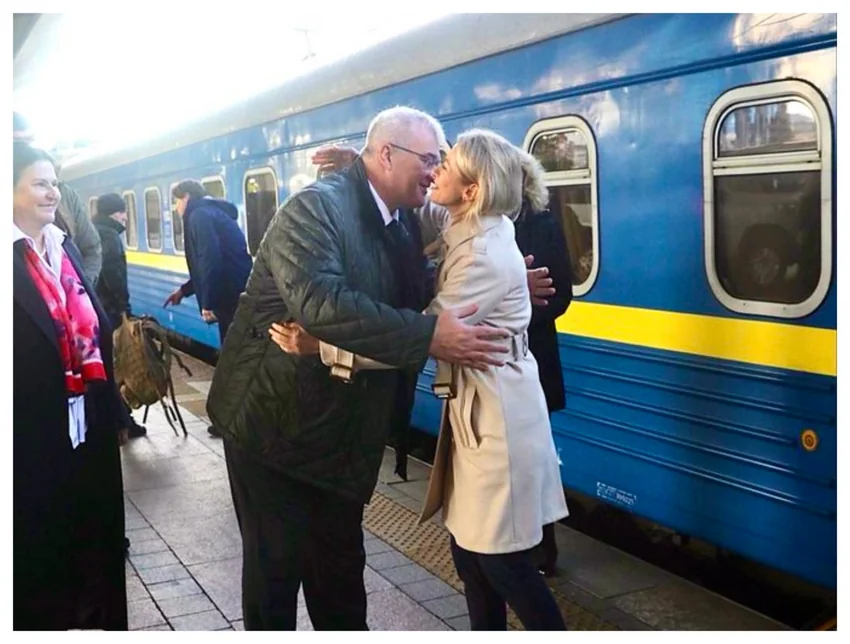
During her visit to the Ukrainian capital Kyiv, Estonia's Prime Minister Kaja Kallas asserted that the European Union must reconsider the possibility of utilizing Russian assets if Hungarian Prime Minister Viktor Orban continues to impose his veto on a €90 billion loan for Ukraine. These statements come at a critical time as Ukraine seeks the necessary financial support to address the economic challenges arising from the ongoing conflict with Russia.
Kallas pointed out that the continuation of Hungary's veto could complicate the EU's efforts to support Ukraine, necessitating consideration of alternative options such as frozen Russian assets. These assets represent a potential opportunity to enhance financial aid to Ukraine, especially given the difficult economic circumstances the country is facing.
Details of the Visit
During her visit, Kallas met with several Ukrainian officials, discussing ways to strengthen cooperation between the two countries in various fields, including economy and security. They also addressed the challenges Ukraine faces amid the ongoing war and the importance of European support during this critical phase.
These remarks come at a time when Orban faces criticism both domestically and internationally regarding his stance on the war in Ukraine, with many believing that his veto on the European loan hinders reconstruction efforts in Ukraine and exacerbates the suffering of the Ukrainian people.
Background & Context
Since the onset of the Russian-Ukrainian conflict, European countries have been on alert to provide support to Ukraine, with substantial amounts allocated for financial and military aid. However, Hungary's position under Orban has raised questions about the unity of the European stance towards the crisis. In recent years, Hungary has taken positions that conflict with European policies, leading to tensions with some EU member states.
Historically, relations between Hungary and Ukraine have been strained, particularly due to issues concerning Hungarian minorities in Ukraine. However, the current situation requires all European countries to cooperate more closely to support Ukraine in facing the challenges it encounters.
Impact & Consequences
If Hungary's veto continues, it could exacerbate the economic situation in Ukraine, increasing pressure on the Ukrainian government. Additionally, the use of frozen Russian assets could open a new avenue for tensions between European countries and Russia, as Russia may view this action as an infringement on its sovereignty.
On the other hand, this situation could deepen divisions within the European Union, revealing disagreements among member states on how to handle crises. This could affect the EU's ability to make unified and effective decisions in the future.
Regional Significance
Considering the situation in Ukraine and its impact on European security, Arab countries may find themselves in a position that requires them to reassess their relations with both Russia and Europe. Amid increasing crises, Arab nations may seek to enhance cooperation with European partners in security and economic fields.
Moreover, the developments in Ukraine could influence global energy prices, directly impacting oil-producing Arab countries. Therefore, monitoring these developments will be essential to understand how they may affect Arab interests in the future.