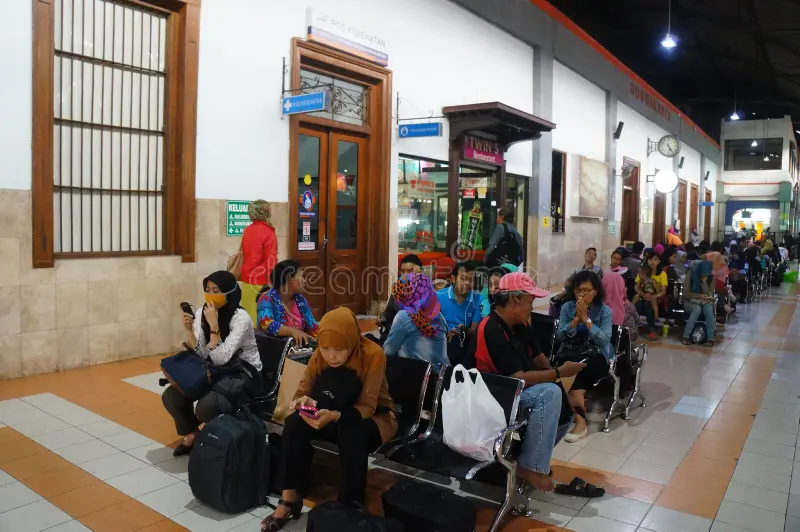
On Saturday, PT Kereta Api Indonesia reported the arrival of 52,961 passengers at Jakarta Station, marking a significant increase in transport activity after a period of decline due to the COVID-19 pandemic. These figures indicate a return to normal life in the country and a growing demand for public transport services.
This increase in passenger numbers comes at a time when Indonesia is witnessing improvements in its economic situation, as the country begins to ease restrictions imposed due to the pandemic. Reports have shown that many citizens have returned to using public transport as part of their daily routines.
Details of the Event
According to data released by PT Kereta Api Indonesia, this large number of passengers was recorded across various railway lines connecting Jakarta to neighboring cities. This revival in transport activity reflects the citizens' desire to travel and move freely after a long period of restrictions.
Company officials noted that this number represents a significant increase compared to previous months, during which transport activity had been severely affected by the pandemic's repercussions. Several measures have been taken to enhance transport services, including increasing the number of trains and providing more services for passengers.
Background & Context
Historically, railways in Indonesia are one of the most important means of transport, connecting major cities and facilitating the movement of goods and people. However, this industry was greatly affected during the COVID-19 pandemic, with passenger numbers plummeting due to travel restrictions.
Since the beginning of 2022, Indonesia has started to ease restrictions, leading to a gradual increase in transport activity. These measures have helped restore citizens' confidence in using public transport, resulting in increased demand for railway services.
Impact & Consequences
These figures are a positive indicator of the recovery of the Indonesian economy, suggesting that citizens are beginning to return to their normal lifestyles. Furthermore, increased transport activity also means heightened economic activity, which could contribute to the creation of more job opportunities.
Moreover, improving public transport services can help reduce traffic congestion in major cities, benefiting the environment and lowering carbon emissions. Thus, this development is an important step towards achieving sustainable development in Indonesia.
Regional Significance
While this news may seem relevant only to Indonesia, it has broader implications for the Arab region. As normal life returns in various countries worldwide, Arab nations are also expected to witness an increase in transport and tourism activity, especially with improving economic conditions.
Arab countries can benefit from Indonesia's positive experiences in enhancing public transport services, contributing to boosting local economies and attracting tourists. Additionally, cooperation between Arab nations and Indonesia in the fields of transport and tourism could open new avenues for development.
In conclusion, the figures recorded in Jakarta reflect a return to normalcy in Indonesia, heralding a brighter future for the economic and transport sectors. These trends are expected to continue growing, contributing to economic growth in the country.