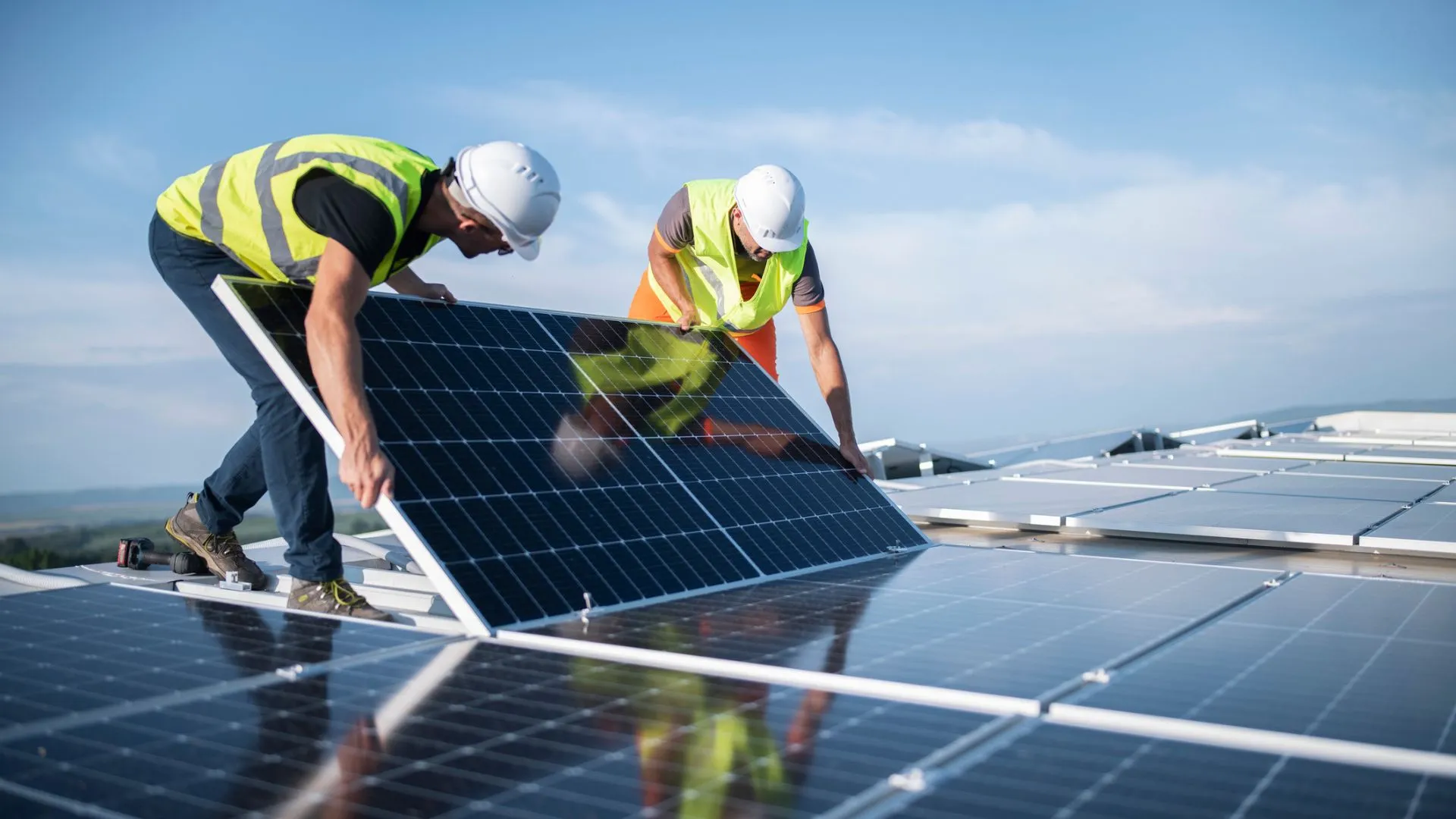
The United States is on track to record a historic production of clean energy this year, with expectations that these energy sources will constitute the vast majority of new additions, despite the opposing policies adopted by President Donald Trump's administration.
The annual report from the American Clean Power Association, released today, forecasts that the country's energy sector will add approximately 60 gigawatts of solar energy, battery storage, and wind power by 2026.
Details of the Event
This figure represents a 20% increase compared to last year’s achievements. The report noted that the association's forecasts are close to the upper limit of the range provided by reputable consulting firms such as BloombergNEF, Standard & Poor's Global, and Wood Mackenzie.
The report also indicates that the sector has not only increased its total capacity but has also injected $79 billion into new projects during 2025, contributing over $150 billion to the American economy and supporting more than 1.4 million jobs nationwide.
Background & Context
The report highlights that solar, wind, and energy storage projects accounted for 91% of the total new electrical capacity added to the American grid last year, with over 50 gigawatts of new supplies connected, enough to power approximately 7 million homes.
According to Bloomberg, many clean energy projects nearing completion began before President Trump returned to office in January 2025. Since then, the U.S. administration has taken steps to halt or slow the construction of solar and wind farms by terminating federal tax incentives and delaying the issuance of permits.
Impact & Consequences
Government officials in Washington have harshly criticized both wind and solar energy, describing renewable energy sources as reliant on government support, along with the need for additional infrastructure to compensate for electricity generation interruptions.
The impact of this expansion is not limited to states that traditionally lead the energy transition. The association states that the United States currently has 363 gigawatts of operational clean energy projects, generating about $3 billion annually in tax revenues for states and local authorities, in addition to $3.2 billion from land lease payments.
Regional Significance
This growth in clean energy in the United States serves as a model for Arab countries seeking to enhance their investments in renewable energy. With the rising demand for clean energy, Arab nations can leverage these global trends to develop their own projects.
In conclusion, the forecasts from the American Clean Power Association suggest that the increasing demand for electricity from artificial intelligence data centers may contribute to driving this growth, making clean energy one of the fastest and cheapest sources of new energy.