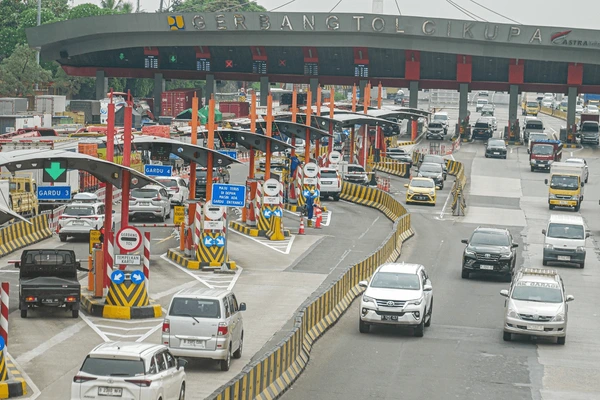
Astra Infra Group, through PT Marga Mandalasakti, recorded over 2.37 million vehicles on the Tangerang-Merak road during the Eid al-Fitr period of 1447 AH, which spans from March 11 to March 26, 2026. This number reflects the significant traffic observed on the road, with 2,371,042 vehicles recorded from 10 days before the holiday to 5 days after.
Oswaton Hasan, Head of the Corporate Social Responsibility and Public Relations Department at Astra, reported that the average daily traffic during this period reached 151,676 vehicles. Despite this large number, it represents a decrease of 2.5% compared to the same period last year, and a 3.8% decrease compared to the normal daily traffic rate.
Traffic Details
According to reports, entry and exit points on the road experienced varying traffic levels. For instance, the exit point at Secuba Road recorded 229,132 vehicles during the mentioned period, with a daily average of 57,246 vehicles, indicating an increase of 7% compared to the normal daily traffic rate, but a decrease of 7.7% compared to the same period last year.
As for traffic at the Merak Gate, 68,841 vehicles were recorded during the period from March 23 to March 26, 2026. On March 26 alone, the traffic volume reached 16,478 vehicles, representing a decrease of 15.1% compared to the same period last year, but showing an increase of 109.1% compared to the normal daily traffic rate.
Background & Context
The Eid al-Fitr period is one of the busiest times on the roads in Indonesia, as many people travel to meet their families and loved ones. This tradition reflects the importance of the holiday in Indonesian culture, where people seek to celebrate with their relatives after a month of fasting.
The Tangerang-Merak roads are among the main routes connecting the capital Jakarta to other regions, making them a vital hub for traffic. With the increasing population and rising traffic, the need for infrastructure improvement and road expansion becomes evident to meet the growing demand.
Impact & Consequences
The figures indicate that traffic during Eid al-Fitr was lower than expected, which may reflect several influences, including economic conditions or changes in travel habits. This decline could have implications for the transportation and logistics sector, as many businesses rely on traffic during this period to achieve profits.
Additionally, the decrease in traffic may contribute to reducing congestion and environmental pollution, which is positive in terms of improving air quality in urban areas. However, local authorities should consider these figures when planning for future years.
Regional Significance
Although the news pertains to Indonesia, it holds significant implications for Arab countries, where many cities face traffic congestion issues during holiday periods. The lessons learned from Indonesia's experience could aid in improving traffic management in Arab cities, especially with the increasing population.
In conclusion, traffic during holidays remains an important topic that requires careful planning and coordination among stakeholders to ensure traveler safety and enhance the travel experience.