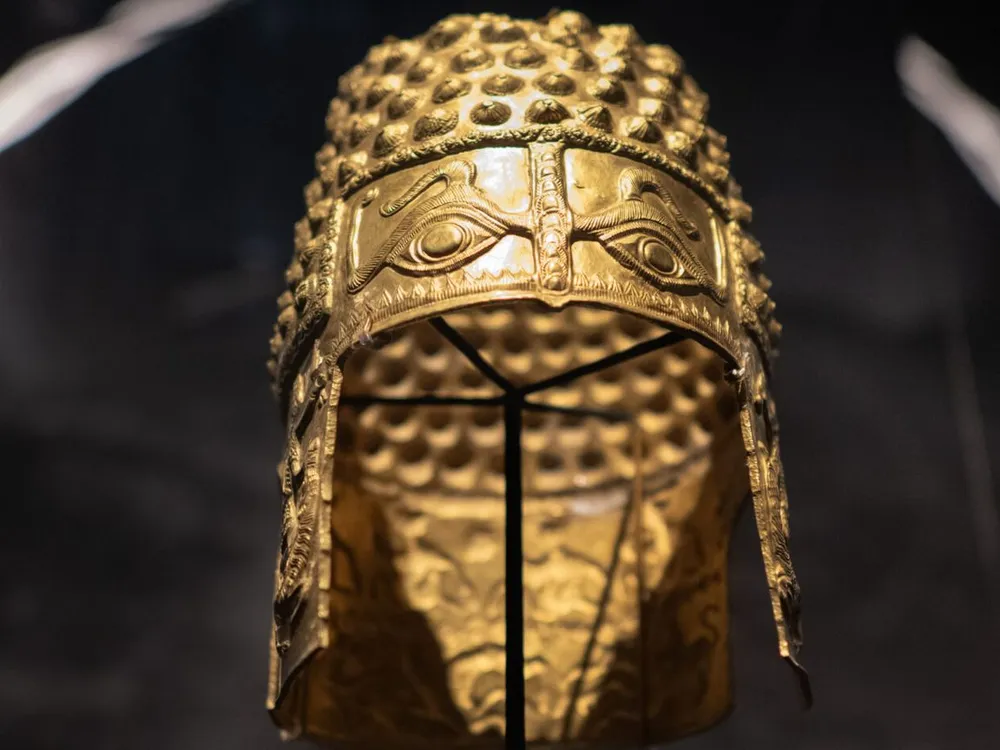
Dutch authorities have successfully recovered a 2,500-year-old gold helmet, considered one of the greatest Roman treasures, after more than a year since its theft during an armed robbery at the Drents Museum in the Netherlands. The helmet, along with two gold bracelets dating back to around 450 BC, was unveiled on Thursday, displayed behind protective glass under armed police guard.
The helmet and bracelets were stolen in January 2025 from the museum, sparking widespread outrage in Romania and raising questions about the safety of valuable artifacts loaned to other countries. Romanian prosecutor Daniela Buriana stated that the recovery of these artifacts was a long-awaited result, expressing her happiness at seeing these Romanian treasures return to their homeland.
Details of the Incident
The robbery at the Dutch museum was executed by an armed gang, who used explosives to breach the building. This incident strained relations between Romania and the Netherlands, as the Dutch government paid insurance compensation estimated at around €5.7 million, but Romanian officials did not clarify the fate of this money.
The director of the Drents Museum, Robert van Laanen, noted that the helmet had suffered some scratches but is repairable, while the bracelets remained in excellent condition. Romanian prosecutor Raiers-Petru Stan added that the theft had a significant impact in his country, praising the efforts of his Dutch colleagues in recovering these treasures.
Background & Context
The recovered artifacts date back to the Dacians, a civilization from the Iron Age in the region known today as Romania. These pieces were on loan from the National Museum of History in Romania, and their theft sparked a debate about the safety of loaned artifacts, especially amid a rise in museum robberies in the Netherlands.
In recent years, several Dutch museums have been targeted by thieves, increasing concerns about how to protect valuable artifacts. For instance, in 2024, famous artworks by artist Andy Warhol were stolen from an exhibition in southern Holland, reflecting the growing security challenges faced by cultural institutions.
Impact & Consequences
The recovery of the helmet and bracelets is a positive step, but it raises questions about how to protect cultural heritage in an era of increasing organized crime. Recovering these treasures may bolster efforts to preserve cultural heritage, but it also highlights the need for improved security measures in museums.
Furthermore, the incident may lead to changes in policies regarding the loaning of artifacts, as countries may hesitate to send their treasures abroad amid rising risks. This situation could affect cultural cooperation between nations and make it difficult for museums to exhibit artifacts from other countries.
Regional Significance
This incident serves as a reminder of the importance of protecting cultural heritage in the Arab world, where Arab countries possess invaluable archaeological treasures. Enhancing security in museums and developing strategies for preserving cultural heritage can positively impact tourism and culture in the region.
In conclusion, the recovery of these artifacts underscores the importance of international cooperation in protecting cultural heritage and highlights the challenges faced by countries in preserving their history and cultural identity.