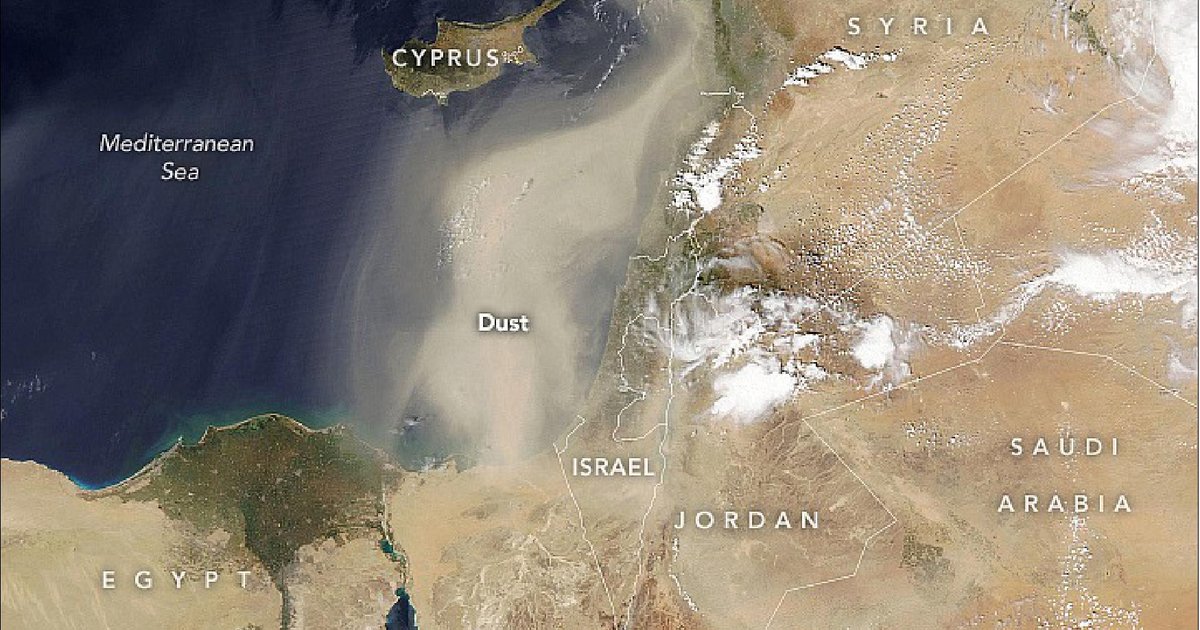
Red storms have swept through several countries in the Mediterranean basin, turning the sky red due to desert dust laden with iron oxides. This phenomenon has significantly impacted daily life in affected areas, leading to flight disruptions and increased pollution levels.
In scenes described as resembling the "end of the world," the Greek island of Crete, along with other regions in Libya and Egypt, witnessed thick clouds of desert dust. This dust, which carries red hues, is actually a result of the iron oxides present in it, affecting how sunlight scatters.
Details of the Event
These storms coincided with heavy rainfall, causing flooding in some areas and disrupting daily life. Satellite images have captured massive clouds of dust moving from North Africa towards Spain and France, even reaching the heights of Europe, reflecting the extent of this phenomenon.
Red storms are not a distinct type of storm; they are essentially desert dust storms that arise when strong winds lift millions of tons of fine sand from the Sahara Desert. These particles are transported across the Mediterranean by air currents, particularly those associated with low-pressure systems.
Background & Context
The Sahara Desert is considered the largest source of dust in the world, making the Mediterranean basin prone to the recurrence of this phenomenon. When low-pressure systems form over the Mediterranean or Europe, they act as pumps, drawing warm, dust-laden air from the south to the north. The intensity of the phenomenon is amplified when it coincides with strong storms, enhancing the upward movement of air.
This type of dust is often referred to as "blood rain" or "mud rain," where droplets of water fall laden with dust particles, leaving a brown or red layer on surfaces. This phenomenon is not new, but it has been occurring more frequently in recent years.
Impact & Consequences
Many countries in the Mediterranean basin have been significantly affected, as red storms have led to flight disruptions and reduced visibility. Air pollution levels have risen, posing a threat to public health. In some cases, health authorities issued warnings to avoid going out during peak times.
These phenomena require a swift response from governments, as emergency plans must be in place to deal with flooding and the health impacts resulting from air pollution. Countries also need to enhance air monitoring systems to better track these phenomena.
Regional Significance
Given the geographical location of Arab countries, they are particularly vulnerable to the effects of these storms. The Sahara Desert is not only a source of dust but also influences the climate and weather in the region. Arab nations must enhance regional cooperation to address these natural phenomena.
In conclusion, red storms represent a complex natural phenomenon that requires deep understanding and ongoing preparedness. An effective response to these challenges will help protect communities and the environment in the region.