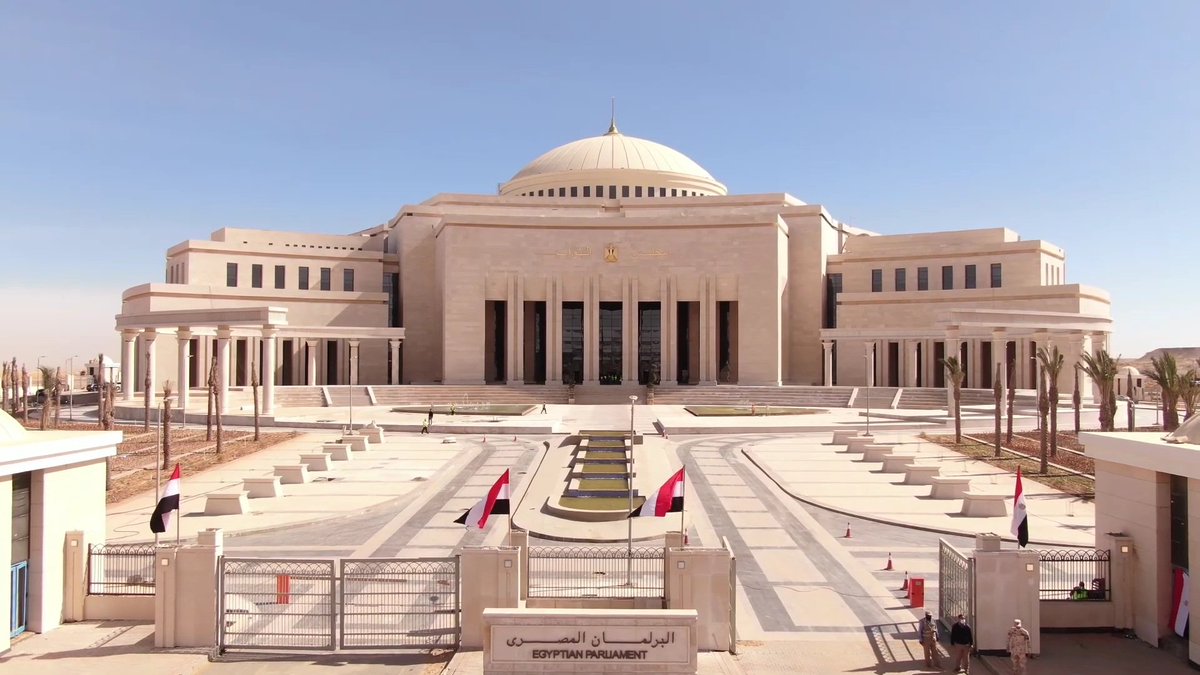
The President of the Egyptian House of Representatives announced the referral of bills related to unified construction, reconciliation, and domestic labor to specialized committees, in a move aimed at expediting their discussion and approval. This step is part of the government's efforts to enhance legislation related to construction and social organization.
The three bills include a set of amendments aimed at regulating work in the construction sector, facilitating reconciliation procedures for construction violations, and organizing the relationship between domestic workers and employers. These laws are part of the Egyptian government's vision to develop infrastructure and improve working conditions in the country.
Details of the Event
The referral of these projects comes at a sensitive time for Egypt, as the government seeks to improve the investment and construction environment in the country. The unified construction project aims to standardize procedures related to construction, making it easier for investors and citizens to obtain the necessary licenses. Meanwhile, the reconciliation project focuses on addressing construction violations that have proliferated in recent years, allowing violators the opportunity to regularize their status.
Regarding the domestic labor project, it seeks to regulate the rights and duties of domestic workers, ensuring the protection of their rights and enhancing their working conditions. This step reflects the Egyptian government's interest in improving the situation of workers across various sectors, especially in light of current economic challenges.
Background & Context
Historically, Egypt has faced numerous challenges in the construction sector, with widespread criticism regarding chaos in construction processes and non-compliance with laws. In recent years, the government has launched several initiatives to address these issues, including a reconciliation campaign for construction violations that began in 2020.
Additionally, domestic labor in Egypt suffers from a lack of legal protection, making it vulnerable to exploitation. Therefore, the project to regulate domestic labor comes as part of the government's efforts to improve working conditions and enhance the rights of this group.
Impact & Consequences
These projects are expected to contribute to improving the investment environment in Egypt, as they will help attract more foreign and local investments. Furthermore, regulating the construction sector will help reduce chaos and violations, thereby enhancing the stability of the real estate market.
As for domestic labor, organizing their rights will lead to improved living conditions, which could positively reflect on society as a whole. These steps reflect the government's direction towards achieving sustainable development and promoting social justice.
Regional Significance
These steps are part of broader trends in the Arab region towards improving the work environment and enhancing workers' rights. Many Arab countries face similar challenges in the construction and labor sectors, making these Egyptian initiatives a model to be emulated.
The success of these projects may encourage other countries in the region to take similar steps, contributing to improving economic and social conditions in the Arab world.
In conclusion, the referral of the bills on unified construction, reconciliation, and domestic labor to specialized committees represents an important step towards achieving sustainable development in Egypt and enhancing the rights of both citizens and investors alike.