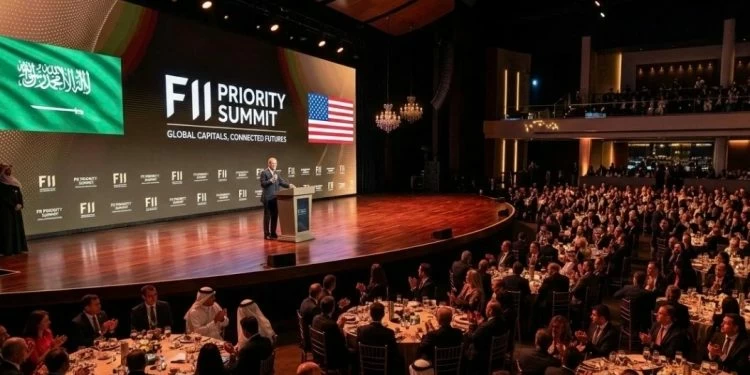
The Miami Priority Summit of the Future Investment Initiative concluded, addressing radical transformations in the global economic landscape. The summit discussed how capital adapts to geopolitical changes and energy fluctuations, emphasizing the importance of critical minerals for the future.
The summit featured in-depth dialogues on green urban development, where speakers redefined the concept of cities as integrated, long-term investment platforms. In this context, the CEO of a global company, Michael Dyke, stated: "We are not just creating a collection of assets; we are building a place where people truly want to live, work, and entertain, which fundamentally changes our thinking about urban development."
Event Details
The summit's general sessions included discussions on redefining asset management amidst ongoing changes. Yee Hsin Hong, the president and CEO of an investment management firm, emphasized that "artificial intelligence enables comprehensive customization on a large scale and at a significantly lower cost." She noted that companies that can harness these technologies to build a sustainable advantage will be the ones that endure in the market.
In a panel discussion on "Global Economic Outlook," the founder of a global company, Josh Harris, warned of the need to proceed cautiously and focus on high-quality assets, pointing out that "the current environment requires ready capital," amid expectations of significant volatility after years of stability.
Background & Context
Highlighting the space sector was an important part of the discussions, as speakers considered it a strategic growth driver linked to industrial policy and global supply chains. Eric Martel, the president and CEO of a company, explained that "demand for commercial aviation is expected to double over the next 20 years," which will reshape supply chains and capital flows.
The race for critical minerals, deemed essential for energy transition and AI infrastructure, was also addressed. Speakers emphasized the need for investors to reassess the concept of investing in countries, as capital flows towards markets that demonstrate policy clarity and regulatory stability.
Impact & Consequences
The summit provided insights into the impact of geopolitical disruptions on reshaping global industries. Manfredi Lefevere Dovidio, the chairman of the World Travel and Tourism Council, noted that "fuel costs significantly affect cruise travel," highlighting the importance of energy price stability.
The session titled "Which Computing Hubs Will Win in the Next AI Wave?" discussed the global race to dominate AI infrastructure, indicating how energy, data, and sovereign ambitions converge to define future economic power centers.
Regional Significance
The outcomes of the Miami Priority Summit are particularly significant for the Arab region, underscoring the need for new investment strategies aligned with global changes. The focus on critical minerals could open new horizons for resource-rich Arab countries.
In conclusion, the sessions wrapped up with a talk by Gianni Infantino, the president of FIFA, about the impact of the World Cup on the economy and culture, reflecting the importance of major events in boosting economic growth.