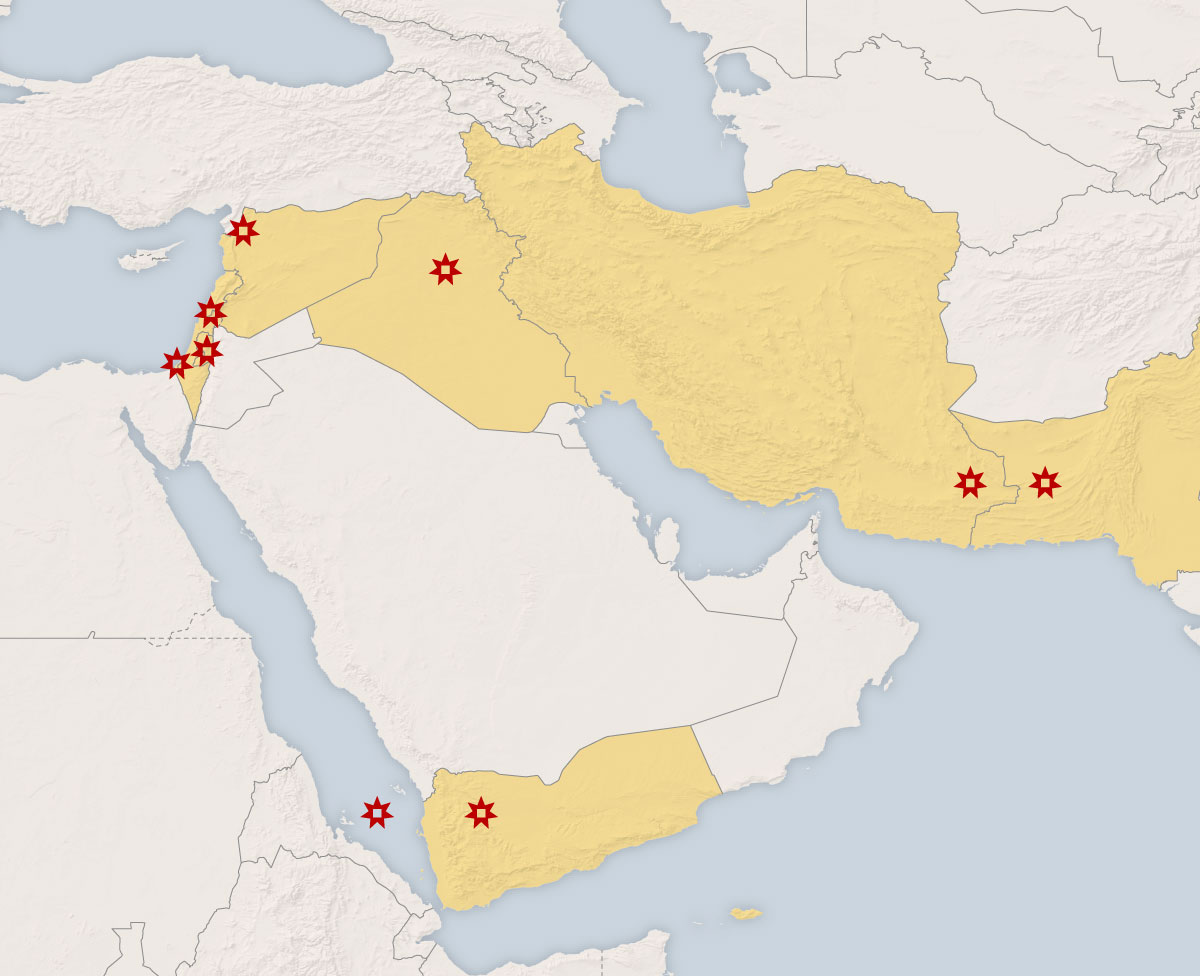
The tensions in the Middle East are escalating, with the war on Iran seen as part of a deeper conflict connected to the Palestine issue. Reports indicate that this war is not merely a military dispute but reflects complex geopolitical struggles concerning the fate of the region.
The interests of major powers are intertwined in this conflict, as the United States and its allies seek to undermine Iran's influence in the area, with Palestine serving as a launching point for these strategies. It is evident that the struggle over Iran transcends national borders, encompassing human rights issues and the Palestinian fate.
Details of the Event
Events are unfolding rapidly in the region, with increasing pressure on Iran from the United States and its allies. This pressure includes economic sanctions and military escalation, complicating the situation further. Simultaneously, Palestine is viewed as a battleground, where Iran aims to support the Palestinian cause as part of its regional strategy.
Recent developments show that Iran is attempting to strengthen its position by supporting Palestinian factions, raising concerns among Western powers. These dynamics illustrate how the conflict over Iran intersects with the Palestinian struggle, heightening tensions in the region.
Background & Context
Historically, Palestine has been at the center of conflicts in the Middle East, linked to issues of identity and sovereignty. Since the Nakba in 1948, Palestine has become a symbol of the Arab-Israeli conflict, making it a starting point for numerous regional alliances.
In recent years, the relationship between Iran and Arab states has undergone significant changes. While Iran seeks to enhance its influence, many Arab countries adopt varying stances, complicating the regional landscape further.
Impact & Consequences
The implications of the conflict over Iran extend beyond its borders, affecting regional stability. These tensions are expected to lead to an escalation of armed conflicts, threatening security in neighboring countries. Additionally, Iran's support for Palestinian factions could lead to heightened confrontations with Israel.
Concerns are growing that this conflict may lead to the disintegration of traditional alliances in the region, potentially altering the balance of power. Under these circumstances, it becomes essential for Arab states to adopt new strategies to address these challenges.
Regional Significance
Events in Iran and Palestine directly impact Arab countries, highlighting the need for Arab unity to confront shared challenges. The continuation of the conflict could result in economic and political repercussions affecting the region's stability.
Ultimately, the question remains about how these dynamics will influence the future of Arab-Iranian relations and whether they will lead to further escalation or new opportunities for cooperation.