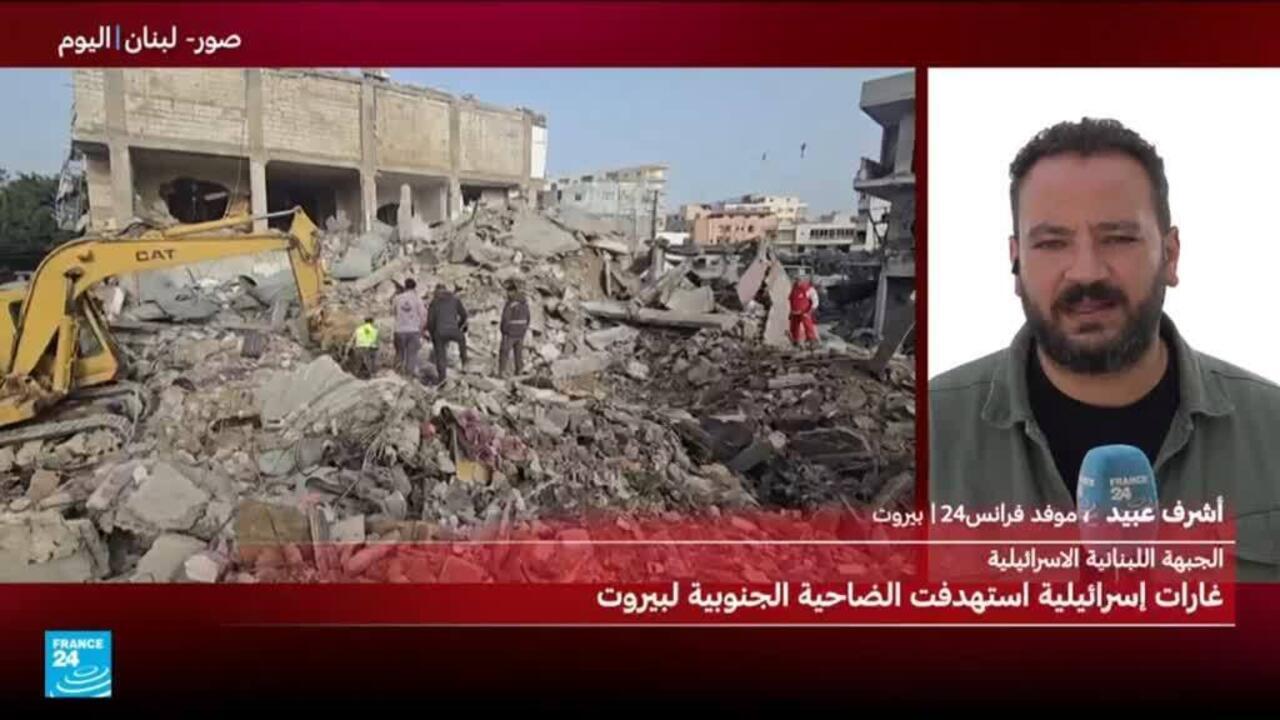
The Israeli army issued a warning on Saturday for residents of neighborhoods in the city of Tyre and its surroundings in southern Lebanon, urging them to evacuate the area. This came just hours after a major hospital in the coastal city was damaged due to airstrikes in its vicinity, reflecting the escalating tensions in the region.
These developments coincided with Hezbollah's announcement of targeting Israeli forces in southern border towns, further complicating the security situation in Lebanon. The warning followed two airstrikes that targeted buildings in the Al-Hosh area of Tyre late Friday night, resulting in their complete destruction.
Details of the Incident
According to the Lebanese Ministry of Health, the airstrikes resulted in injuries to eleven civilians, including three paramedics from the Lebanese Civil Defense. These incidents come at a sensitive time, as southern Lebanon is witnessing unprecedented military escalation, raising concerns about the worsening humanitarian situation in the area.
In contrast, local media reported military sources stating that an Israeli soldier was killed on Saturday in an area near the Lebanese border, reflecting the rising tensions between the two sides and increasing the likelihood of military escalation in the coming days.
Background & Context
Historically, the Lebanese-Israeli border has witnessed ongoing tensions for decades, with Hezbollah being one of the key actors in the region. Since the outbreak of conflict in 2006, clashes between the two sides have increased, leading to significant human and material losses.
The political and military dimensions of this conflict are intertwined, as each side seeks to achieve its strategic objectives. Hezbollah, backed by Iran, considers itself the defender of Lebanon against Israeli threats, while Israel aims to maintain its national security through preemptive military operations.
Impact & Consequences
These events underscore the increasing risks facing the region, as they may lead to large-scale military escalation, threatening regional security. Furthermore, the continuation of fighting could negatively impact the humanitarian situation in Lebanon, which is already suffering from economic and social crises.
If these tensions persist, they could have repercussions at the regional level, as regional and international powers may intervene in the conflict, complicating the situation further. The escalation of violence could also adversely affect relations between Lebanon and neighboring countries, including Syria.
Regional Significance
The current events in southern Lebanon hold significant importance for the Arab region, as they reflect ongoing conflicts between regional powers. These developments could affect relations between Arab countries and Israel, especially amid normalization attempts being witnessed by some nations.
Moreover, the escalation in Lebanon may provoke reactions from other Arab countries, further complicating the political landscape in the region. Under these circumstances, hope remains pinned on peace efforts and dialogue to avoid further escalation.
In conclusion, the situation in southern Lebanon remains under observation, as everyone looks forward to peaceful solutions that ensure security and stability in the region.