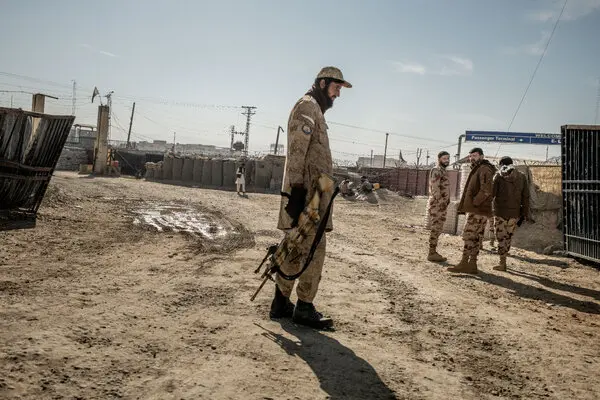
Clashes continue between Pakistan and Afghanistan, with Pakistani officials declaring an 'open war' against their neighbor in late February. Despite China's attempts to mediate between the two sides, violence remains ongoing, raising concerns at both regional and international levels.
In March, Pakistan conducted airstrikes on Afghan cities and military infrastructure, resulting in the deaths of hundreds of civilians over the past three months. Although the intensity of violence has decreased recently, clashes continue to occur weekly, reflecting the depth of the crisis between the two countries.
Details of the Conflict
Afghan Interior Ministry spokesperson Abdul Mateen Qani stated that the relationship between Pakistan and Afghanistan was previously like a 'magnetic force,' but has now become 'repulsive.' This statement reflects the increasing tension between both sides, as it appears neither is willing to retreat or make concessions.
During a visit to Pakistani forces, Prime Minister Shahbaz Sharif affirmed that the campaign against Afghanistan continues 'with full determination.' This statement reflects the official Pakistani stance towards escalation, complicating the security situation in the region.
Background & Context
Historically, relations between Pakistan and Afghanistan have been strained, with border and ethnic issues overlapping between the two countries. Since the Taliban's takeover in Afghanistan, Pakistani fears regarding the influence of armed groups on its internal security have increased, prompting Islamabad to take more severe measures against its neighbor.
The regional situation also reflects broader conflicts involving major powers like the United States and China, which are attempting to mediate disputes. However, Chinese mediation efforts have yielded little success so far, leaving the region in a state of instability.
Impact & Consequences
The ongoing clashes between Pakistan and Afghanistan affect regional security, potentially leading to greater escalation in armed conflicts. The continuation of violence reflects the international community's failure to find a lasting solution to the crisis, increasing the suffering of civilians in both countries.
Moreover, the escalation of violence may impact relations between Pakistan and neighboring countries, threatening stability in South Asia as a whole. Under these circumstances, the international community must intensify its efforts to resolve the conflict and achieve peace in the region.
Regional Significance
The situations in Pakistan and Afghanistan are of particular importance to Arab countries, as they can affect regional security and bolster extremist groups. Additionally, the continuation of the conflict may lead to a flow of refugees into neighboring countries, placing additional pressure on resources in those nations.
Ultimately, the current situation in Pakistan and Afghanistan requires urgent action from the international community to ensure regional stability and achieve lasting peace.