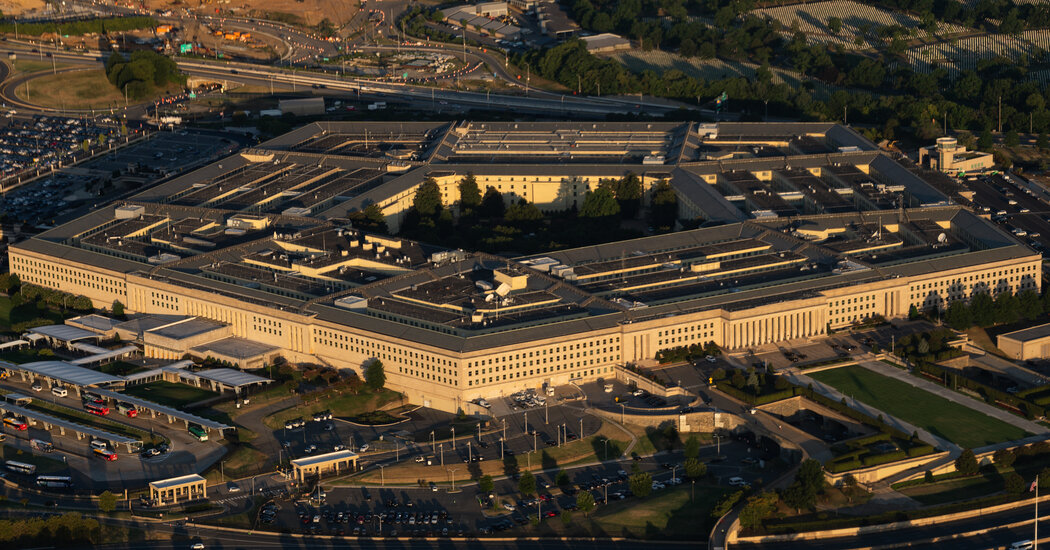
The legal confrontation between the U.S. Department of Defense (Pentagon) and the New York Times has resurfaced, as the department has taken measures described as a circumvention of a previous court ruling that mandated the reinstatement of Times journalists to their workspaces within the department.
Instead of allowing the reporters who were excluded last year to enter, the department relocated them to an external annex of the building, prompting sharp criticism and being labeled by some reporters as an "outright ruse" to obstruct journalistic work.
Details of the Event
Last October, the Pentagon imposed strict restrictions on journalistic work within its buildings, requiring journalists to provide written consent not to publish unauthorized information. The department also halted a traditional practice that allowed journalists unrestricted access to non-secret areas, enabling them to walk the hallways and visit officials' offices.
Since his appointment as Secretary of Defense in February, Pete Hegseth has defined the places where journalists can go without escorts, escalating tensions between the department and the media.
Background & Context
The roots of this issue trace back to March 20 of last year, when Federal Judge Paul Friedman ruled that the restrictions imposed by the Pentagon violate the First and Fifth Amendments of the U.S. Constitution, as they restrict fundamental journalistic practices. Friedman ordered the reinstatement of the credentials of seven New York Times journalists, but the department responded that those credentials do not permit them to enter the main building.
Instead, the Pentagon confined the journalists to the "Conference Center and Library," a separate underground building, requiring military escorts for any interviews or press briefings.
Impact & Consequences
During a hearing, Friedman expressed his astonishment at this reasoning, questioning whether the Pentagon was living in a state of absurd contradiction, directing journalists to a library for which they do not have permission to access the hallways leading to it. Kevin Baron, executive editor of Defense One, considered that the department is engaging in "political games" by deliberately breaking the rules.
Baron recalled the traditions that prevailed during the wars in Afghanistan and Iraq, where officials and reporters met daily to exchange information, noting that the current administration's actions reflect a desire to control the narrative by isolating journalists.
Regional Significance
This case highlights the challenges facing press freedom in the United States, which may impact how events are covered in conflict areas, including the Middle East. Restricting access to information can lead to a lack of transparency and hinder journalists' ability to perform their work effectively.
In conclusion, the relationship between the Pentagon and the media remains under scrutiny, as journalists strive to continue their work despite the imposed restrictions.