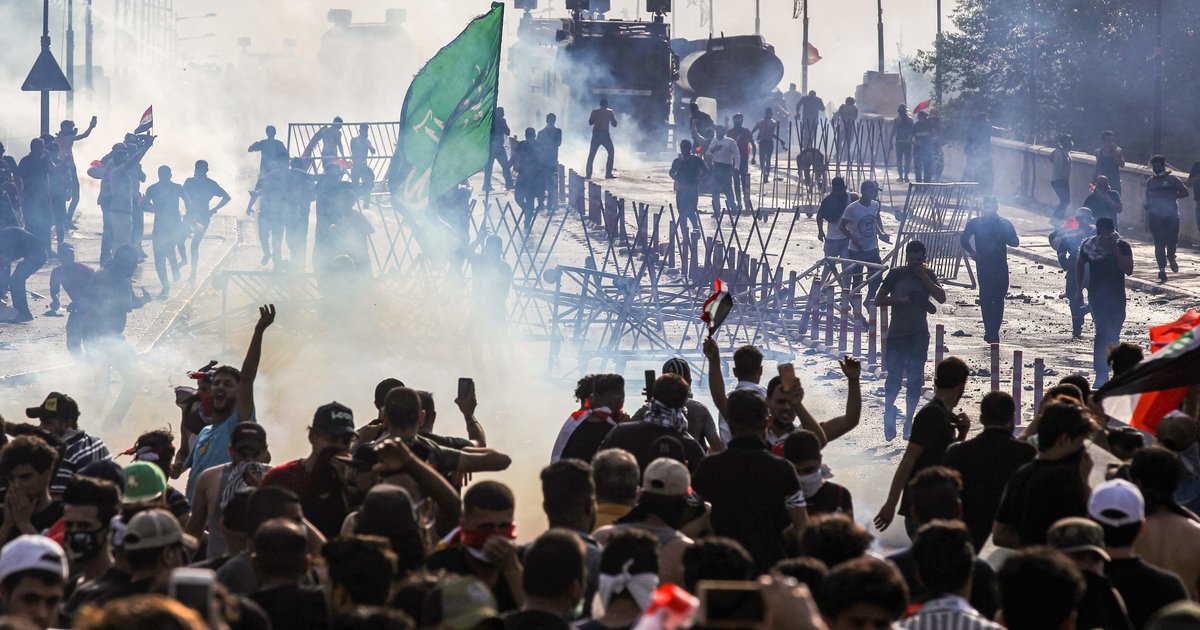
Protests have reignited in Iraq, with thousands of citizens taking to the streets in several cities, demanding improvements in economic conditions and a crackdown on the corruption that has plagued the country for years. These demonstrations come at a critical time, as Iraq faces significant economic challenges, including rising unemployment rates and deteriorating public services.
The protests began in the capital, Baghdad, and spread to other cities such as Basra, Najaf, and Karbala, where demonstrators raised slogans calling for radical reforms in the political and economic systems. Some areas witnessed clashes with security forces, resulting in injuries among protesters.
Details of the Protests
These protests coincide with a surge in public anger due to widespread corruption within state institutions, with many Iraqis believing that the current government is incapable of implementing the necessary reforms. Protesters have pointed out that corruption has led to the deterioration of essential services such as education and healthcare, negatively impacting their daily lives.
Some protesters also noted that the economic situation has worsened due to the repercussions of the COVID-19 pandemic, which caused a drop in oil prices, the main source of revenue for Iraq. This has led to a reduction in the government budget, further increasing citizens' suffering.
Background & Context
Historically, Iraq has witnessed numerous popular protests since 2011, but the recent protests that began in 2019 have been the most intense, with millions taking to the streets demanding the overthrow of the regime. Those protests led to the resignation of former Prime Minister Adel Abdul-Mahdi, but the subsequent changes were not sufficient to quell public anger.
In recent years, Iraq has experienced political conflicts among various factions, resulting in political and economic instability. Additionally, foreign interventions, particularly from Iran and the United States, have complicated the internal situation.
Impact & Consequences
The current protests are indicative of the instability in Iraq and may lead to new political changes. If the demonstrations continue, the government may be compelled to take urgent measures to meet the protesters' demands, which could affect the formation of the next government.
Furthermore, the continuation of protests could impact the Iraqi economy, potentially leading to a decline in foreign investments and increased social tensions. If the government fails to address the raised issues, we may witness an escalation in protests.
Regional Significance
The protests in Iraq are part of a wave of public anger that has been observed in several Arab countries in recent years, such as Lebanon and Sudan. These protests reflect dissatisfaction with the economic and political conditions in the region, which could have negative implications for regional stability.
The situation in Iraq may also affect relations between Arab countries, especially amid existing political tensions. It is crucial for Arab nations to monitor the situation in Iraq, as stability in Iraq is essential for regional security.
In conclusion, the protests in Iraq remain a sign of public discontent and serve as a reminder that change requires genuine efforts from the government and civil society. There must be an effective response to citizens' demands to ensure a better future for Iraq.