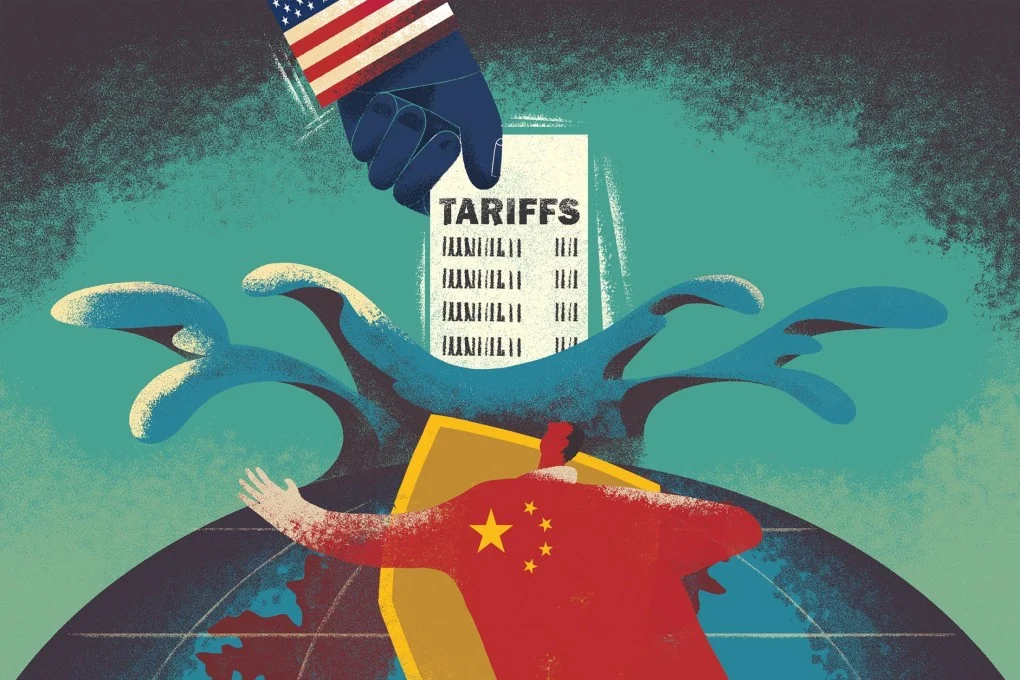
The United States and China concluded the sixth round of trade talks in Paris last March, as the trade war between the two nations continues after a year of increasing tensions. Although both sides reached a temporary truce, economic and political crises persist, raising questions about who holds the upper hand in this confrontation.
In a striking event, two American flags in the background were caught in a sudden gust of wind, causing them to fall, prompting officials to rush to secure them to the wall. This scene symbolized the ongoing instability of the trade war, as discussions continue without yielding tangible results.
Details of the Event
During the press conference that followed the talks, U.S. Treasury Secretary Scott Piesen affirmed that the United States is committed to reaching a comprehensive agreement with China. However, specific details regarding the issues addressed were not disclosed, raising concerns about the possibility of achieving real progress in the near future.
On the other hand, reports indicate that China is seeking to improve trade relations with the United States, while at the same time warning that any agreement must be balanced and consider its national interests. These statements reflect the ongoing tensions between the two sides, as each seeks to achieve economic gains without compromising their sovereignty.
Background & Context
The trade war between the United States and China began in 2018 when Washington imposed tariffs on Chinese goods, prompting Beijing to respond in kind. Since then, trade relations between the two countries have experienced significant fluctuations, accompanied by escalating political and economic tensions. This war has impacted global markets and raised concerns about a potential economic recession.
Despite efforts to reach an agreement, fundamental issues such as intellectual property rights, tariffs, and unfair trade practices remain unresolved. These issues present significant challenges to any lasting settlement, complicating the situation further.
Impact & Consequences
The trade war between the United States and China affects the global economy as a whole, with increasing concerns about its repercussions on economic growth and investment. Global companies are directly impacted, as supply chains shift and costs rise due to tariffs.
Moreover, the ongoing tensions between the two largest economic powers in the world could exacerbate economic crises in other countries, especially those dependent on trade with the United States or China. This situation necessitates that other nations take precautionary measures to protect their economies from negative impacts.
Regional Significance
For Arab countries, the trade war between the United States and China raises numerous questions about how it will affect trade relations and investment in the region. Many Arab nations are seeking to strengthen their trade ties with China, particularly under the Belt and Road Initiative.
Additionally, tensions between the two powers may lead to a reshaping of global supply chains, providing Arab countries with an opportunity to enhance their position as trade and investment hubs. However, these nations must be cautious in navigating the rapid changes in global trade policies.
In conclusion, the trade war between the United States and China remains a complex issue that requires close monitoring, as its repercussions extend worldwide, including to the Arab region.