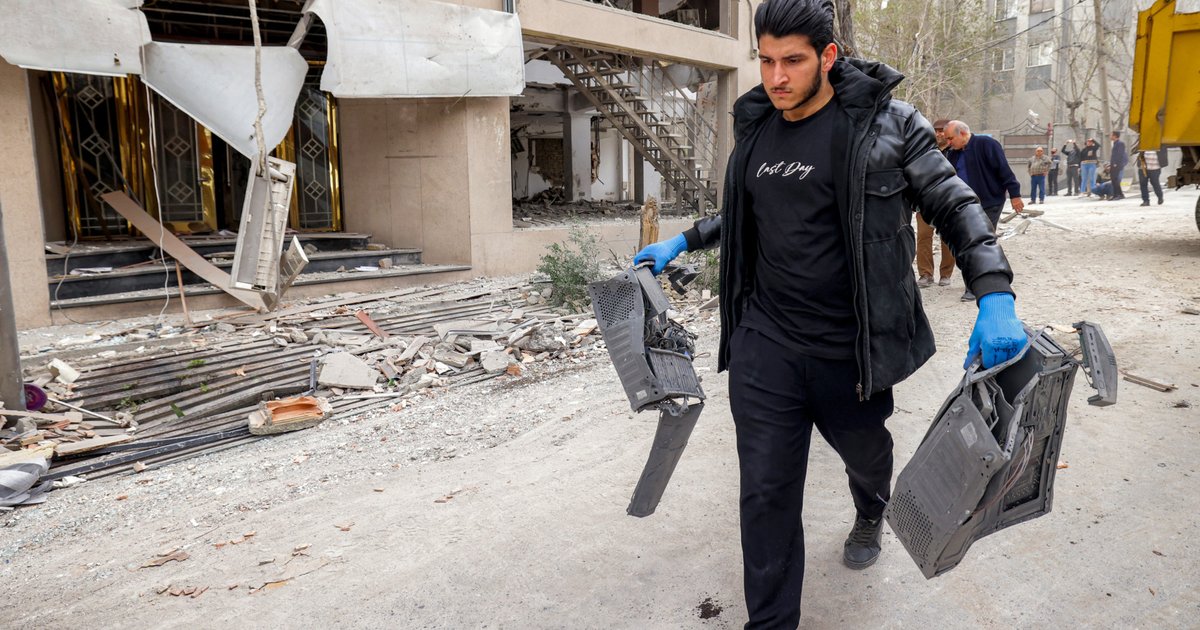
An airstrike targeted Isfahan University of Technology on Sunday, making it the second assault on this educational institution within a week. Akbar Salehi, the Deputy for Security and Law in Isfahan Province, reported that the attack caused damage to several buildings on campus and resulted in injuries to four employees.
Salehi confirmed that the university had previously been attacked last Thursday, raising concerns about the safety of educational institutions in Iran amid escalating tensions in the region.
Details of the Incident
These attacks come at a sensitive time, as Iran faces rising tensions with the United States and its allies. The recent strike on Isfahan University reflects an escalation in targeting educational institutions, which could provoke strong reactions from the Iranian government. Local officials have indicated that the attacks may be linked to attempts to undermine the Iranian regime by targeting symbols of education and research.
Simultaneously, the Iranian Revolutionary Guard Corps warned of potential retaliation against these attacks by targeting American universities in the region, further heightening tensions between Tehran and Washington. These statements reflect growing concerns about escalating violence in the area, which could lead to unforeseen consequences.
Background & Context
Historically, Iran has witnessed numerous attacks targeting its educational institutions, especially under tense political circumstances. Since the United States withdrew from the nuclear agreement in 2018, tensions between Iran and the West have escalated, leading to a series of attacks and military responses. These attacks are not new, but they indicate a shift in military strategy that may now target educational institutions as part of psychological warfare.
Attacks on universities also reflect the broader conflict between Iran and the United States, as each side seeks to achieve its strategic objectives. In recent years, Iran has increased its investments in higher education, making universities potential targets in the regional conflict.
Impact & Consequences
The repercussions of these attacks could be far-reaching, potentially leading to increased repression within Iran, particularly in educational institutions. Students and faculty may feel unsafe, adversely affecting education and scientific research. Additionally, these attacks could provoke international reactions, as they may be viewed as violations of human rights.
Furthermore, these events could escalate the conflict in the region, as other countries might intervene in the dispute, complicating the situation further. Targeting universities may raise international concerns about the future of education in Iran and could lead to calls for increased support for Iranian universities from the international community.
Regional Significance
The Arab region is directly affected by the escalating tensions between Iran and the United States. Attacks on educational institutions in Iran could increase tensions between Arab states and Iran, as Arab nations may become concerned about rising violence in the region. These events could also impact relations between Iran and Arab countries, especially amid ongoing conflicts in Iraq and Syria.
In conclusion, the attacks on Isfahan University reflect an escalation in the regional conflict and could have serious implications for education and security in the area. It is crucial for Arab nations to closely monitor these developments, as the impact may extend throughout the region.