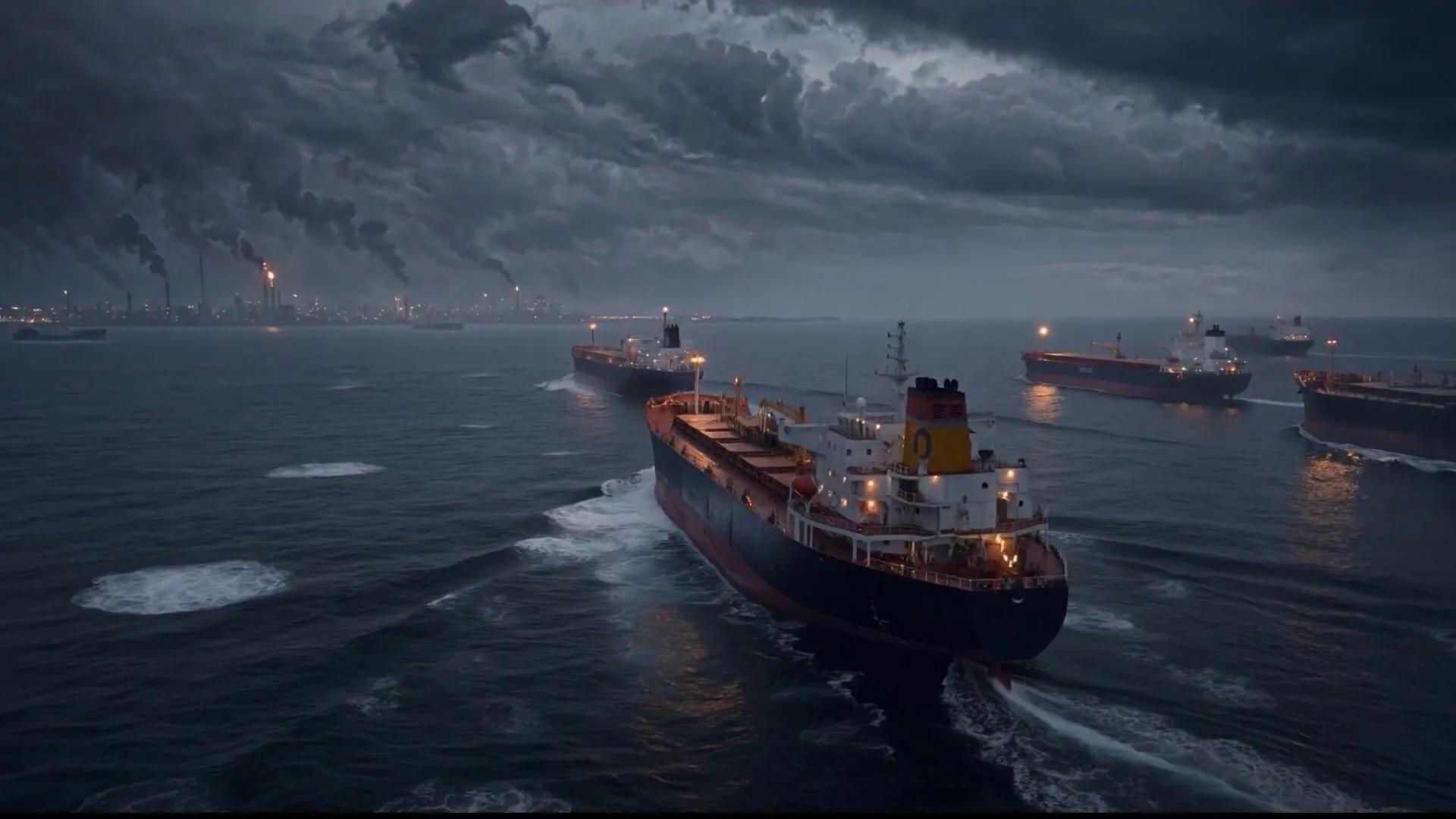
Despite increasing statements regarding the possibility of reopening the Hormuz Strait, ending the maritime blockade does not necessarily mean an immediate resumption of global energy flows. Hundreds of tankers that have been stuck for months face complex technical and logistical challenges that could delay normal operations in one of the world's most important oil corridors.
Military tensions continue near the strait, with the U.S. Central Command announcing the rerouting of 108 commercial vessels since the blockade imposed on Iran began last April. This comes alongside new strikes in southern Iran, according to exchanged U.S. and Iranian data.
Details of the Situation
Markets are awaiting the results of ongoing mediation between Washington and Tehran to reopen the strait, and oil prices have started to decline as investor expectations grow regarding the potential resumption of navigation. However, concerns remain about the extraction of the stuck vessels and the gradual securing of transit movement.
According to a report prepared by Abdullah Sukkar based on an analysis from the data unit at Al Jazeera, the Gulf and the Gulf of Oman currently contain 724 stuck tankers, following a 95% decrease in transit movement through the strait since the outbreak of the war. These vessels include 541 oil tankers, 82 liquefied gas carriers, 55 petroleum product tankers, and 46 logistical vessels.
Context and Background
354 tankers are positioned within the Gulf of Oman, while the remaining vessels are distributed between the Hormuz Strait and nearby Gulf waters. The main challenge is not only related to the number of vessels but also to the nature of their cargo and their operational status after months of inactivity or limited movement. Some of these tankers are used for logistical purposes and fueling other ships, rather than for transporting conventional commercial oil.
Data from the “Kpler” platform indicates that there are 261 cross-border oil tankers carrying approximately 135 million barrels of crude oil, which are significant quantities that have remained stuck in a tense marine environment, imposing additional challenges on shipping, insurance, and port companies.
Impact and Consequences
Maritime transport specialists state that restarting such a large number of vessels all at once may face technical difficulties related to engine maintenance and navigation systems, especially after long periods of inactivity in the Gulf waters and rising temperatures and humidity. Additionally, some tankers may require inspections and technical re-certifications before being allowed to sail, particularly those that have been subject to security warnings or international sanctions in recent months.
Concerns are increasing over a potential maritime congestion crisis, as returning hundreds of ships to export lines in a short period could create bottlenecks in ports and transit corridors, as well as difficulties in organizing priority movement between oil, gas, and cargo tankers.
Impact on the Arab Region
According to the risk index on the “Kpler” platform, there are 46 tankers subject to U.S. sanctions, most of which are linked to trade relations with Iran, while 33 tankers are classified as “high risk” due to transporting Iranian oil. Spatial data reveals that about 37% of the sanctioned tankers are located within Iran's exclusive economic zone, meaning that any arrangements to resume movement will require complex security and legal agreements involving insurance, inspections, and safe transit mechanisms.
Under normal circumstances, approximately 20 million barrels per day pass through the Hormuz Strait, accounting for nearly one-fifth of global oil. Therefore, the disruption of navigation for months has not only affected prices but has also reshaped shipping routes and supply plans for global energy companies.
Environmental experts warn that the presence of these massive quantities of oil inside stationary or limited-moving tankers increases the likelihood of oil spills or maritime accidents, especially in narrow and environmentally sensitive areas like the Hormuz Strait and the surrounding Gulf.
Despite the increasing talk of a potential agreement between Washington and Tehran to reopen the strait and resume Iranian oil exports, the crisis of the stuck tankers seems likely to continue for additional weeks, given the technical and security complexities that have accumulated since the war began.