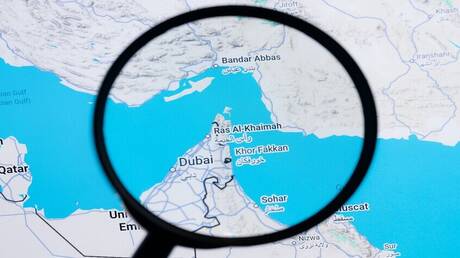
Mike Summers, the CEO of the American Petroleum Institute (API), emphasized that reopening the Strait of Hormuz is the "only real solution" to address the increasing energy prices. These statements come at a time when the global market is experiencing sharp fluctuations in oil prices, which directly affects the global economy.
The Strait of Hormuz is a vital transit point for oil, with approximately 20% of the world's total oil passing through it. Therefore, any closure or disruption in this waterway can lead to significant price hikes, negatively impacting consumers and economies worldwide.
Details of the Situation
In his remarks, Summers pointed out that the current situation requires urgent action to ensure market stability. He explained that reopening the strait would help increase oil flow, which would alleviate price pressures. He expressed concern that the continuation of the current situation could exacerbate economic crises in many countries, especially those heavily reliant on oil imports.
Summers also called for enhanced cooperation among oil-producing countries to ensure market stability. He stressed the importance of dialogue between producing and consuming countries to achieve a balance between supply and demand.
Background & Context
The Strait of Hormuz, which stretches between Iran and Oman, has long been a focal point for geopolitical tensions. In recent years, the region has seen escalating tensions between Iran and the United States, leading to threats of closing the strait. In 2019, the area witnessed a series of attacks on oil tankers, raising concerns about the safety of navigation in this vital region.
Historically, oil prices have been significantly affected by tensions in the Middle East. In 1973, the oil crisis led to a substantial price increase, impacting the global economy. Today, it seems history is repeating itself, as fears grow that any new escalation could lead to a global energy crisis.
Impact & Consequences
If the Strait of Hormuz is reopened, oil prices are expected to drop significantly, contributing to global economic stability. However, any delay in this process could exacerbate economic crises in many countries, particularly those facing financial difficulties.
Moreover, stable energy prices could foster economic growth in developing countries that heavily depend on oil imports. Thus, reopening the strait is not merely an economic issue but also a matter of global security and stability.
Regional Significance
Arab oil-producing countries, such as Saudi Arabia and the UAE, are among the biggest beneficiaries of stable oil prices. Any increase in prices could positively reflect on the revenues of these countries, enabling them to enhance development and infrastructure projects.
However, ongoing tensions in the region could negatively impact foreign investments, hindering economic growth. Therefore, reopening the Strait of Hormuz could be a crucial step towards ensuring regional stability and achieving sustainable development.
In conclusion, the question remains about how to address geopolitical tensions in the region and whether the involved countries will be able to reach effective solutions that ensure the stability of the Strait of Hormuz and alleviate pressures on energy prices.