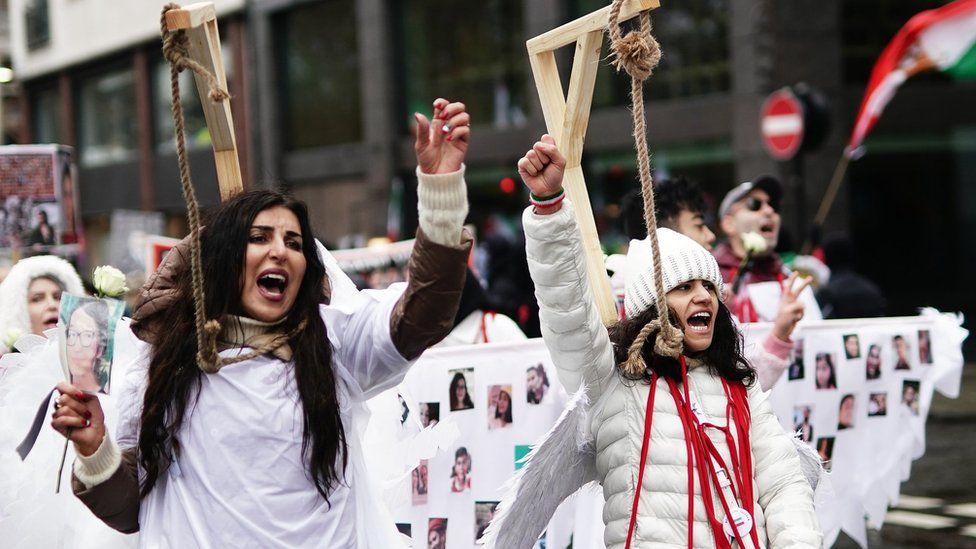
The United Nations High Commissioner for Human Rights has announced a troubling report revealing severe human rights violations in Iran, where 21 people have been executed and more than 4,000 others arrested for political and national security reasons. These figures emerge at a time when the Middle East is witnessing escalating tensions and conflicts, raising concerns about human rights in the region.
The report issued by the Commission reflects the deteriorating human rights situation in Iran, where authorities continue to use excessive force against political opponents and activists. It indicates that arrests were made under illegal conditions, with detainees held without fair trials or legal guarantees.
Details of the Violations
Violations in Iran are notably increasing, with arrests focused on individuals expressing political opinions or participating in peaceful protests. Documented cases of torture and mistreatment of detainees raise fears that these violations may be systematic. Furthermore, the executions carried out are part of a repressive policy aimed at silencing dissenting voices.
These events coincide with rising tensions in the region, where many neighboring countries are also experiencing instability. This situation reflects the growing concern of the international community regarding human rights in Iran, with many international organizations calling for urgent action to protect individual rights.
Background & Context
Historically, Iran has suffered from human rights violations, especially following the Islamic Revolution in 1979. The country has witnessed waves of repression against political opponents and activists, leading to a deterioration of the human rights situation. In recent years, public protests against the government have surged, prompting authorities to take strict measures against demonstrators.
These violations are part of the Iranian regime's policy to suppress any form of opposition. Despite increasing international pressure, Iran continues to deny these violations, complicating the human rights situation in the country.
Impact & Consequences
The ongoing human rights violations in Iran affect the country's international relations, as it faces increasing pressure from the global community. This pressure could lead to new sanctions against the Iranian regime, further isolating it internationally. Additionally, the continuation of these violations may exacerbate internal conditions, threatening stability in the country.
Moreover, these violations impact Iran's image globally, as human rights are a core issue of concern for the international community. Such violations could lead to increased support for the Iranian opposition from Western countries, heightening tensions in relations between Iran and Western nations.
Regional Significance
The human rights violations in Iran are a matter of concern for the Arab region as a whole, as Iran's stability directly affects neighboring countries. Amid rising tensions, these violations could worsen security conditions in the region, increasing the risk of armed conflicts.
Furthermore, the situation in Iran may influence opposition movements in Arab countries, as these movements could draw inspiration from events in Iran. Therefore, what is happening in Iran is not merely an internal issue but has far-reaching implications for security and stability across the entire region.
The ongoing violations of human rights in Iran raise international alarm and call for urgent action from the global community to protect individual rights. The situation in Iran serves as a reminder of the necessity to uphold human rights as a universal value that must be defended.