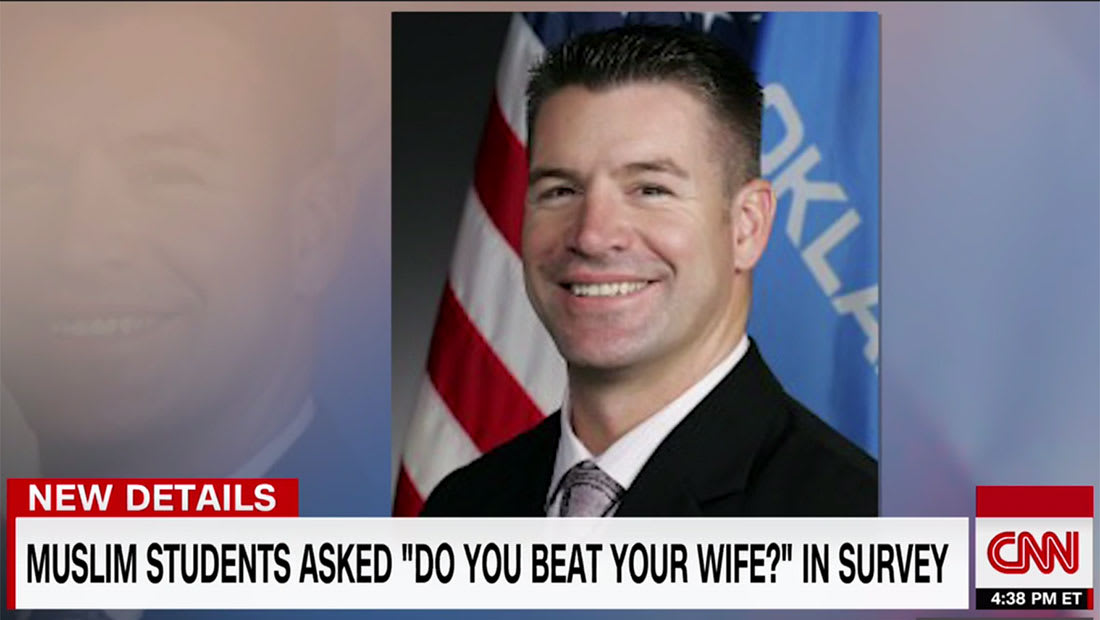
Despite the hostile remarks he has made, Republican Congressman Andy Ogles has won re-election in the congressional elections for Tennessee's 5th district, which includes a large Muslim community. This victory raises questions about how Ogles managed to retain his seat amidst open hostility towards Muslims, who represent an important voting bloc in the region.
American political analyst David Daley, in an article for The Guardian, noted that Ogles' re-election reflects a flaw in the American electoral system, which allows for manipulation in the drawing of electoral districts. According to Daley, this system enhances the dominance of low-participation primaries, enabling politicians with extreme views to gain power.
Event Details
Ogles, who regularly expresses his animosity towards Muslims, recently wrote on social media that "Muslims do not belong to the American community," reflecting a broader pattern of anti-Islam rhetoric in the United States. Nevertheless, Tennessee's 5th district is home to an estimated 30,000 to 40,000 Muslims, including a significant number of professionals, such as doctors who have moved to rural areas suffering from a lack of healthcare services.
Ogles has also not hesitated to attack other candidates, such as Zahran Mamdani during the New York City mayoral race, labeling him a "communist" linked to terrorism and calling for his deportation if the allegations against him were proven. These statements reflect his strategy of rallying a narrow base of voters who embrace or tolerate this type of rhetoric.
Background & Context
Before the 2022 elections, the boundaries of Tennessee's 5th district were redrawn, merging parts of it with more conservative rural areas, turning it into a safe seat for Republicans. As a result, the Republican primary became the decisive battle instead of the general election. In that election, only about 60,000 voters participated, and Ogles won with over 35% of the votes, which is approximately 21,000 votes in a district with around 760,000 residents.
This means that Ogles reached Congress with support from only about 4% of the district's population. Daley emphasizes that this reality allows candidates to win by appealing to a small segment of hardline voters, rather than gaining the support of the majority. This electoral system explains how Ogles can make hostile remarks against Muslims without facing serious electoral consequences.
Impact & Consequences
The anti-Muslim statements made by Ogles are not merely an individual deviation but a logical result of political incentives within an electoral system that promotes polarization. This system rewards extreme rhetoric, pushing candidates to appeal to the most ideologically committed bases rather than building broad and inclusive coalitions.
Moreover, there are controversial issues surrounding Ogles, including scrutiny from the FBI and congressional ethics committees regarding allegations related to campaign financing, yet his electoral position has not been significantly affected. These matters indicate a lack of effective accountability within the electoral system.
Regional Significance
This situation reflects larger challenges facing Muslim communities in the United States, where anti-Islam rhetoric can exacerbate social tensions. It also highlights the need for electoral reform to ensure better representation for minorities, including Muslims.
In conclusion, Daley calls for reforms that include adopting a preferential voting system in primaries and expanding proportional representation in the House of Representatives, to ensure that candidates receive broader support that better reflects the diversity of voters. Without these reforms, American politics will continue to produce elected officials who ignore parts of their constituents, such as Muslims in Ogles' district, while remaining in office without effective accountability.