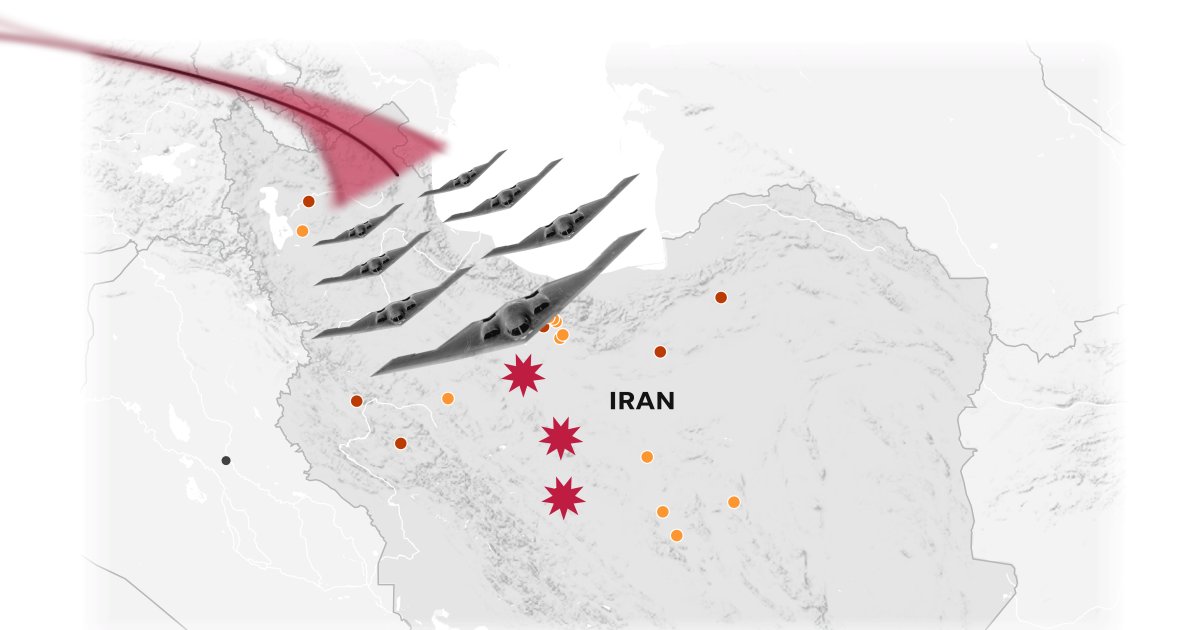
U.S. forces successfully rescued an American pilot whose aircraft was shot down in Iran, with the operation taking place under complex and challenging conditions. The incident occurred at a time when tensions between the United States and Iran are escalating, increasing regional anxiety.
The pilot, whose name has not been disclosed, was on a military mission when his aircraft came under fire from Iranian forces. Following the crash, a rescue operation was quickly coordinated by U.S. military command, which utilized helicopters and specialized equipment to ensure the pilot's safety.
Details of the Incident
The incident took place in a remote area within Iranian territory, where the aircraft was conducting a reconnaissance mission. After the crash, the pilot managed to survive, which aided U.S. forces in locating him more swiftly. The operation was successful, and the pilot was recovered without sustaining serious injuries.
The operation elicited mixed reactions from American and Iranian officials. The U.S. Department of Defense (Pentagon) confirmed that the operation was necessary to protect the pilot's life, while Iran viewed the incident as a violation of its sovereignty.
Background & Context
Historically, U.S.-Iran relations have been marked by ongoing tensions since the Iranian Revolution in 1979. These tensions have notably increased in recent years, particularly following the U.S. withdrawal from the Iranian nuclear deal in 2018. The recent incident occurs at a sensitive time, as fears of potential military escalation between the two sides are on the rise.
In recent years, there have been several similar incidents where American aircraft were shot down in Iranian airspace, leading to complex rescue operations. These incidents reflect the ongoing tensions in the region and their impact on regional and international security.
Impact & Consequences
The successful rescue operation of the American pilot could lead to heightened tensions between the United States and Iran, as Iran may take retaliatory actions. Additionally, the incident could affect relations between the United States and its allies in the region, who are closely monitoring the situation.
On the other hand, this incident may bolster the standing of the U.S. administration domestically, as it can be used as evidence of the United States' ability to protect its forces in conflict zones. This could influence U.S. foreign policy towards Iran in the future.
Regional Significance
The incident has direct implications for security in the Arab region, as neighboring Arab countries closely monitor developments. The escalation of tensions between the United States and Iran could lead to negative effects on stability in Iraq, Syria, and Lebanon, where Iran-aligned militias are present.
Moreover, this incident could impact relations between Arab countries and the United States, as it may necessitate increased security coordination to address potential threats. Under these circumstances, there remains hope that wisdom prevails and military escalation is avoided.