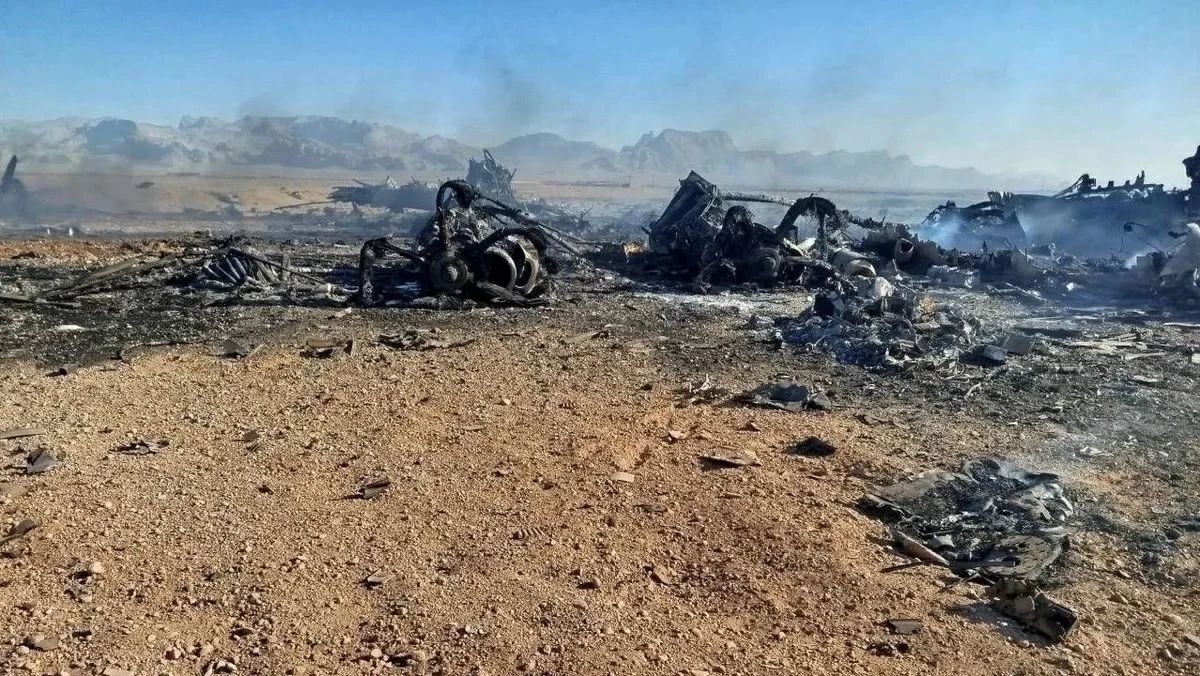
In a complex military operation, U.S. special forces successfully rescued a weapons systems officer from an F-15 fighter jet that was shot down over Iran. However, the mission was fraught with risks, as two aircraft designated to transport U.S. forces out of Iran became disabled.
According to reports from the New York Times, the rescue operation involved hundreds of special forces personnel and dozens of warplanes, reflecting the complexity faced by U.S. forces during this mission. After the pilot was rescued, the forces encountered a significant crisis when the two aircraft malfunctioned, prompting the U.S. military to decide to send three new aircraft to evacuate all military personnel.
Details of the Operation
Officials reported that the two disabled aircraft were destroyed to ensure they did not fall into Iranian hands. CBS News confirmed that the three aircraft sent for evacuation took off from Iran with a short time interval between each flight, successfully completing the mission before midnight, after all U.S. forces had exited Iranian airspace.
In contrast, the Iranian Tasnim news agency reported that the Revolutionary Guard destroyed several flying objects during the U.S. operation. It confirmed that these objects were hostile aircraft, noting that the Iranian police announced the downing of a U.S. military transport plane, a C-130, in the southern Isfahan region.
Background & Context
These events come at a sensitive time, as U.S.-Iranian relations have been increasingly strained since the onset of the war on February 28. The U.S. military indicated that at least four fighter jets have been downed during this period, with the Pentagon confirming that three of them were due to friendly fire.
These developments coincide with an escalation in military activities from both sides, as the Iranian military also announced the downing of an Israeli drone in the same area, further complicating the security situation in the region.
Impact & Consequences
These events highlight the significant challenges faced by U.S. forces in their operations within Iran, as such missions require complex coordination and substantial resources. The destruction of the disabled aircraft reflects the United States' strategy to protect its military information and prevent any potential advantage for Iran.
These operations are expected to impact U.S.-Iran relations, potentially leading to a new escalation in tensions, especially amid ongoing military activities from both sides.
Regional Significance
These events are particularly significant for the Arab region, as they reflect the ongoing struggle between major powers and its impact on regional security. The escalation of tensions between the United States and Iran may also affect neighboring countries, increasing instability in the region.
In conclusion, these events underscore the need for effective diplomatic dialogue to avoid military escalation, as the continuation of conflicts could lead to serious repercussions for regional and international security.