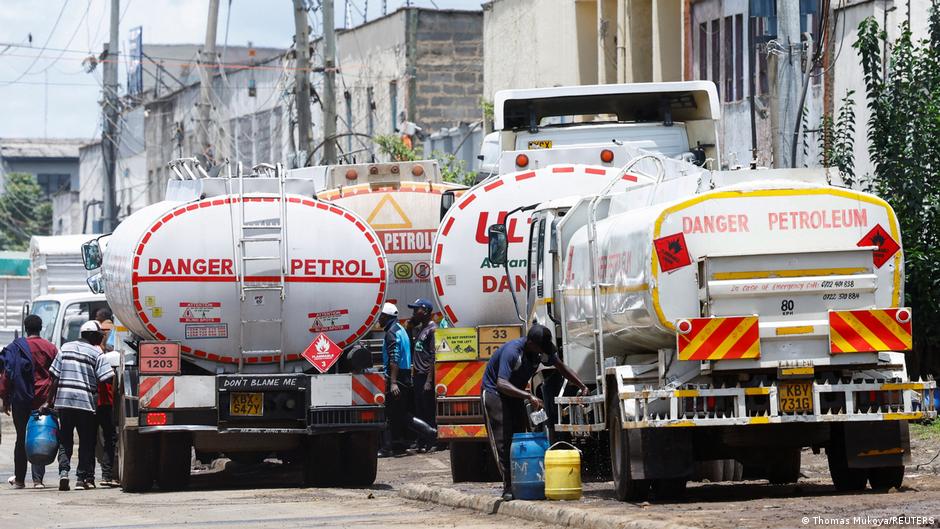
Five senior officials in the Kenyan energy sector have resigned in a move related to investigations into manipulation of fuel stock data, amid rising prices resulting from the war in Iran. The office of Kenyan President William Ruto announced these resignations in an official statement on Saturday, indicating that this step is part of efforts to safeguard the public interest and combat any actions that could harm the national economy.
The resignations include Joe Sang, the managing director of Kenya Pipeline Company, Daniel Kiptoo Bargoria, the director general of the Energy and Petroleum Regulatory Authority, and Mohammed Liban, the principal secretary for petroleum. Liban's resignation was personally accepted by President Ruto, reflecting the government's seriousness in addressing this issue.
Details of the Incident
The allegations against the officials involve manipulation of fuel stock data, where they are accused of attempting to justify an emergency fuel import at inflated prices, despite existing contracts with several suppliers. The government statement confirmed that Saudi Aramco, ADNOC Trading, and the Emirates National Oil Company are all fulfilling their contractual obligations, indicating that there is no real shortage in supplies.
Additionally, three individuals involved in this case have been arrested, with reports indicating that Joseph Wafula, the deputy director of petroleum at the Ministry of Energy, and Joel Mburu, the director of supplies and logistics at Kenya Pipeline Company, also resigned following their arrests. Hundreds of millions of Kenyan shillings have been seized during the investigations.
Background & Context
These events come at a time when Kenya is facing a fuel crisis, exacerbated by the war in Iran and the closure of the Strait of Hormuz. Although Kenya relies on renewable energy sources to generate about 90% of its power, the need for fossil fuels remains significant for operating vehicles and other economic activities.
In 2023, a government framework for intergovernmental trade was introduced in response to market fluctuations and restrictions on foreign currency, following the Russian invasion of Ukraine in 2022. This framework aims to protect Kenya from global energy price volatility, yet this issue reveals gaps in the system.
Impact & Consequences
These resignations and arrests are seen as a positive step towards enhancing transparency and accountability in the Kenyan energy sector. They reflect the government's commitment to protecting the public interest and combating corruption, which is crucial amid the challenging economic conditions the country is facing.
These events are expected to increase pressure on the government to strengthen oversight in the energy sector, which may contribute to improving public trust in government institutions. Ongoing investigations could uncover further potential manipulations, necessitating strict actions against any violations.
Regional Significance
Arab countries are directly affected by fluctuations in global energy prices, with Kenya being one of the nations striving to secure its fuel supplies amid global crises. These events may lead to a reassessment of trade relations between Kenya and Arab countries, especially given existing contracts with major companies like Aramco and ADNOC.
In conclusion, this case underscores the importance of transparency and accountability in managing natural resources, highlighting the challenges faced by developing countries amid global crises. Strengthening oversight in the energy sector could contribute to greater stability in both local and international markets.