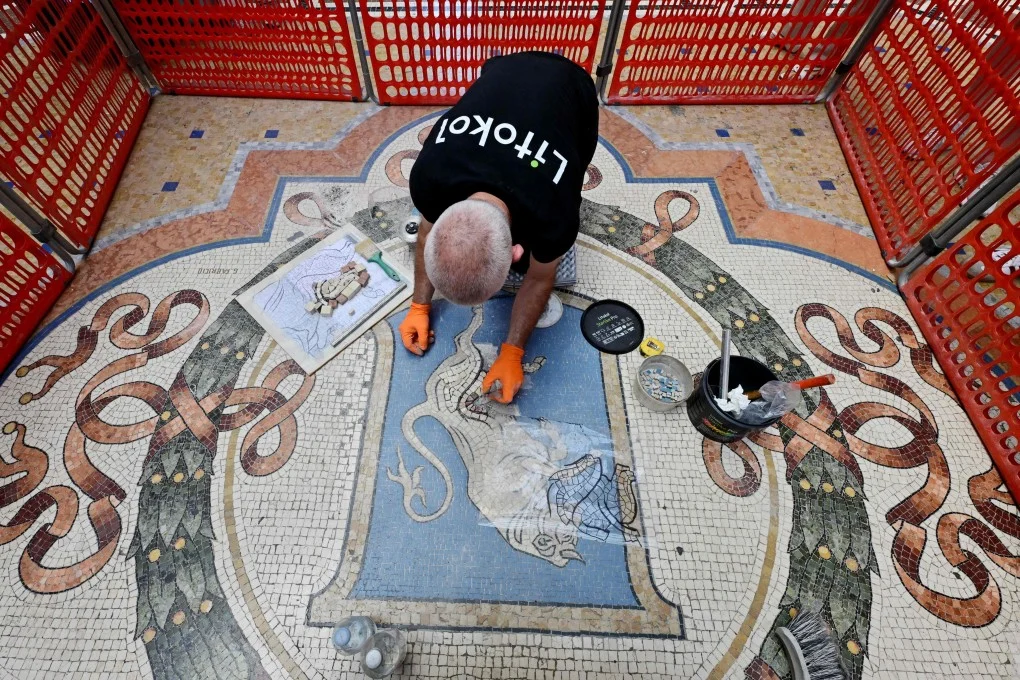
Milan is preparing to renovate the famous Bull Mosaic located in Galleria Vittorio Emanuele II, which has suffered erosion due to visitor traditions. It is believed that stepping on the bull's testicles guarantees a return to the city. With thousands of visitors daily, the pink sections of the mosaic have worn away, resulting in a small hole.
This mosaic is considered part of the city's cultural heritage, as tourists have been keen to replicate this peculiar custom for decades. Officials have indicated that the renovations will be carried out carefully to preserve the historical character of the mosaic, using materials that match the original mosaic.
Event Details
The mosaic dates back to the nineteenth century and is one of the most prominent tourist attractions in Milan. It is located in the heart of Galleria Vittorio Emanuele II, one of the oldest shopping centers in the world. This mosaic is known for attracting visitors from all over the globe, as many seek to experience this unusual tradition.
The renovation of the mosaic comes at a time when Milan is witnessing a resurgence in tourism after a decline due to the COVID-19 pandemic. Officials hope that this renovation will help attract more visitors and enhance the city's status as a major tourist destination.
Background & Context
Historically, Milan has been an important cultural and economic center in Italy and Europe. The Galleria Vittorio Emanuele II dates back to 1867 and was designed to be a hub for commerce and entertainment. The mosaic representing the bull reflects the unique architectural arts that characterized that era.
The mosaic is considered a symbol of the city and has been carefully preserved over the years. However, its erosion due to frequent use by visitors poses a challenge to maintaining this cultural heritage. Therefore, the renovation process represents an important step in preserving the city's cultural identity.
Impact & Consequences
The renovation of the mosaic could have a positive impact on tourism in Milan. With visitors returning to the city, economic activity in the area surrounding Galleria Vittorio Emanuele II is expected to increase. Additionally, preserving cultural heritage enhances the city's status as a global cultural center.
Moreover, this step could serve as a model for other cities facing erosion of their tourist landmarks. Preserving cultural heritage requires ongoing investments, and there should be clear plans to ensure the maintenance of these landmarks.
Regional Significance
Considering tourism as a vital sector in many Arab countries, these nations could benefit from Milan's experience in preserving its cultural heritage. Many Arab cities contain historical landmarks that need maintenance and renovation to retain their tourist appeal.
The renovation of the mosaic in Milan highlights the importance of investing in cultural heritage, which can serve as a significant lesson for Arab cities seeking to enhance tourism and improve the local economy.