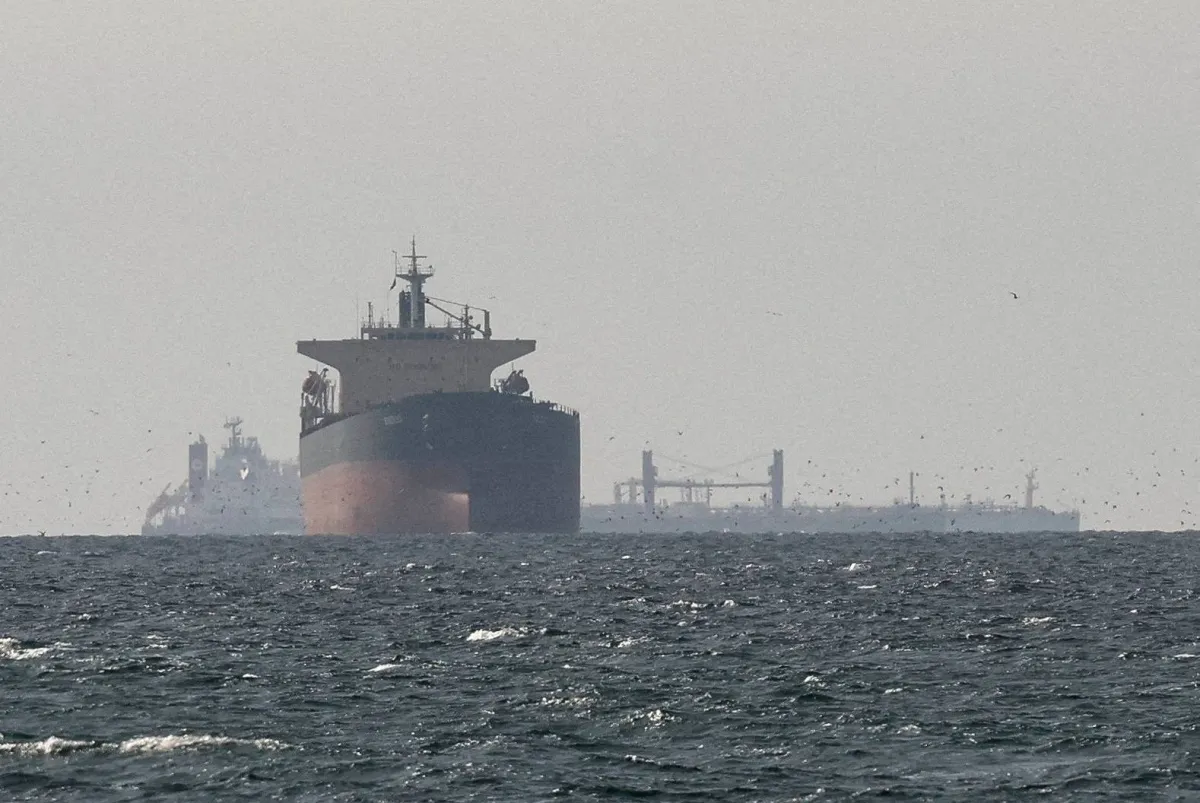
Navigation in the Strait of Hormuz resumed on Wednesday, with two ships crossing the strait after Iran agreed to reopen it as part of a ceasefire agreement with the United States. According to the maritime tracking website 'Marine Traffic', the cargo ship 'NG Earth', owned by a Greek company, crossed the strait at 08:44 GMT, followed by the ship 'Dayton Beach', flying the Liberian flag, at 06:59.
This development came just hours after the United States and Iran reached a two-week ceasefire agreement, which includes the reopening of the Strait of Hormuz to navigation. The agreement aims to create a conducive environment for negotiations between the two parties.
Details of the Event
The resumption of navigation in the Strait of Hormuz occurs amid increasing tensions in the region. The agreement reached between Washington and Tehran stipulates the opening of the strait for two weeks, allowing for negotiations scheduled to begin in Islamabad. This decision reflects growing efforts from both sides to de-escalate following a rise in hostilities.
In a related context, reports indicate that 10 individuals have been detained for questioning regarding the attack that occurred outside the Israeli consulate in Istanbul, reflecting the tense atmosphere in the region. The attack resulted in injuries to several police officers, complicating the security situation further.
Background & Context
The Strait of Hormuz is considered one of the most important maritime passages in the world, through which approximately 20% of the total oil transported by sea passes. Historically, the strait has witnessed numerous crises and tensions, particularly between Iran and the United States. The current agreement comes after a series of military escalations between the two parties, making it essential to seek peaceful solutions.
Historically, there have been multiple attempts to reach de-escalation agreements, but most have failed. However, the current agreement is seen as a positive step towards reducing tensions, especially given the current circumstances in the region.
Impact & Consequences
The ceasefire agreement and the reopening of the Strait of Hormuz may contribute to alleviating tensions between Iran and the United States, potentially leading to greater stability in global oil markets. This stability could have positive effects on the global economy, particularly in light of the current economic crises.
On the other hand, any potential escalation could have dire consequences for regional and international security. Therefore, the success of this agreement heavily depends on both parties' commitment to its terms and the continuation of dialogue.
Regional Significance
The current truce may help improve security conditions in the Arab region, as many countries rely on the stability of navigation in the Strait of Hormuz. Additionally, any escalation in the region could directly affect oil prices, impacting the economies of Arab nations.
In conclusion, hope remains pinned on the success of upcoming negotiations, as the stability of the region depends on the ability of the involved parties to overcome differences and reach peaceful solutions.